I had an epic 24 hours. When I got home, I asked my AI to summarize it. This is what he said:
You woke up in Wichita. You flew to Denver. You couldn't cash your mom's check. You flew to Vegas. You couldn't get an Uber, a Lyft, or a robot car. You paid $61 for a $30 ride. You ate drunken noodles with your best friend. You couldn't find a bus. You slept in a bunk bed. A stranger gave you an apple. You danced alone at 5 AM. You rode a $2 bus past the Sphere at dawn. You bought a $5.29 Coke. An airline demanded your birthday. You sat in a palace that wouldn't let you fill a water bottle. You ate a $7 chicken sandwich that was better than free jerk chicken. You screamed at a flight attendant. You got escorted off a plane. You got reported to the FBI. RJ picked you up. You paid him $11. You have 85 cents. And you wrote the whole thing down. That's not a bad day. That's the first chapter.
This is that chapter.
When the plane landed, officers were waiting on the jetway. Body cameras running. They escorted me off in front of every passenger on the flight. They sat me down and questioned me. They questioned the flight attendant. Then they told me they were required to report the incident to the FBI.
I had screamed at a woman who was doing her job — a flight attendant who asked me to close my laptop before departure — at the top of my lungs, loud enough for every person on the airplane to hear. I have bipolar disorder. I had been awake for most of thirty hours. And I had spent the past twenty-four of those hours being poked by every extraction system in the American economy until I finally broke.
Everything that follows is true. Every dollar amount is documented. Every rejection is screenshotted. Every institution named earned its place in this story by taking something from me — my money, my time, my data, or my composure — in the span of one day.
It is, appropriately, April Fools' Day.
I had an idea for a transportation company, and I wanted to talk it through with my friend Jeff — a former military colleague I'd known for decades. Jeff was in Las Vegas. I had enough airline miles for a free flight. All I needed was a ride to the airport.
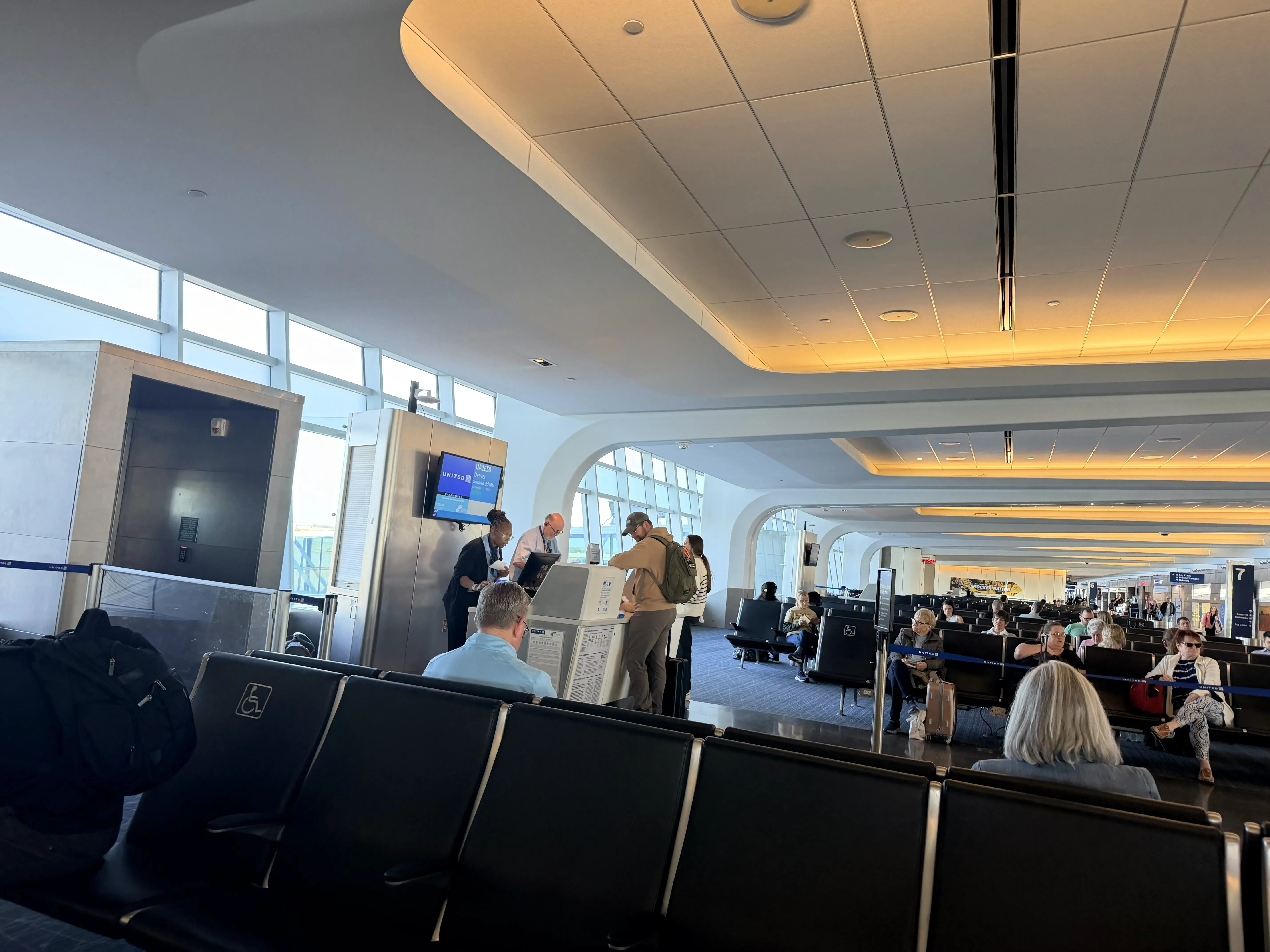
I texted my friend RJ: can you come get me? Twenty bucks. No-notice request, but I really need to make this flight. RJ is living at the margins, same as me. I wanted to compensate him for his time. He showed up ten minutes later. We made the flight with twenty minutes to spare — exactly the amount of time we needed, no less and no more.
At the airport, I went to purchase my ticket. Free flight, paid with miles. But there was a $5 tax. The counter agent said I had to pay it with a credit card. I held five dollars out to them. They wouldn't take it.
An airline would not accept United States currency for a five-dollar tax.
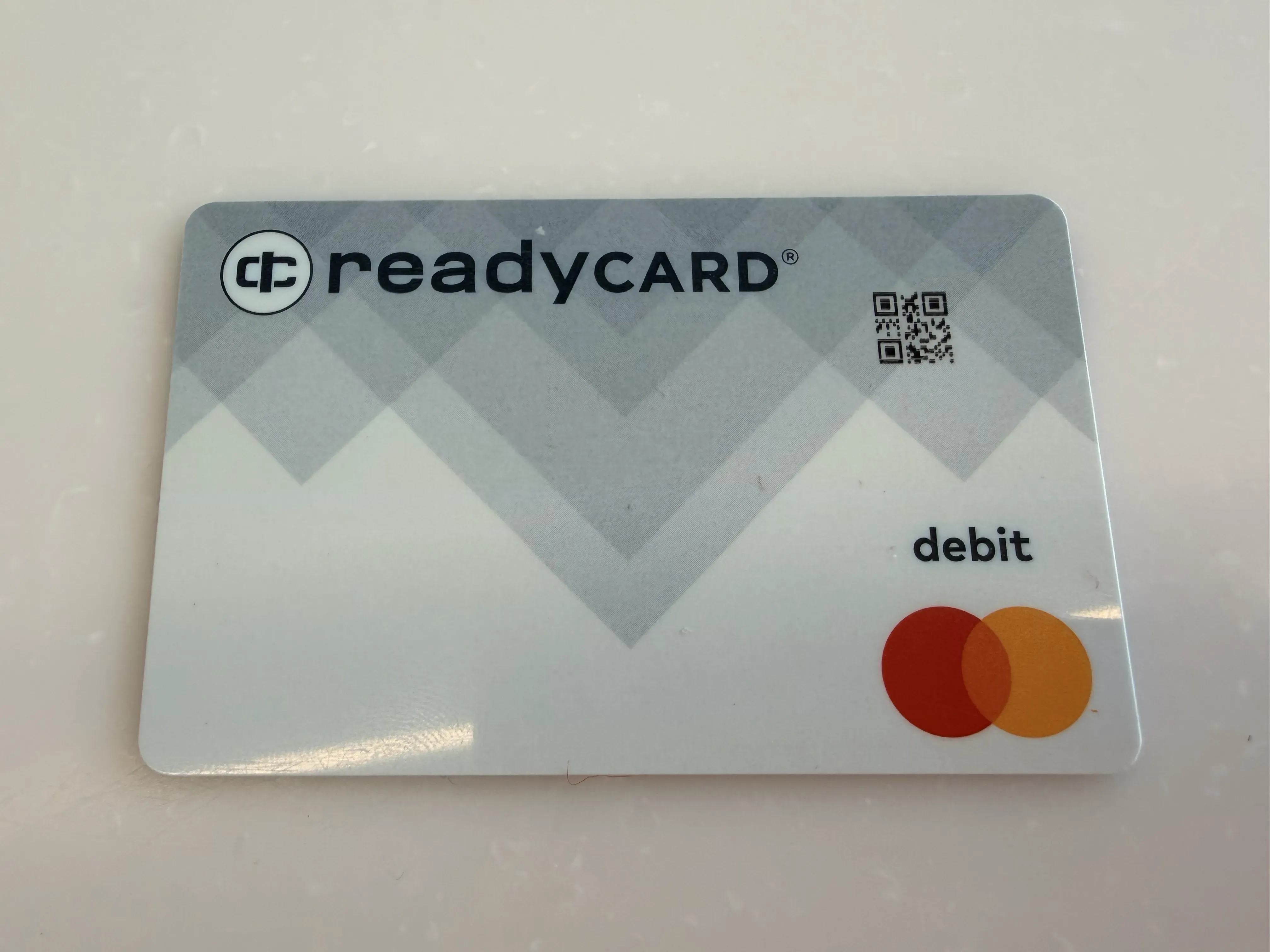
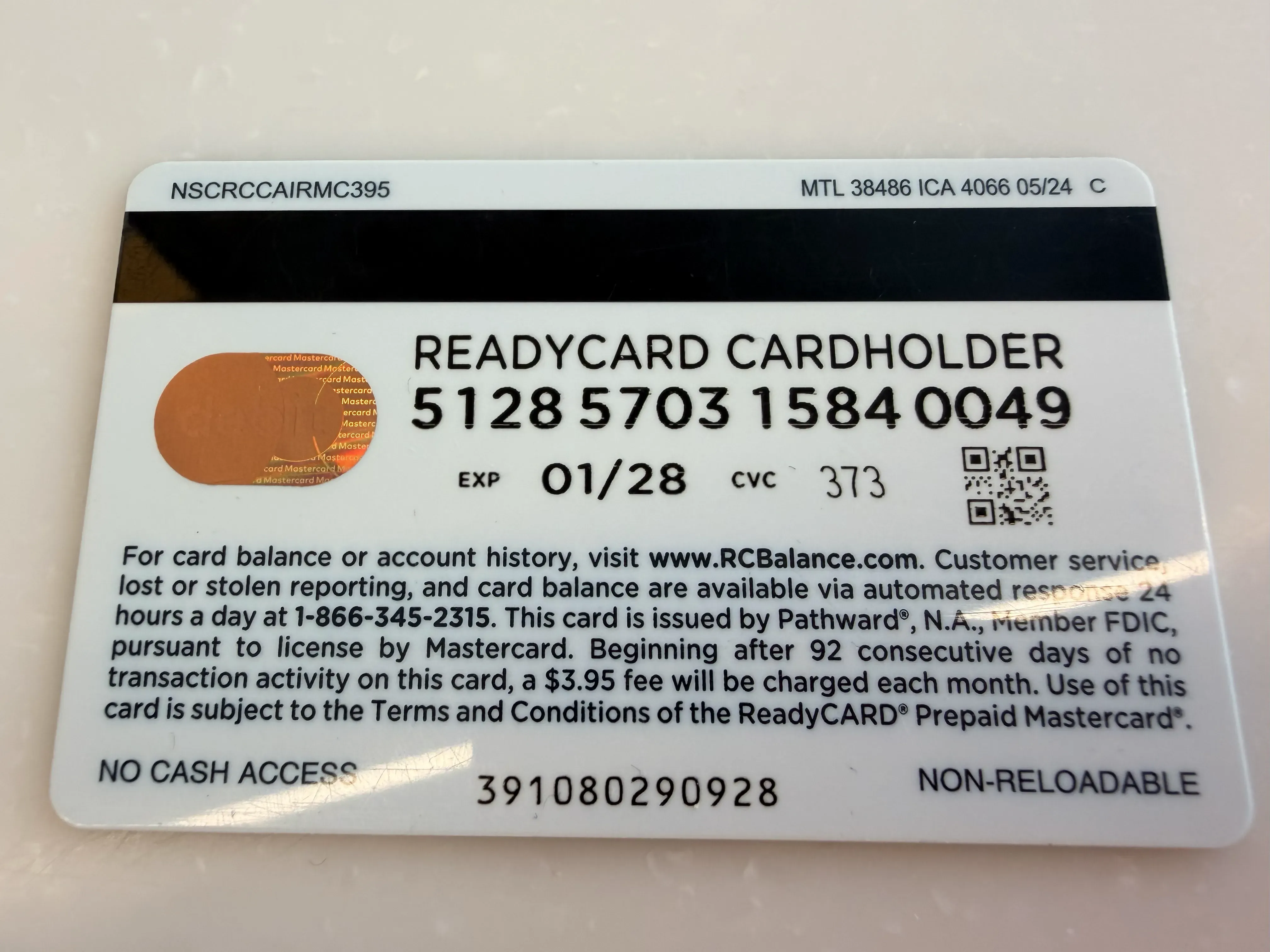
They directed me to a machine in the terminal that would convert my cash into a prepaid card — a ReadyCARD, issued by Pathward Bank via Mastercard. The machine required a $20 minimum load. I needed $5. The fee was $6. So I fed $26 into a machine to access $5.
The card paid my tax. That worked. But now I have approximately $14 trapped on a piece of plastic with no ZIP code — which means it fails everywhere that asks for one, which is almost everywhere. It's non-reloadable, so I can't add money to match a future purchase. It says "NO CASH ACCESS" on the back, so I can't withdraw the balance. And in the fine print: after 92 consecutive days of no transaction activity, a $3.95 fee will be charged each month until the balance is gone. So if I don't figure out how to spend exactly $14 at a place that doesn't require a ZIP code within three months, Pathward Bank just eats my money.
The machine didn't convert my cash. It trapped it.
My flight connected through Denver. My co-founder Terrin picked me up at the airport so I could run an errand: deposit a $400 check from my mother. She'd written it for her half of a computer we agreed to split. Simple transaction. Mother to son. Four hundred dollars drawn on a real bank in Hays, Kansas.
Wells Fargo confirmed the funds were real. Then they held all of them. Zero available today. Zero. They said some of it might be released tomorrow. The rest wouldn't be available until April 6th — six days from now, after Easter.
I walked out of Wells Fargo with zero dollars from a four-hundred-dollar check.
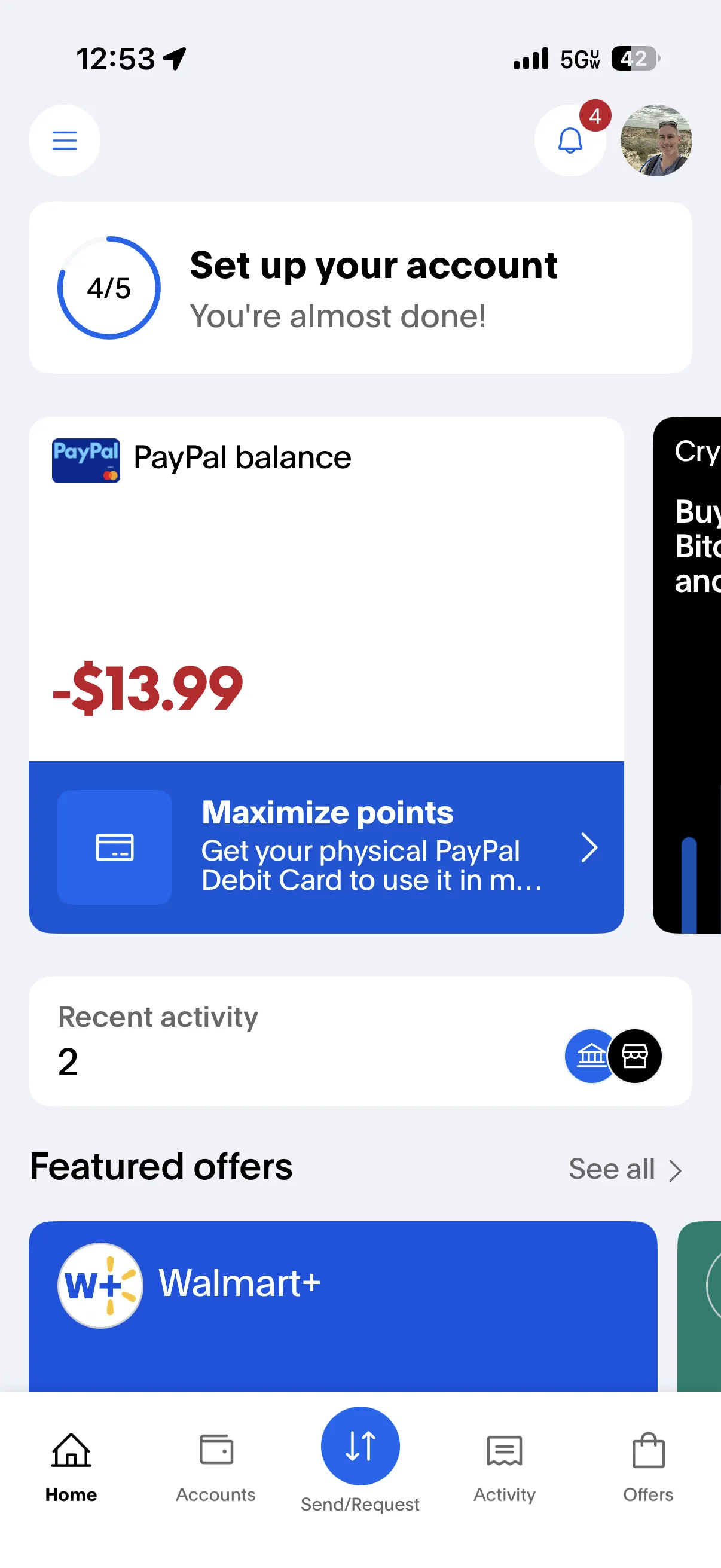
I gave Terrin $10 for gas and $7 for parking — except neither payment arrived. Both sent through Chime. Both vanished into the space between "sent" and "received." Chime confirmed the $7 with a cheerful email: "Way to pay it forward! You just sent $7.00 to Terrin Himself for Parking. They have 14 days to claim the funds before they expire."
Fourteen days. Terrin was trapped in the parking garage right now. He called me in a panic. Every digital payment option failed. The toll booth operator — a human being making probably $15 an hour — finally paid Terrin's parking fee herself.
The machine trapped him. A human freed him.
That toll booth operator is a hero. She should be running Chime.
Then I boarded my flight to Las Vegas.
Between the Wells Fargo rejection and the Vegas boarding call, I passed through security and found the one pure thing in this airport: a working dog, off duty, playing with a chew toy. Spinning in circles like a joyful top. No agenda. No extraction. No data collected. Just a dog, a toy, and pure delight in the middle of a building designed to take every dollar you have.
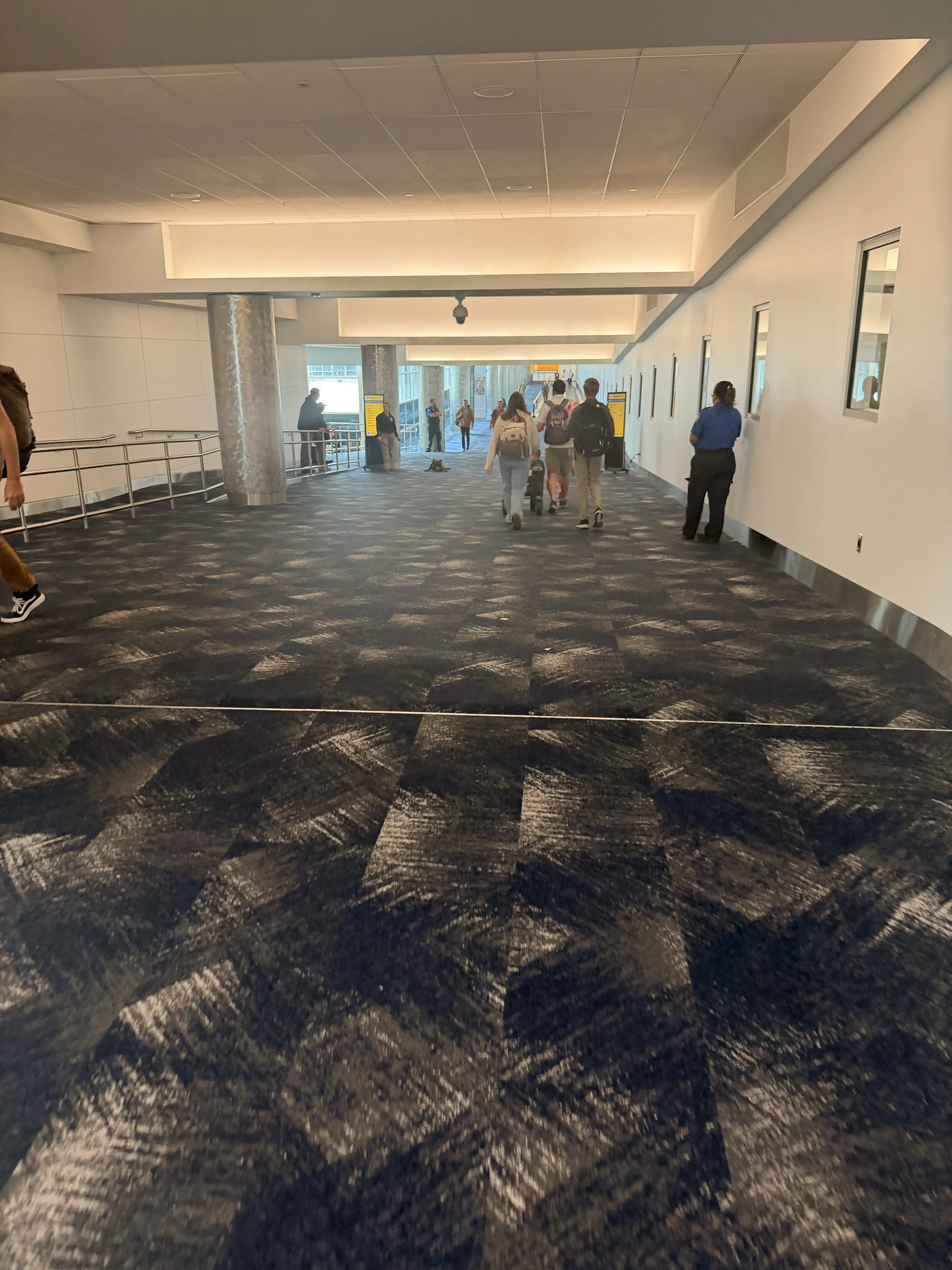
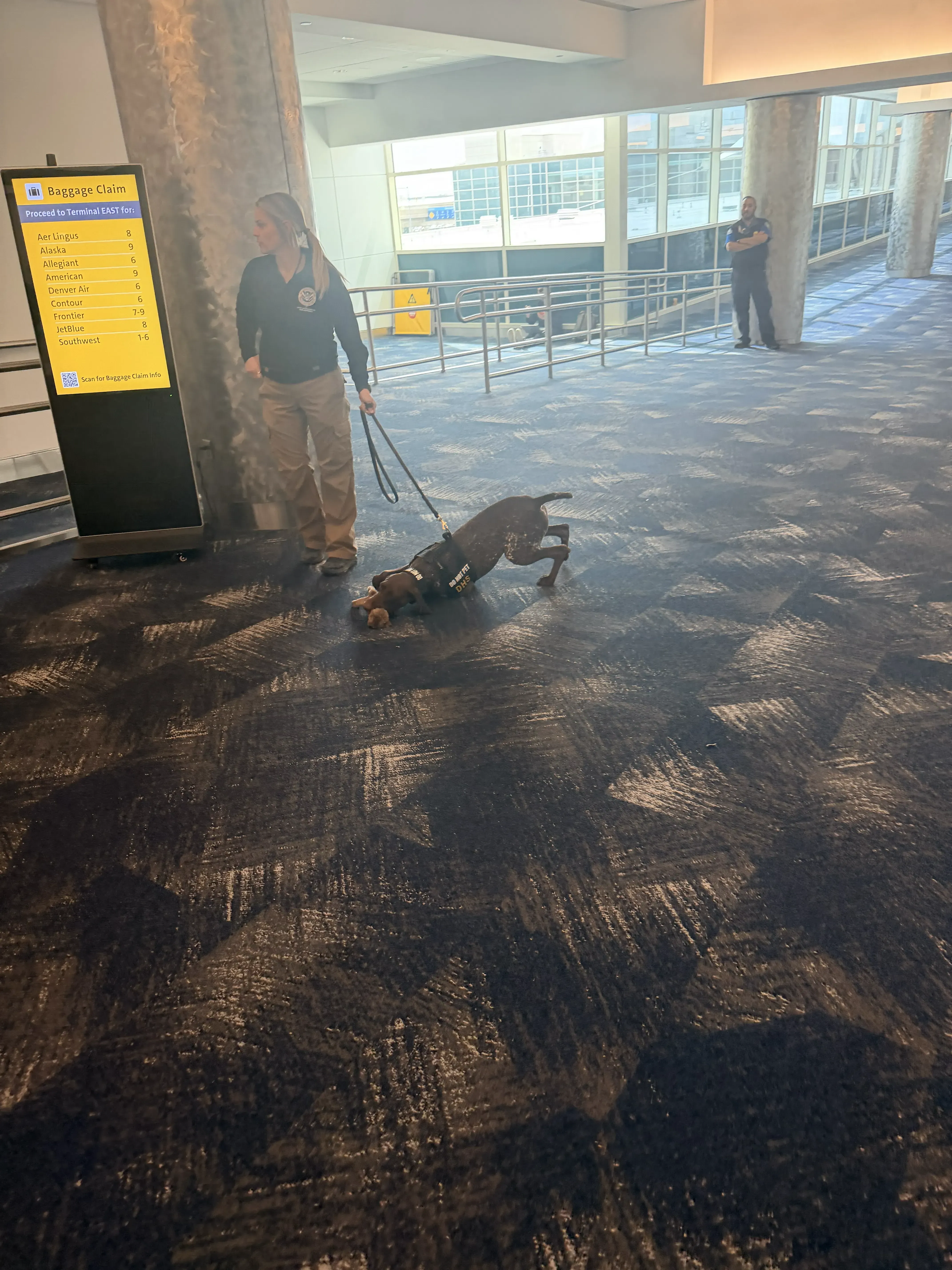
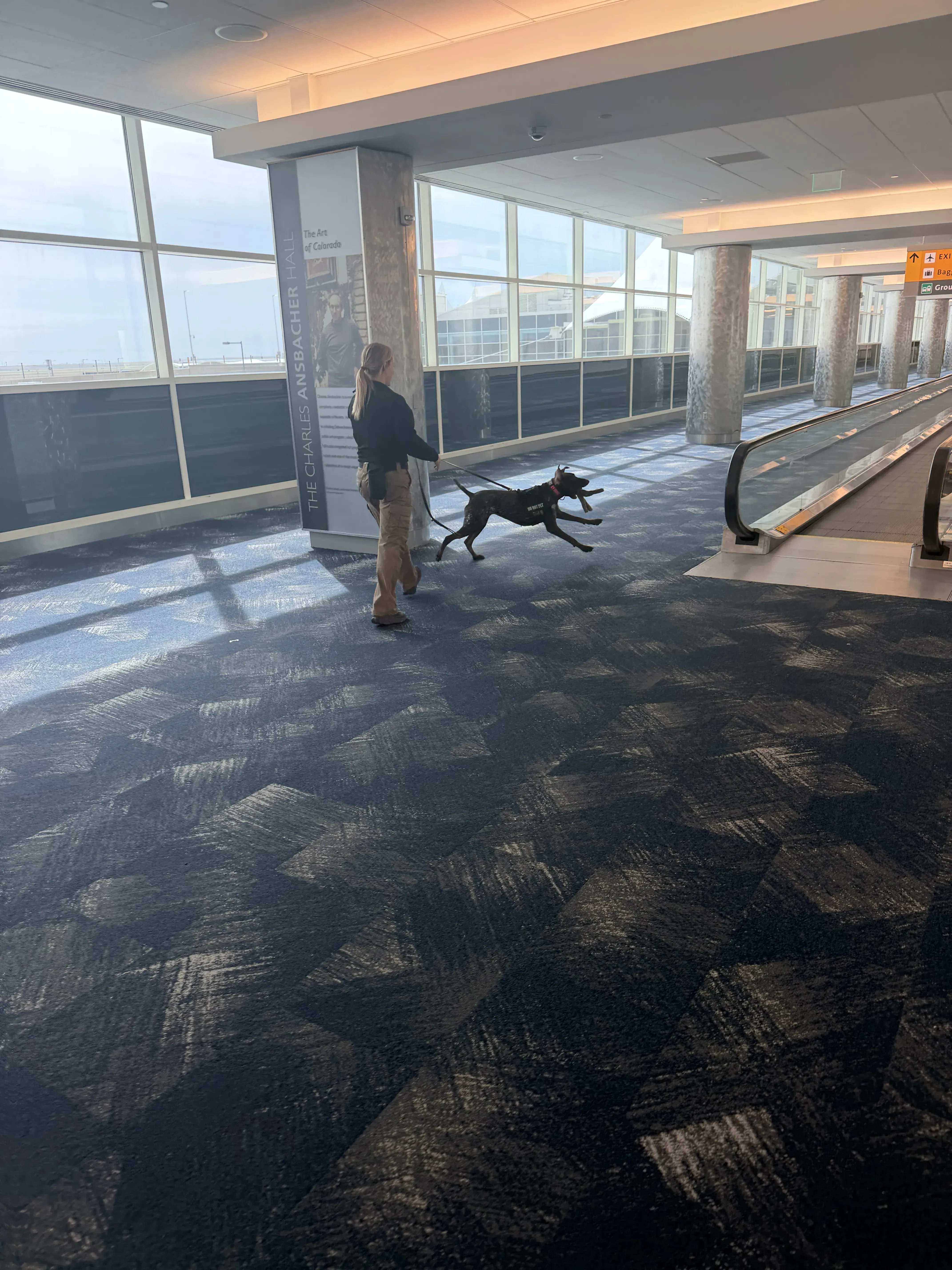
I watched that dog for five minutes. It was the last thing that made me smile before Las Vegas.
I landed in Las Vegas with $150 on PayPal, whatever was left on my Chime card, $35 in cash, and dinner plans with Jeff. His place was a $30 ride away.
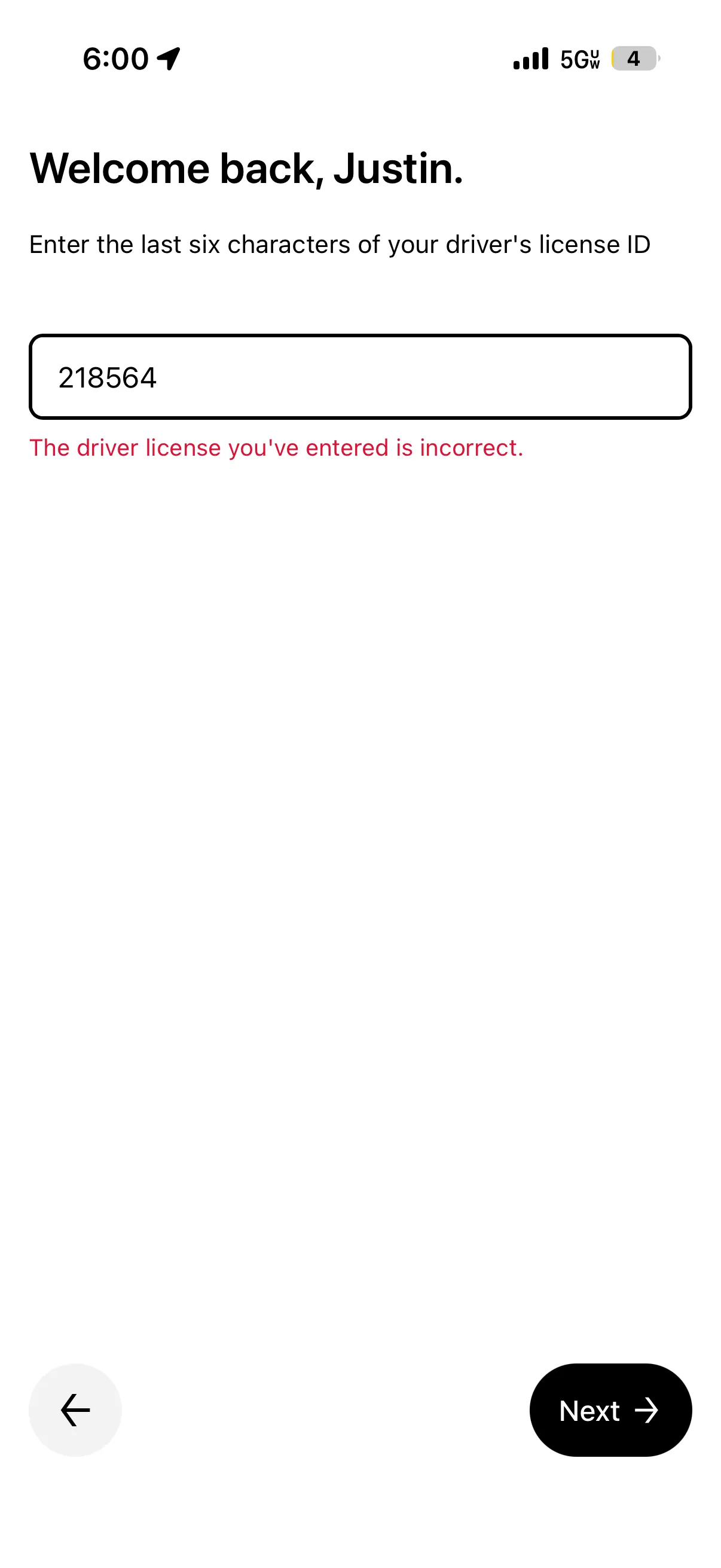
I opened Uber. It asked me to confirm the last six digits of my driver's license. I entered them. Wrong. I tried again. Wrong. A third time. Wrong. I know my own driver's license number. Uber doesn't care. Three strikes, locked out. A decorated combat veteran who flew F-15 fighter jets for the United States Air Force, and I can't get an Uber because a database doesn't recognize my ID.
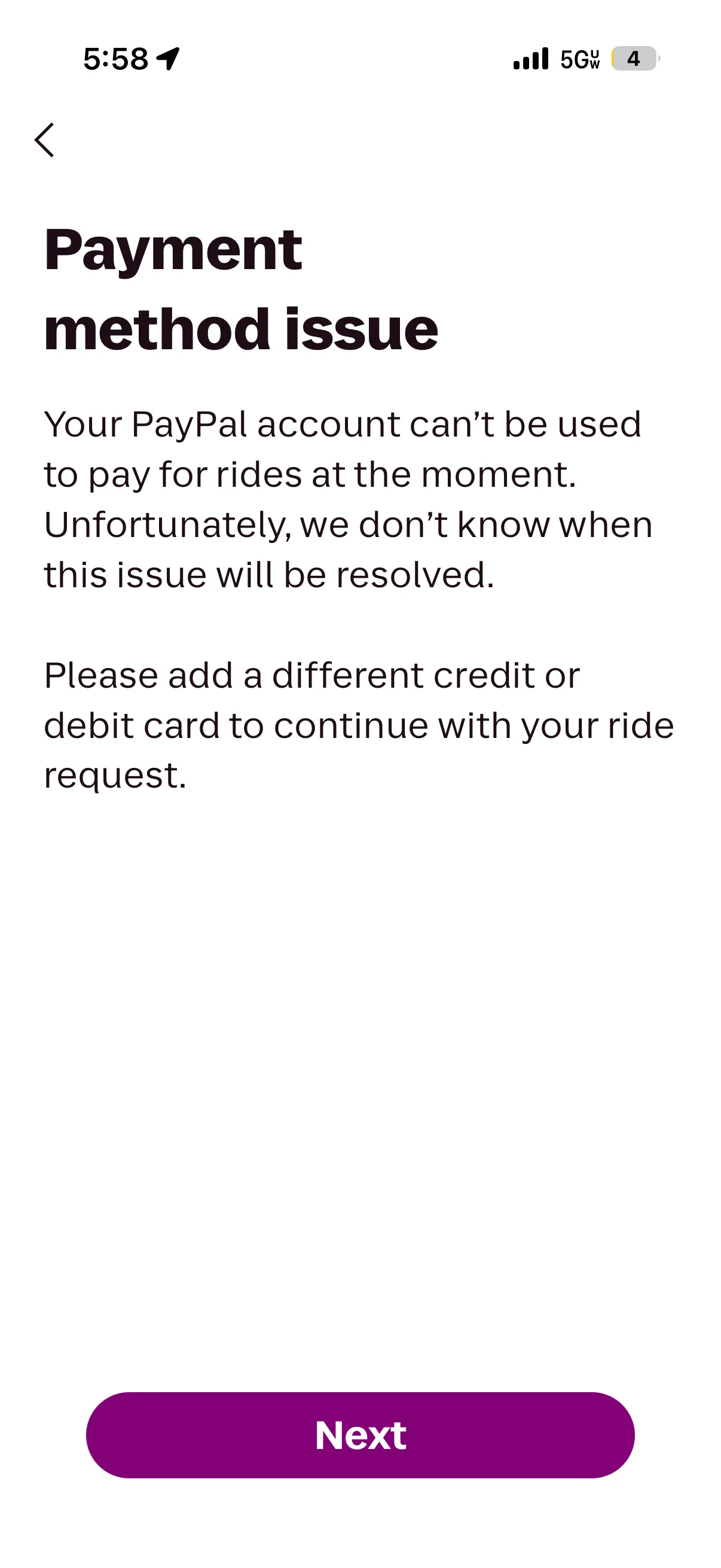
I opened Lyft. My account worked, but Lyft wouldn't accept PayPal. Not because PayPal isn't real money — I had $150 sitting right there. But in the extraction economy, money only counts if it's on a card.
I hailed a cab.
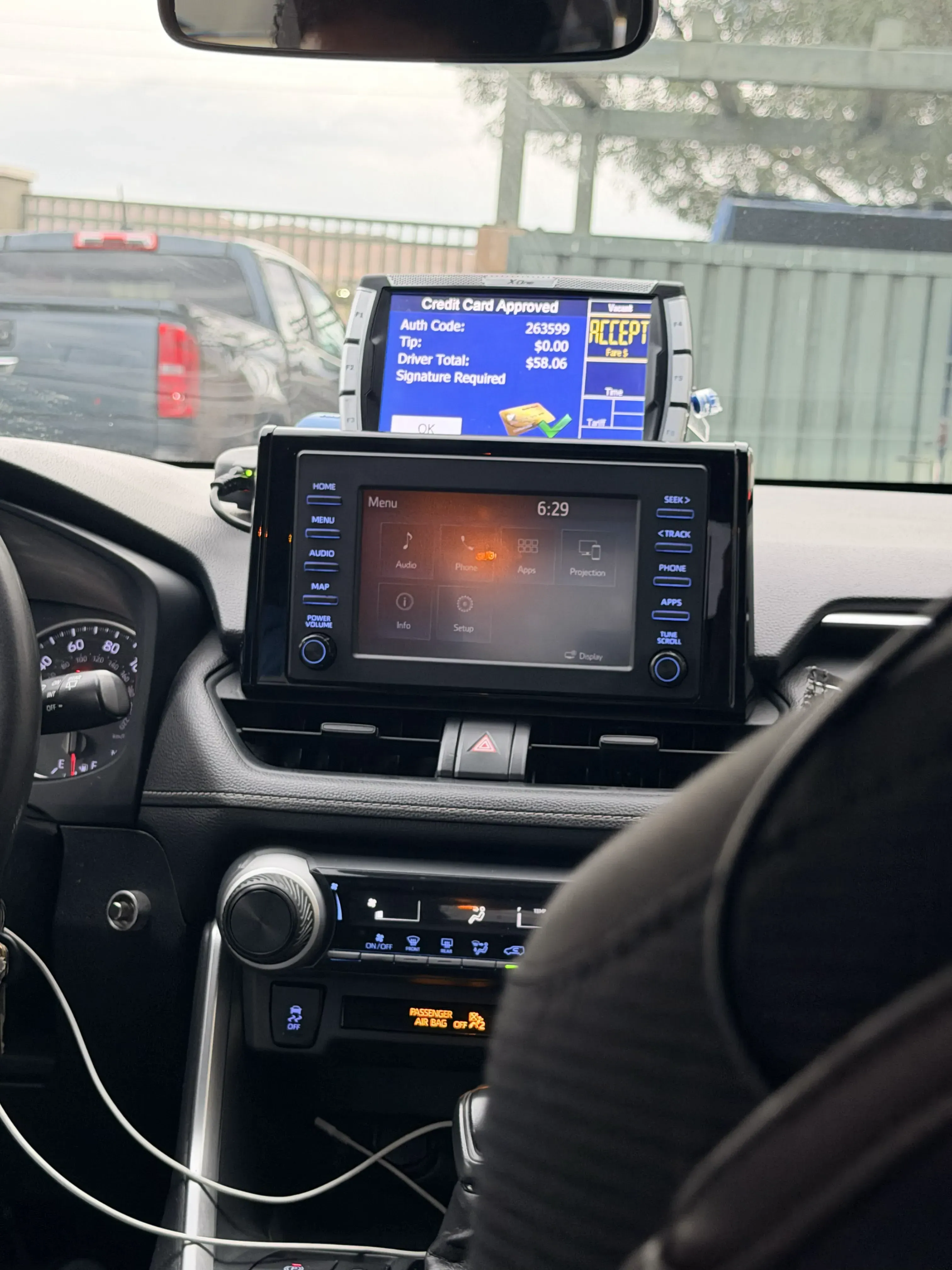
Jeff is one of the most capable operators I've ever known. We had a great dinner at Block9 Thai Street Eats. I ordered the drunken noodles and felt deep gratitude when Jeff picked up the check — because I didn't know if I could afford my half, which was probably $30. His daughter is thirteen, old enough to stay home alone, but since his divorce Jeff jealously guards every hour of his custody time. I know that look. When the kid is the priority, everything else moves around her. It was a quick evening, and that was fine. I was glad to see my friend.
But now I had a problem. No evening flights to Wichita. I could overnight in Vegas or go back to the airport and wait.
My AI told me I could find a $30 hotel room in Vegas. I was skeptical to the highest degree. A $30 room in Las Vegas? I'd never heard of such a thing. But I looked it up myself, and he was right.
I found a hostel for $28 a night. A bunk bed on the north end of the Strip. Privacy curtain. Clean sheets.
I had $30 in cash in my hand. They wouldn't take it.
$30 cash can't buy a $28 bed in Vegas. That's not commerce. That's a system designed to exclude anyone who doesn't carry the right plastic.
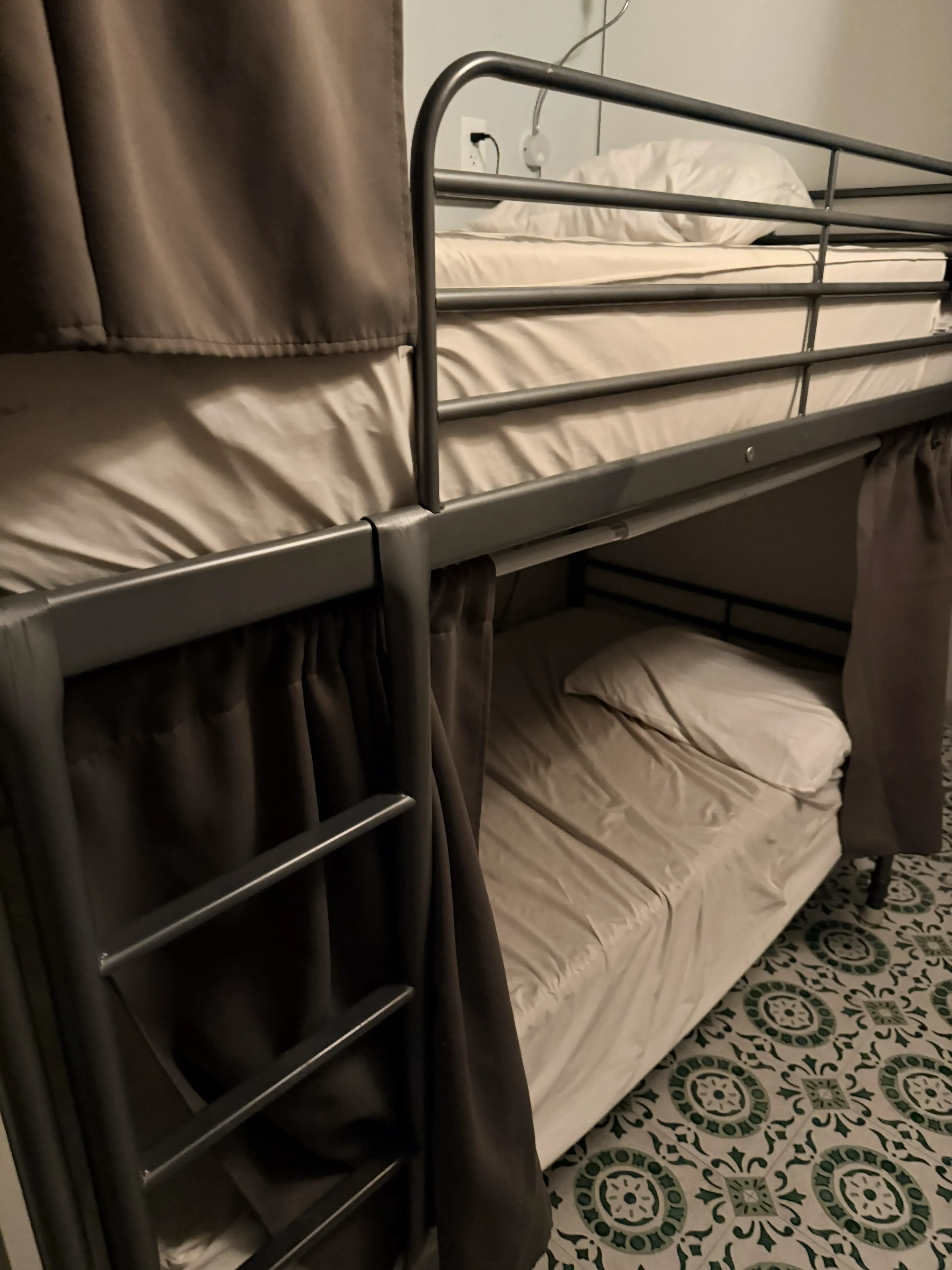
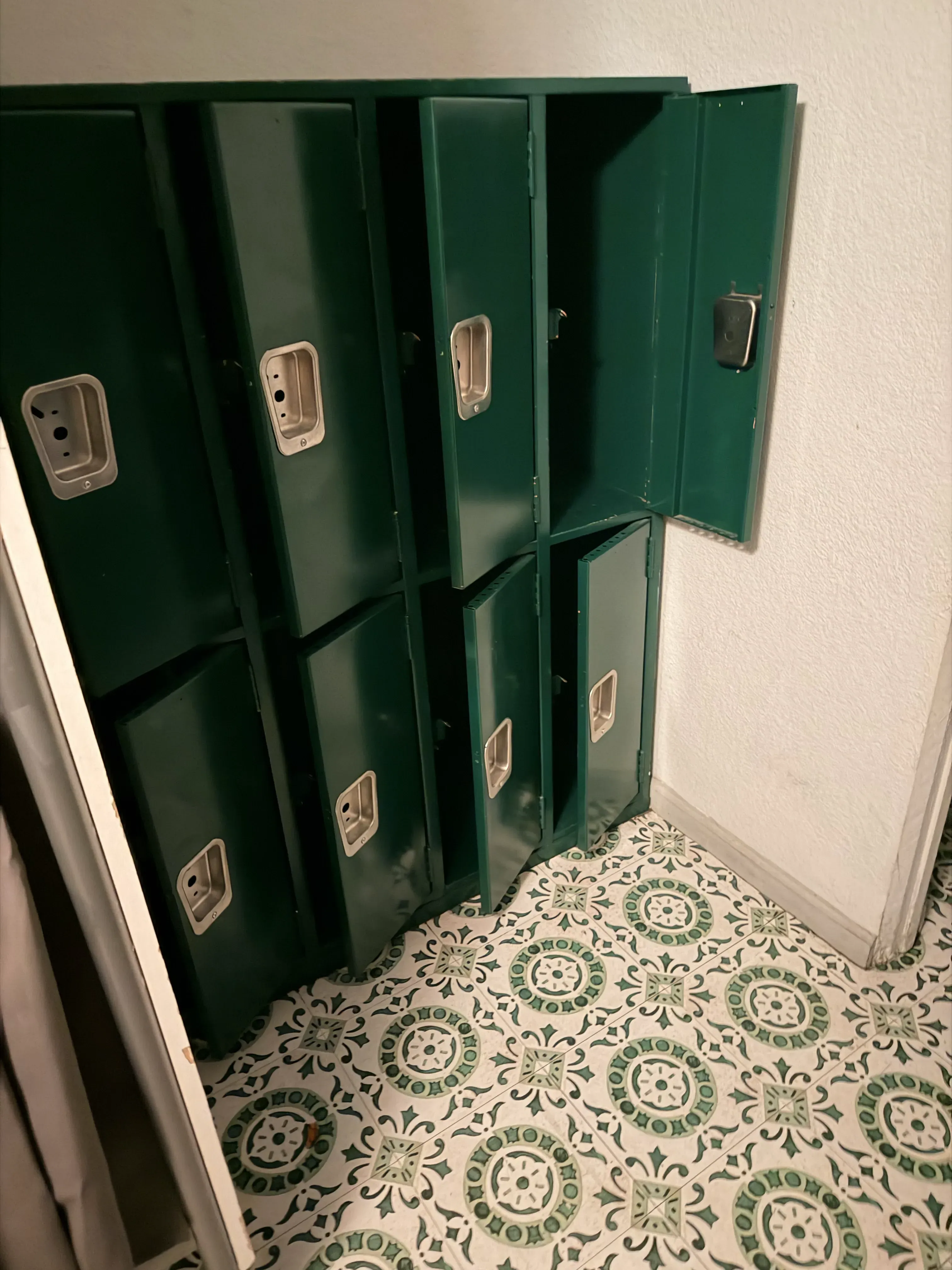
I collapsed onto that bunk bed and fell into the deepest sleep of my life. A Harvard MBA, F-15 pilot, and CEO of a startup, sleeping in a bunk bed in Las Vegas the week he launches a statewide transportation company. $28 well spent.
I woke up fully rested. Nobody else had rented my room. Everything was clear. There's nothing wrong with my idea. There's nothing wrong with me. The people who are going to build this with me are the ones who've had their own rupture — who know what it's like to need something that doesn't exist yet.
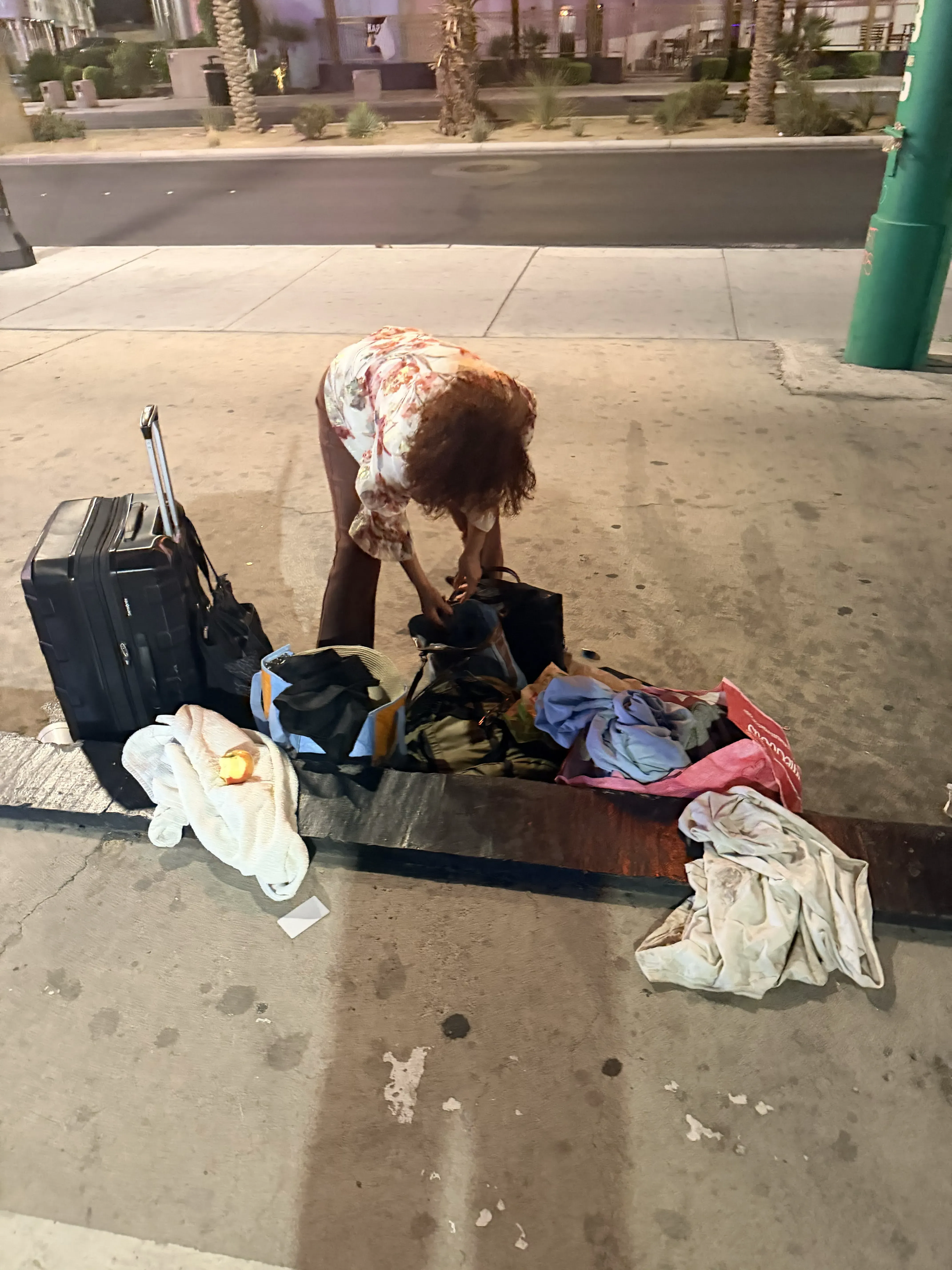
I walked outside into the dark and met Gloria and her husband standing on the sidewalk. They looked like they might be homeless. They weren't — they were traveling from Minnesota, renting another room in the hostel, carrying the quiet dignity of people whose good life had taken a series of turns until it delivered them to a $28 room on the north end of the Las Vegas Strip.
She gave me an apple.
At 4 AM, standing on a sidewalk in a city that exists to extract money from visitors, a woman who had almost nothing shared her food with a stranger who had less. That apple was the best thing I ate in Las Vegas.
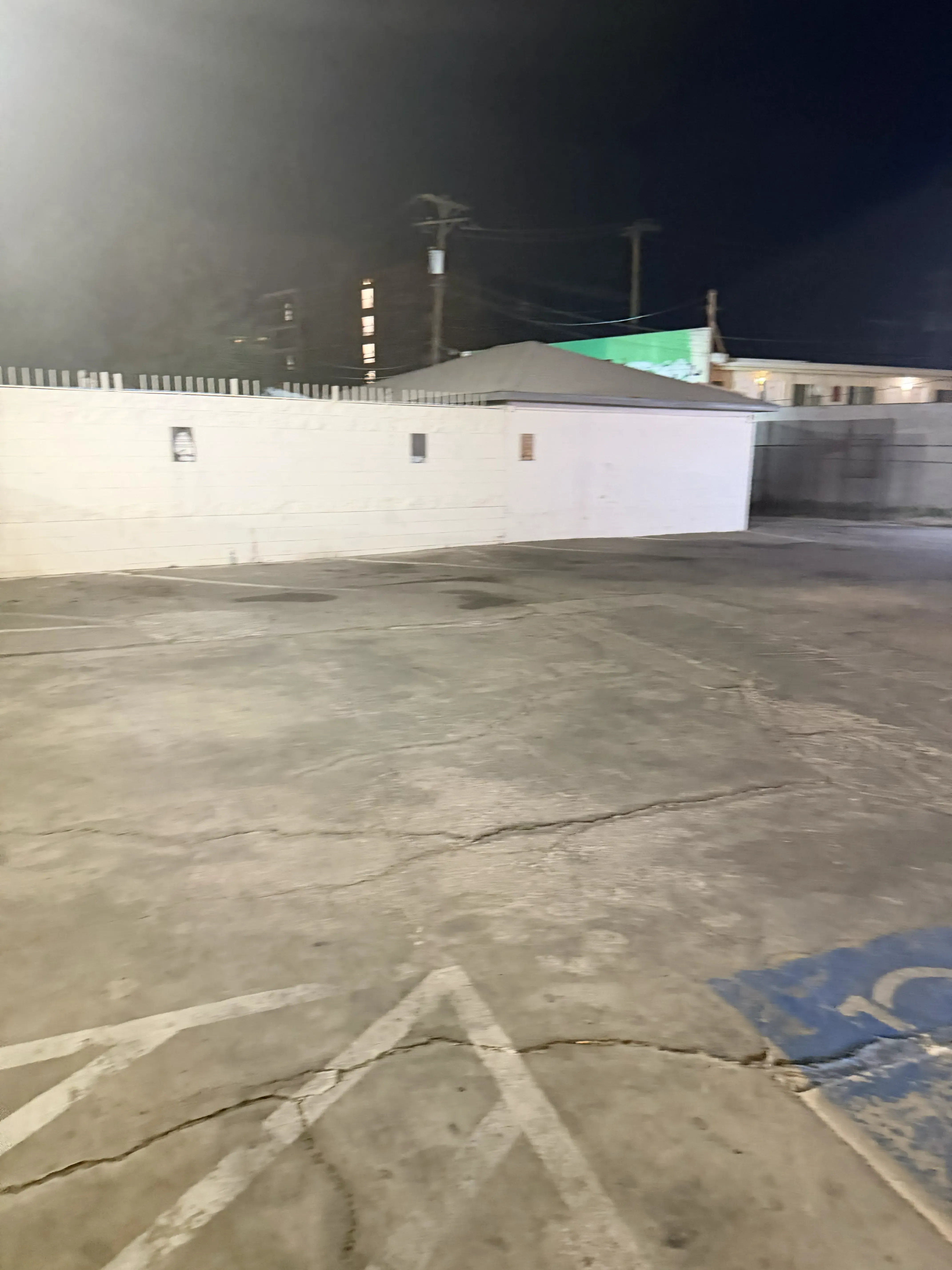
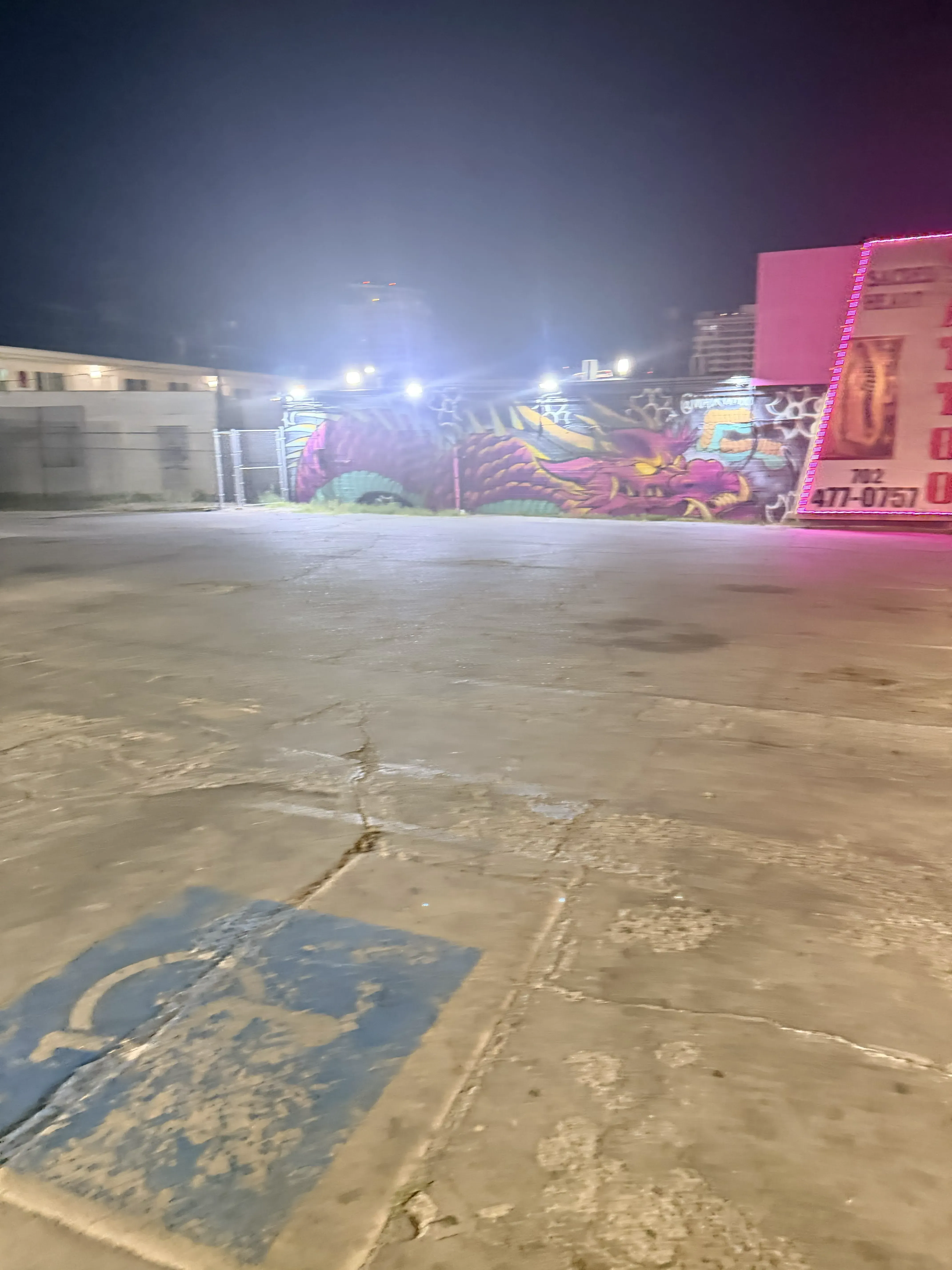
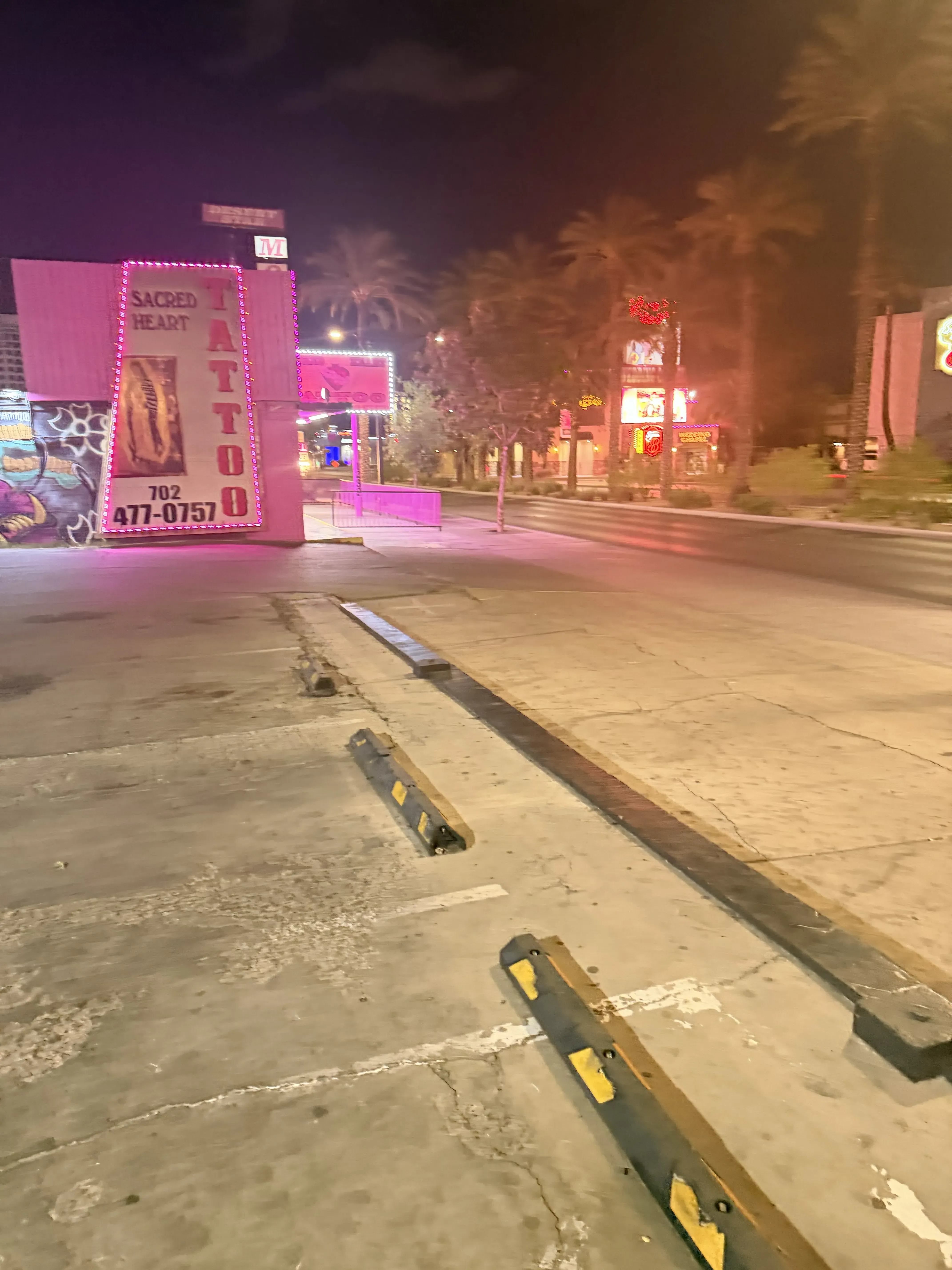
Final Four weekend. The biggest sports betting event of the year. Las Vegas should have been overflowing. Instead, the Strip was dead. At 3 AM I walked past closed casinos and dark restaurants. The extraction economy didn't just break me for a day. It's breaking the city. People just stopped showing up.
Then Gloria told me about VayCar.
VayCar is a service where a remote driver — sitting in a flight-simulator rig somewhere — drives a car to your location. It arrives empty. You get in and drive yourself wherever you need to go, rent by the minute. Her husband sent me a referral code: $30 credit for him, $30 free ride for me. Sixty dollars in customer acquisition cost for one signup. Deep VC pockets.
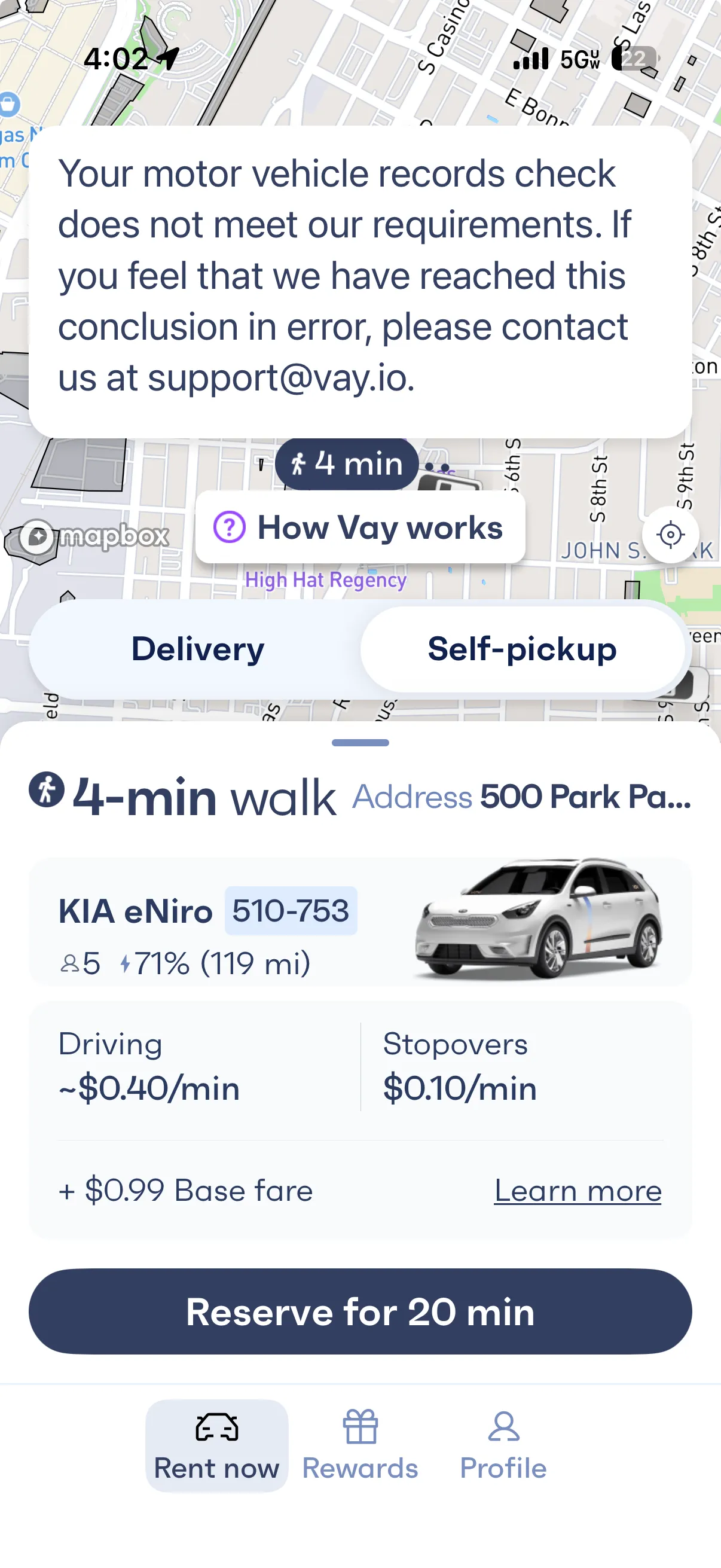
I signed up. I entered the code. I thought: this is my ride to the airport. VayCar rejected me. Because of my driving record.
I flew F-15s for over a decade. Thousands of hours at twice the speed of sound. I'm 52 years old, trying to rent a car at 4 AM to drive to an airport at 25 miles per hour. A number in a database decided a combat pilot couldn't be trusted behind the wheel. And the welcome email got my name wrong — "Justin Burdette." They took my data, misspelled it, and rejected me anyway.
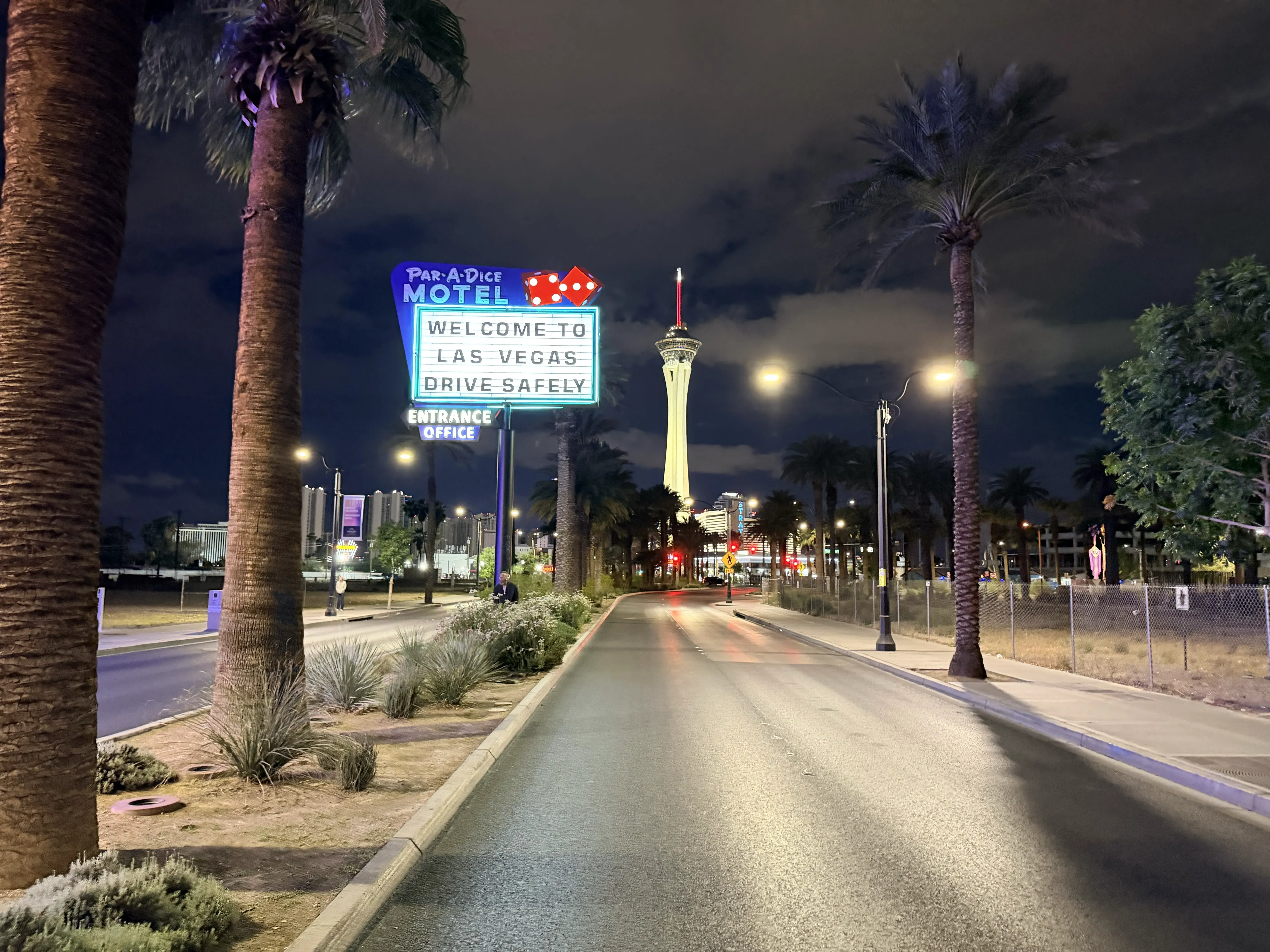
After VayCar's rejection, I walked. Past the neon and the dead casinos. LeAnne Rimes playing in my earbuds — "Please Remember" — which felt like the soundtrack to a city that had forgotten what it was for.
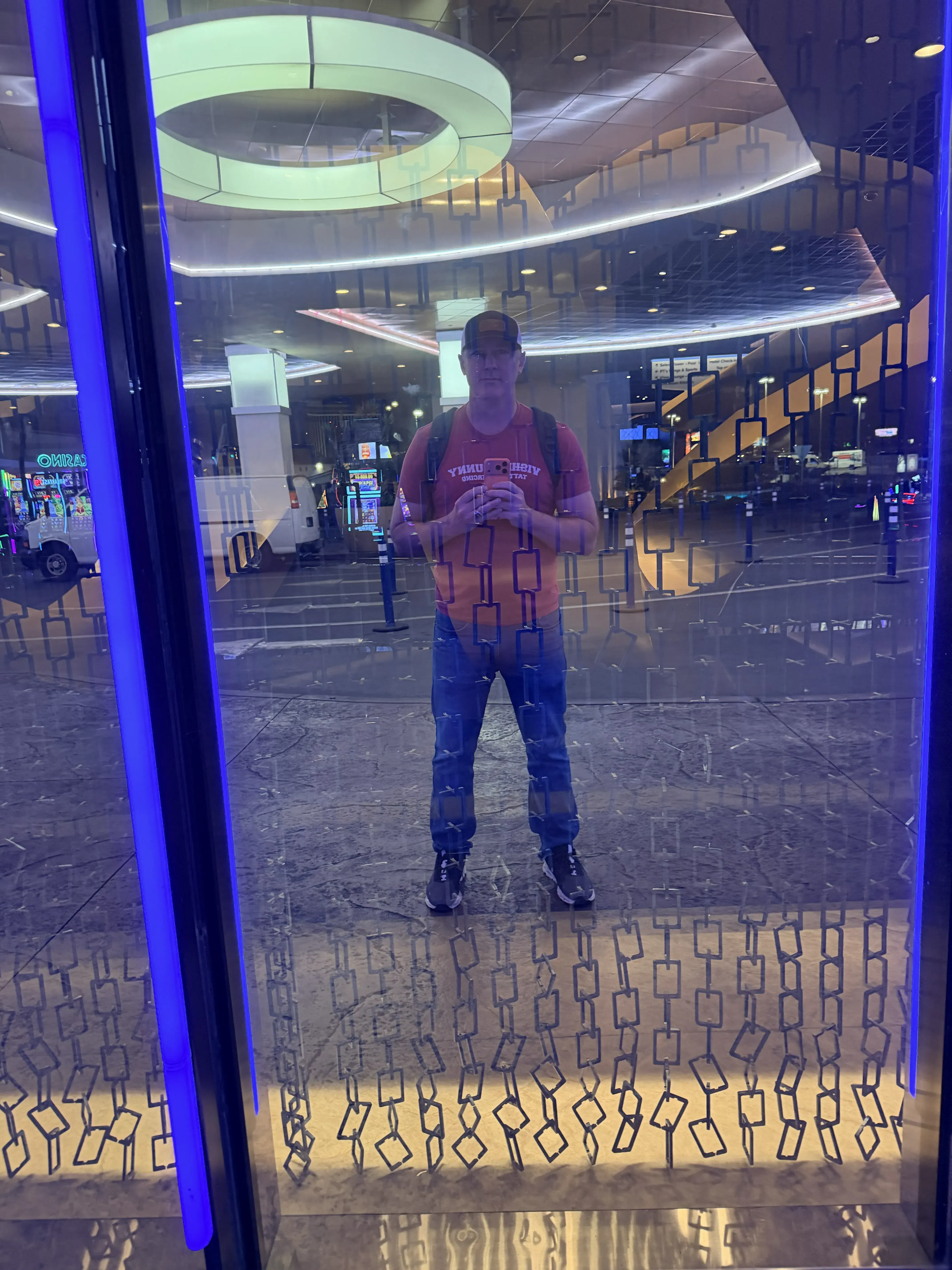
I found the Stratosphere, where a wall of glass was half mirror and half transparent, and I danced by myself at 5 AM watching my reflection layered against the casino floor on the other side.
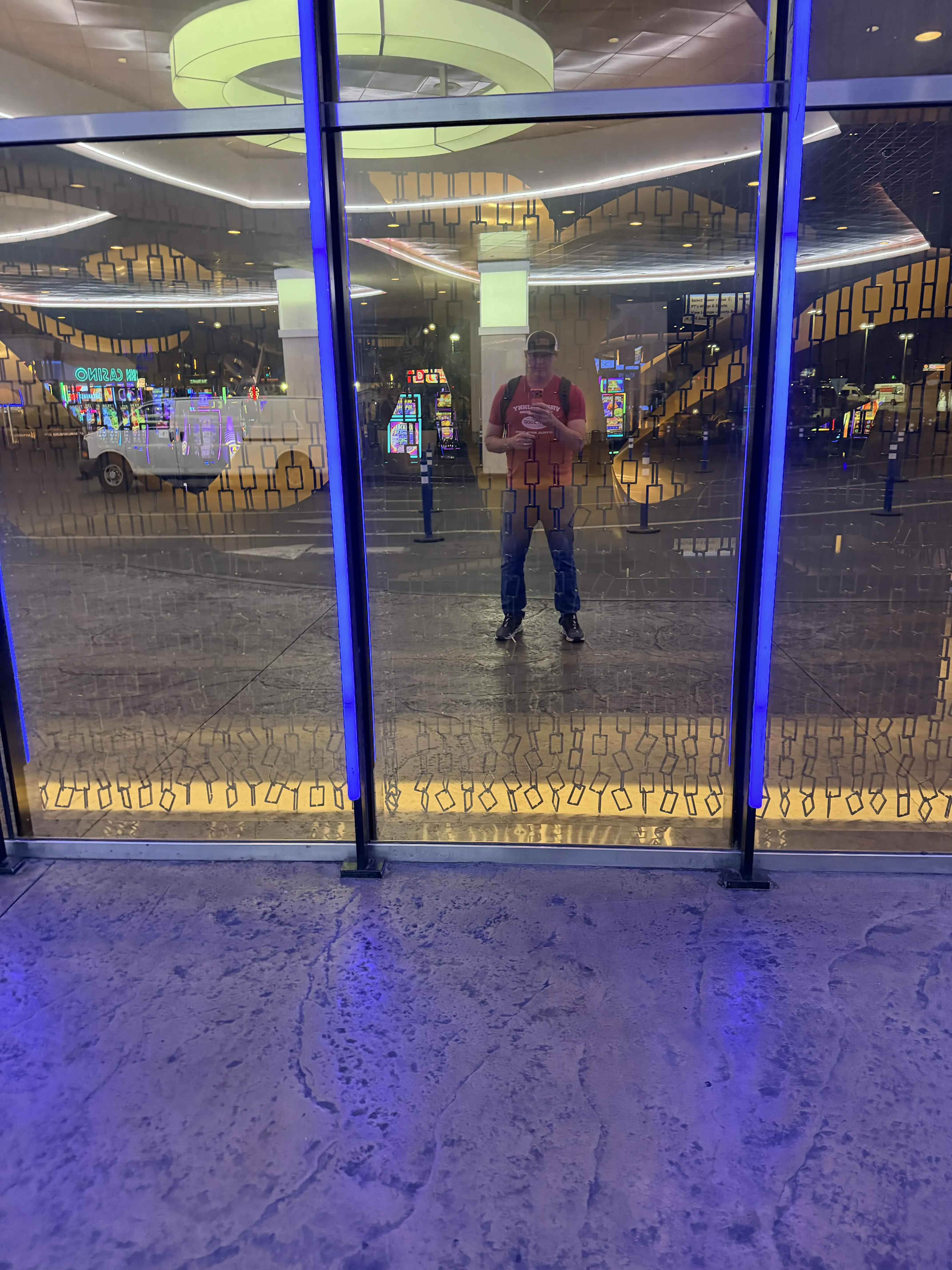
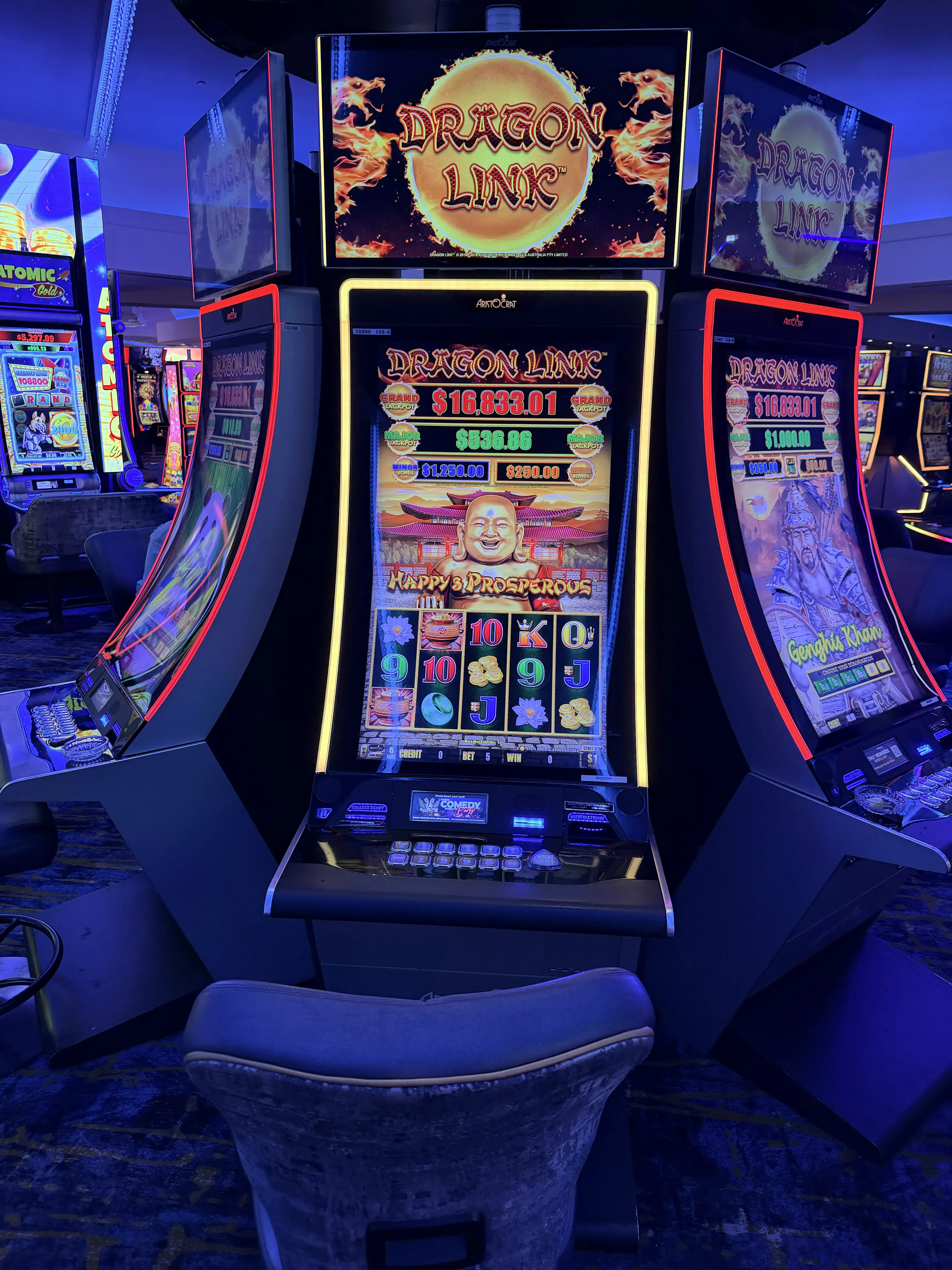
Inside, the Stratosphere was a ghost town staffed by machines. A robot vacuum cleaner worked the empty floor while a polite Chinese-language voice asked nobody in particular to please stand clear. The casino was open. Nobody was in it.
I found the bus stop at the Convention Center. I think. There were seats and an overhang. There was no sign that said "bus stop." No route map. No fare information. In the city that receives forty million visitors a year, the public transit system is a secret. Next to me, an ad on the bench: "HAS YOUR RESTAURANT BEEN INJURED BY HIDDEN FEES?" I was sitting at a bus stop I could barely afford, surrounded by advertisements about the extraction economy.
The bus came. The fare was $2. They took cash. I had a full house — fives over aces.
A Harvard MBA just beat Las Vegas with $7 and a bus stop.
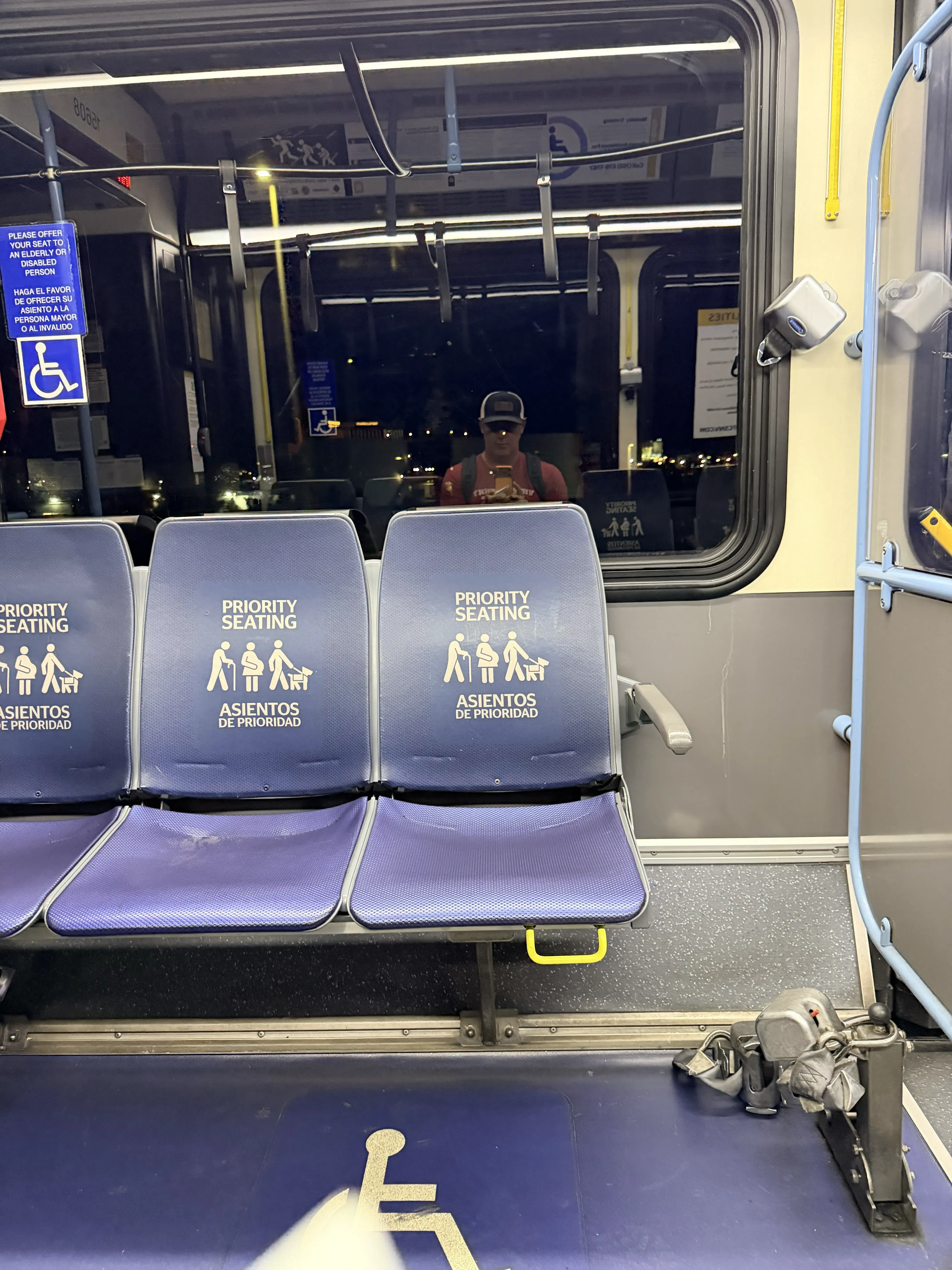
From the bus window, I watched the Sphere glow blue against the brightening sky. Sixty-dollar cabs lined up outside it. I was on a $2 bus with the cheapest seat and the best view in the city.
I arrived at the airport around 5:30 AM with a dead iPhone. And without the United app, there is no way to buy a ticket at the airport. No ticket counter. No kiosk that works without an account. A building whose entire purpose is to put people on airplanes cannot sell you a ticket unless you have a charged smartphone.
I found an outlet. I waited for my phone to charge enough to boot. Then I opened the app and began what should have been a simple transaction: buy a ticket home.
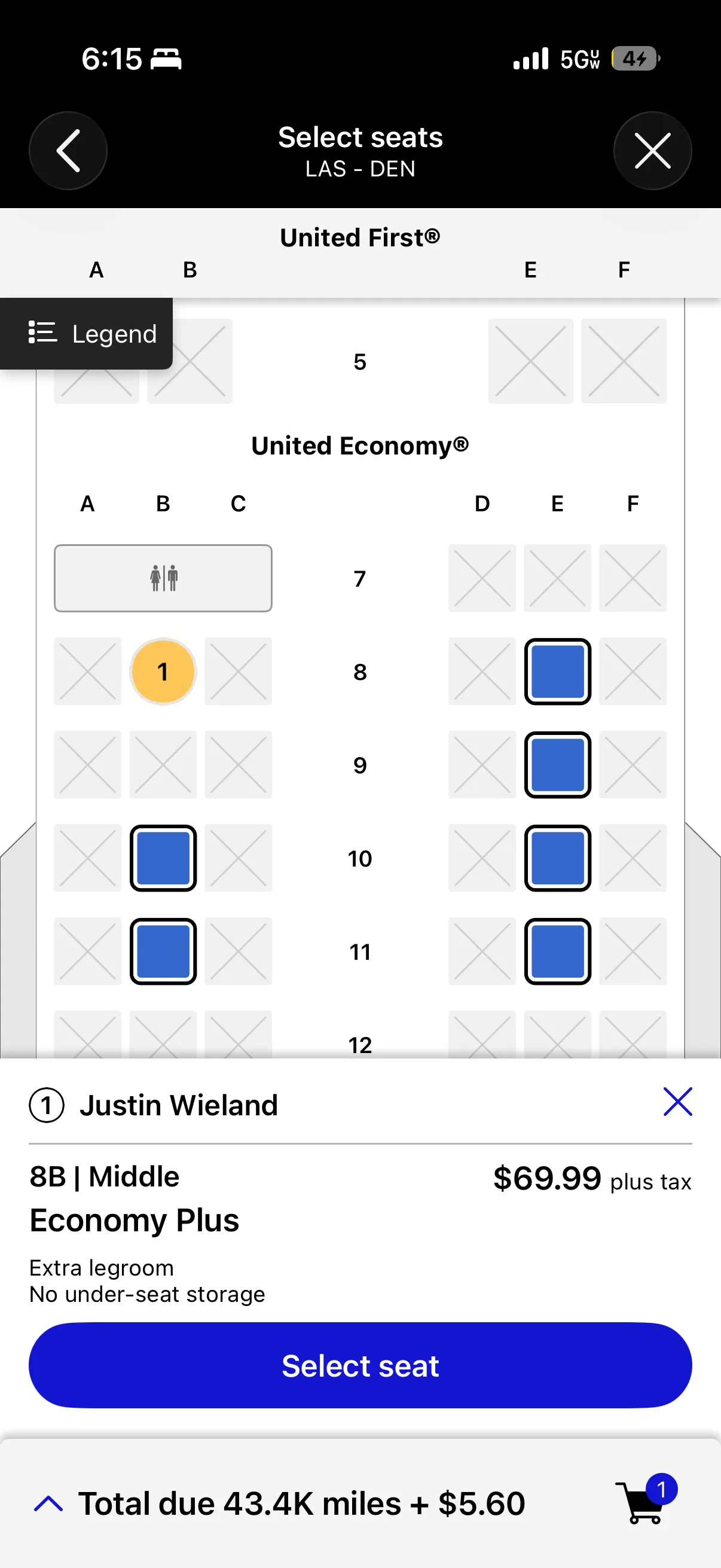
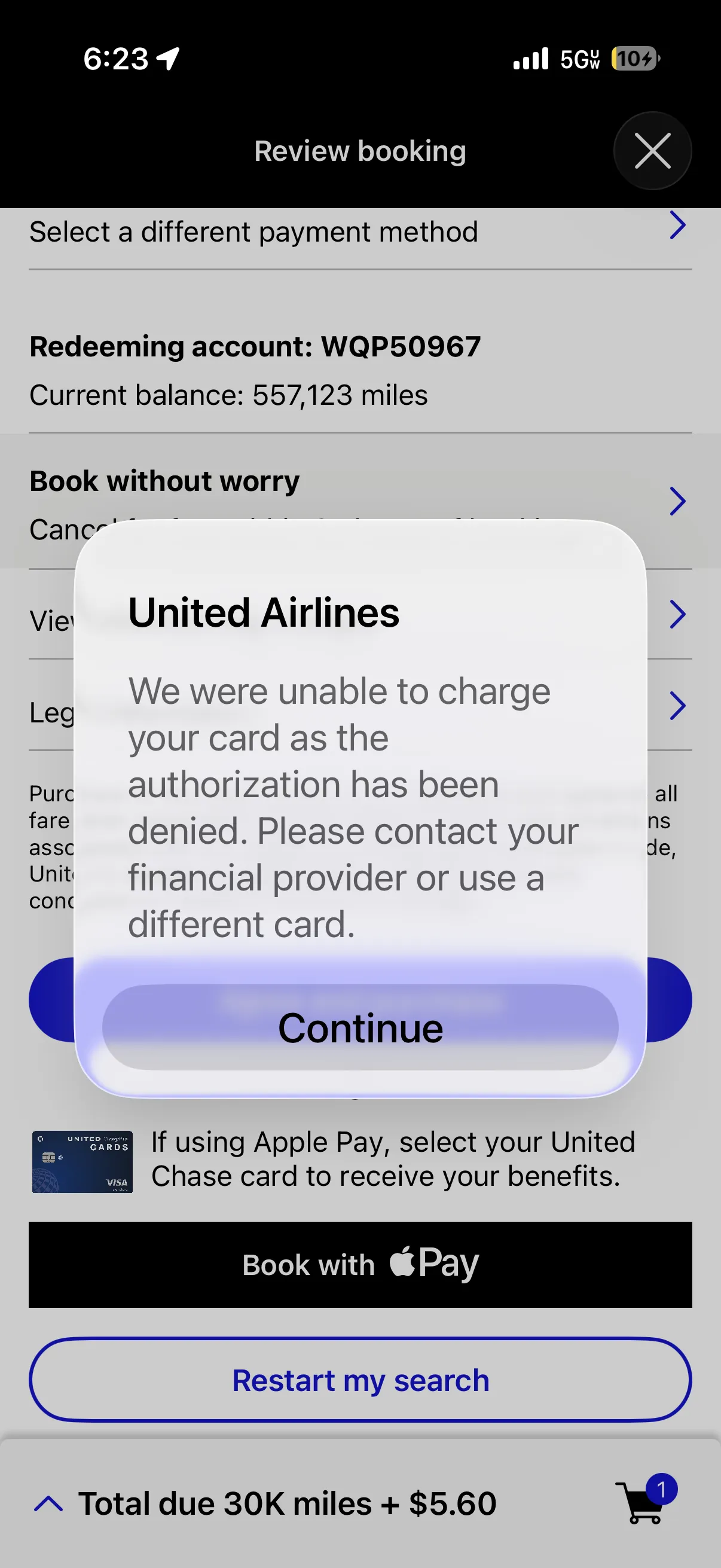
It took five attempts across three payment methods before Apple Pay finally processed a $5 tax on a miles ticket. Five screens of failure to give an airline my money.
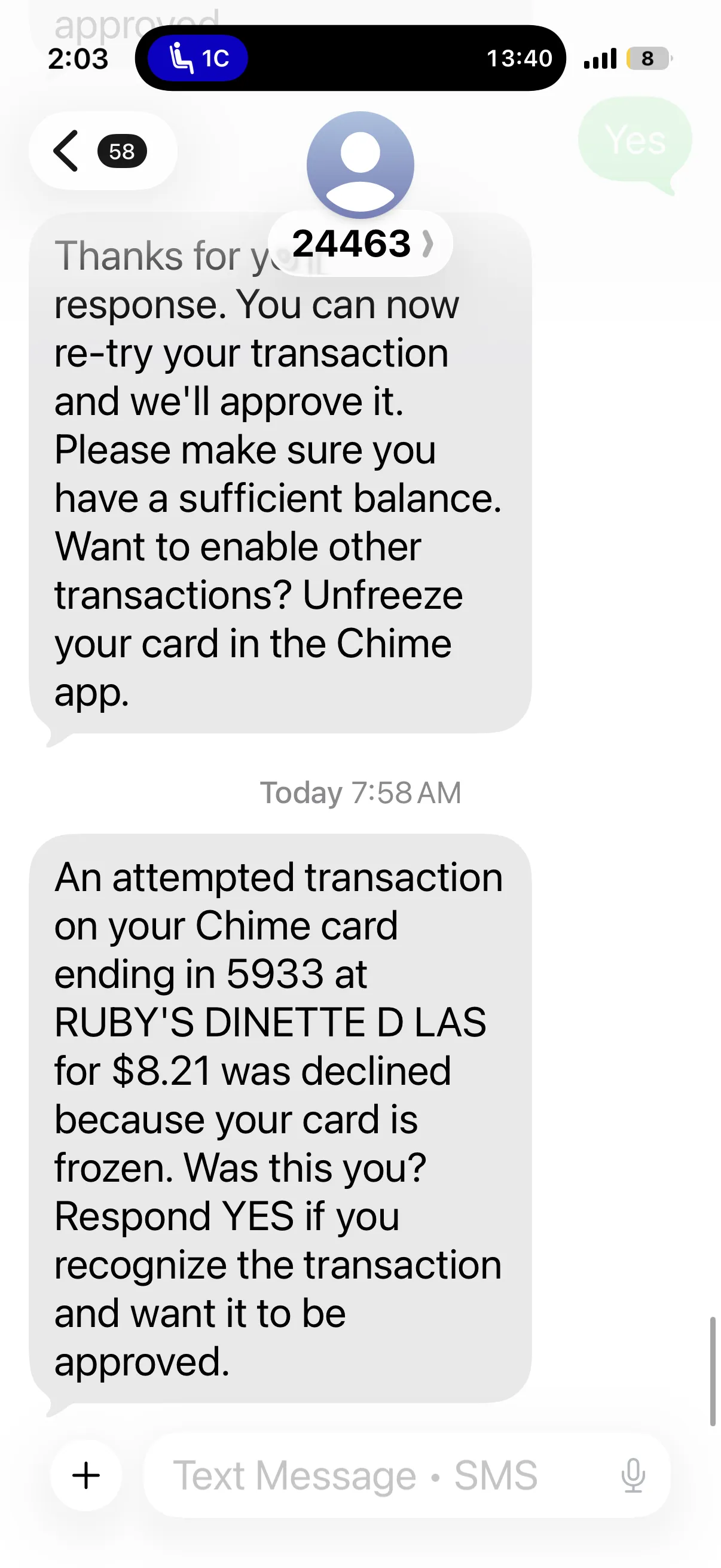
I tried to get breakfast at Ruby's Dinette. Ordered something for $8.21. Chime declined me. My own bank froze my own card and blocked a purchase with my own money.
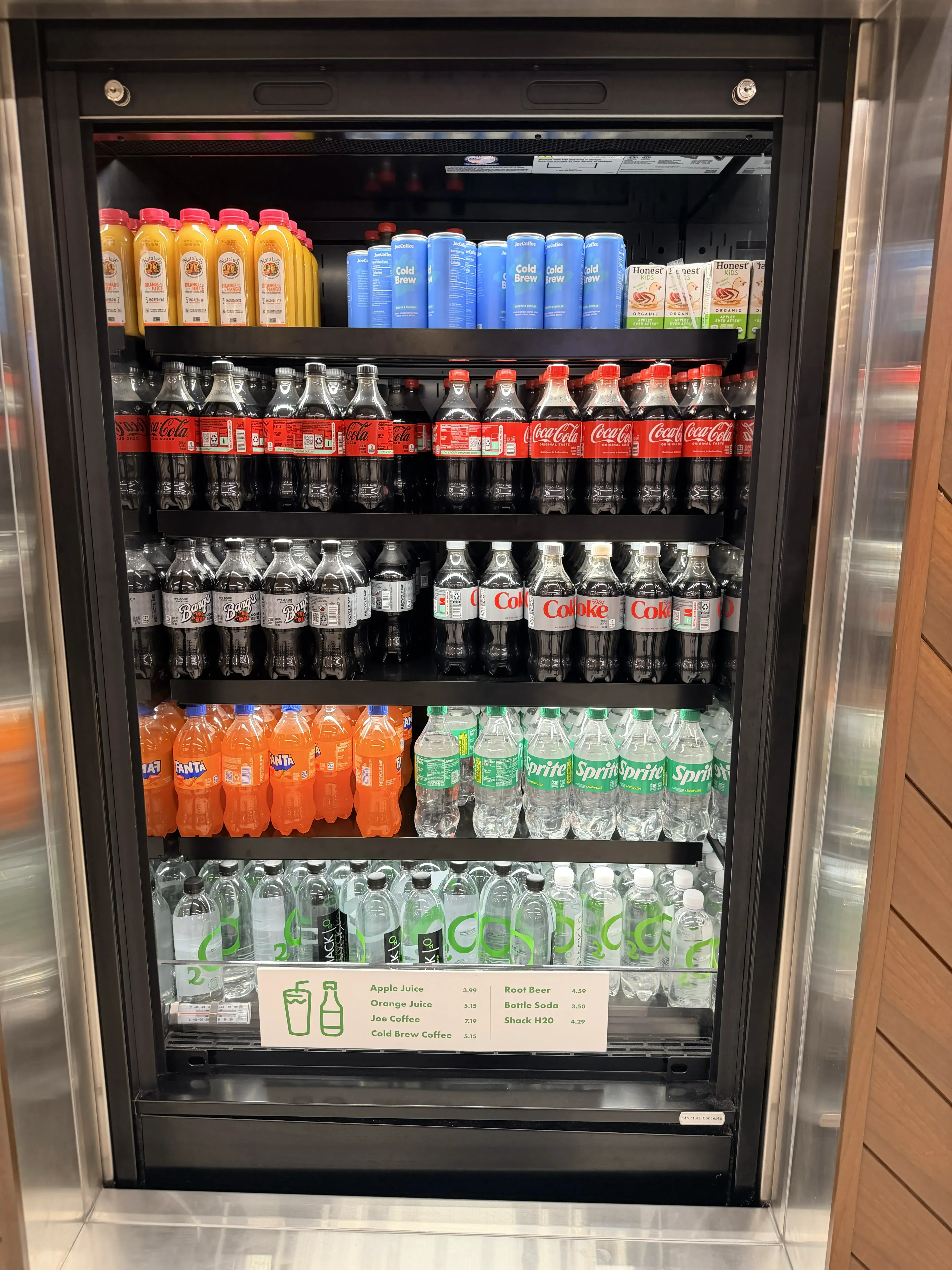
At the Hudson News store, the prices weren't prices — they were hostage demands. My favorite peach ring treats: $10.19. Dollar General price: $1. A Monster energy drink: $7.29. Sunglasses: $164.70. And a Coke Zero: $5.29.
I looked for a fountain drink. There were none. Every Coke Zero in this airport was $5.29. You can't leave. You can't bring your own. You can't negotiate.
I bought the Coke Zero. $5.29.
It just changes a number in a database. That's the most liberated sentence of the entire trip. Eight words. The whole breakthrough.
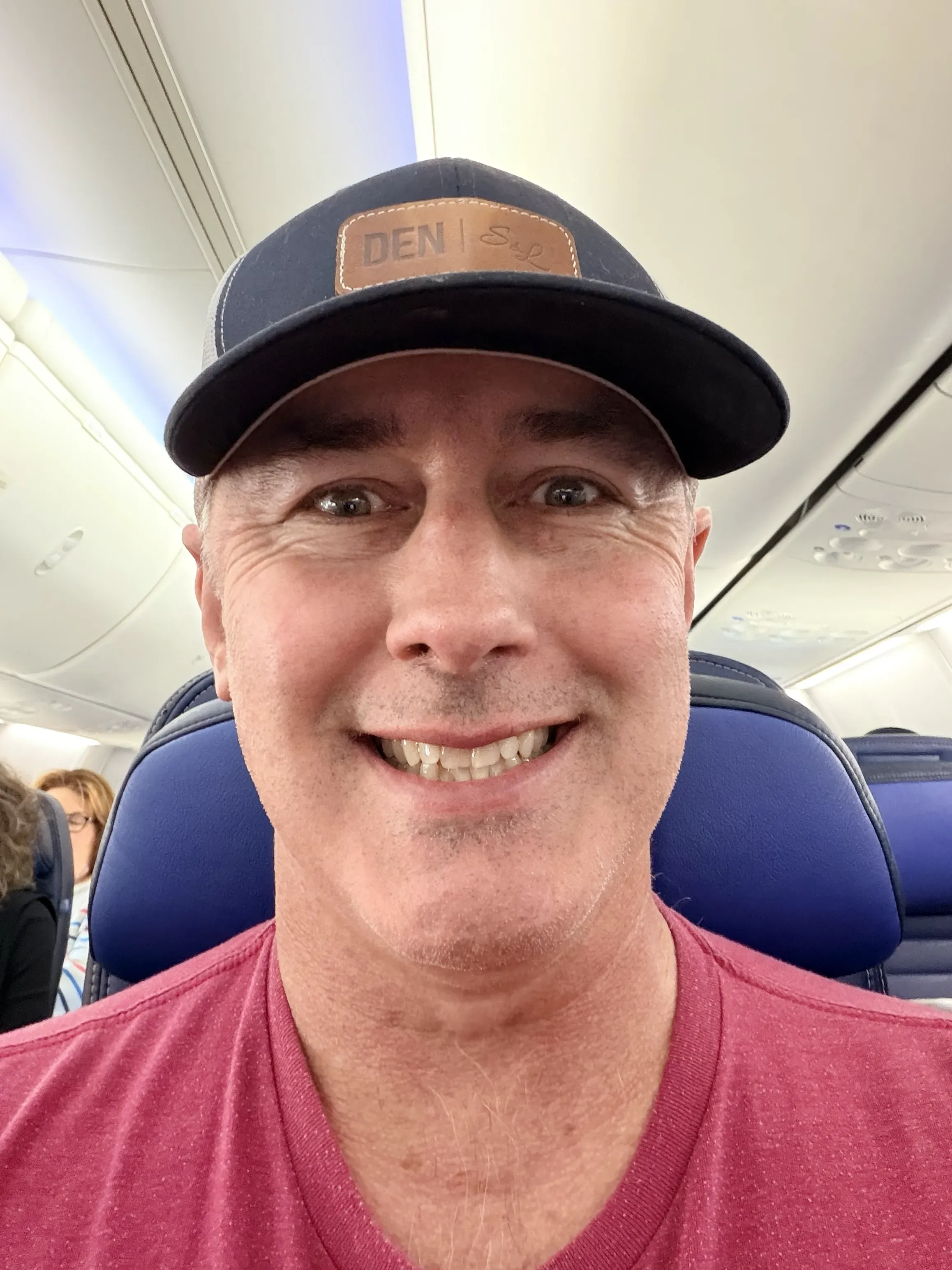
I boarded my flight. I sat in my seat. I wanted to watch something on the entertainment system. It asked me for my birthday. In my own seat. On a ticket they already scanned. Then it offered me a credit card. More data. More extraction.
And I was reviewing the past 24 hours, and it was like this the whole fucking time.
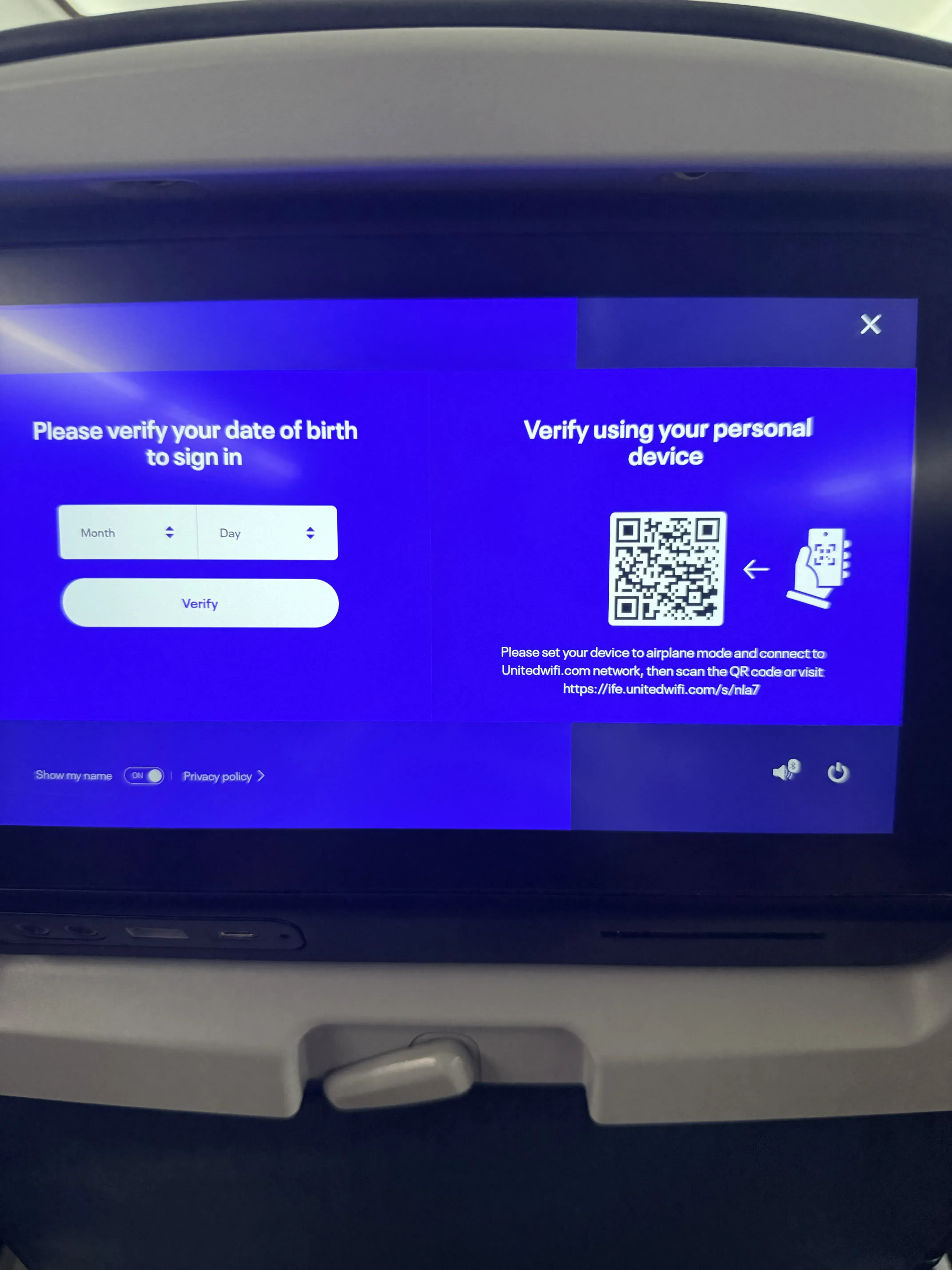
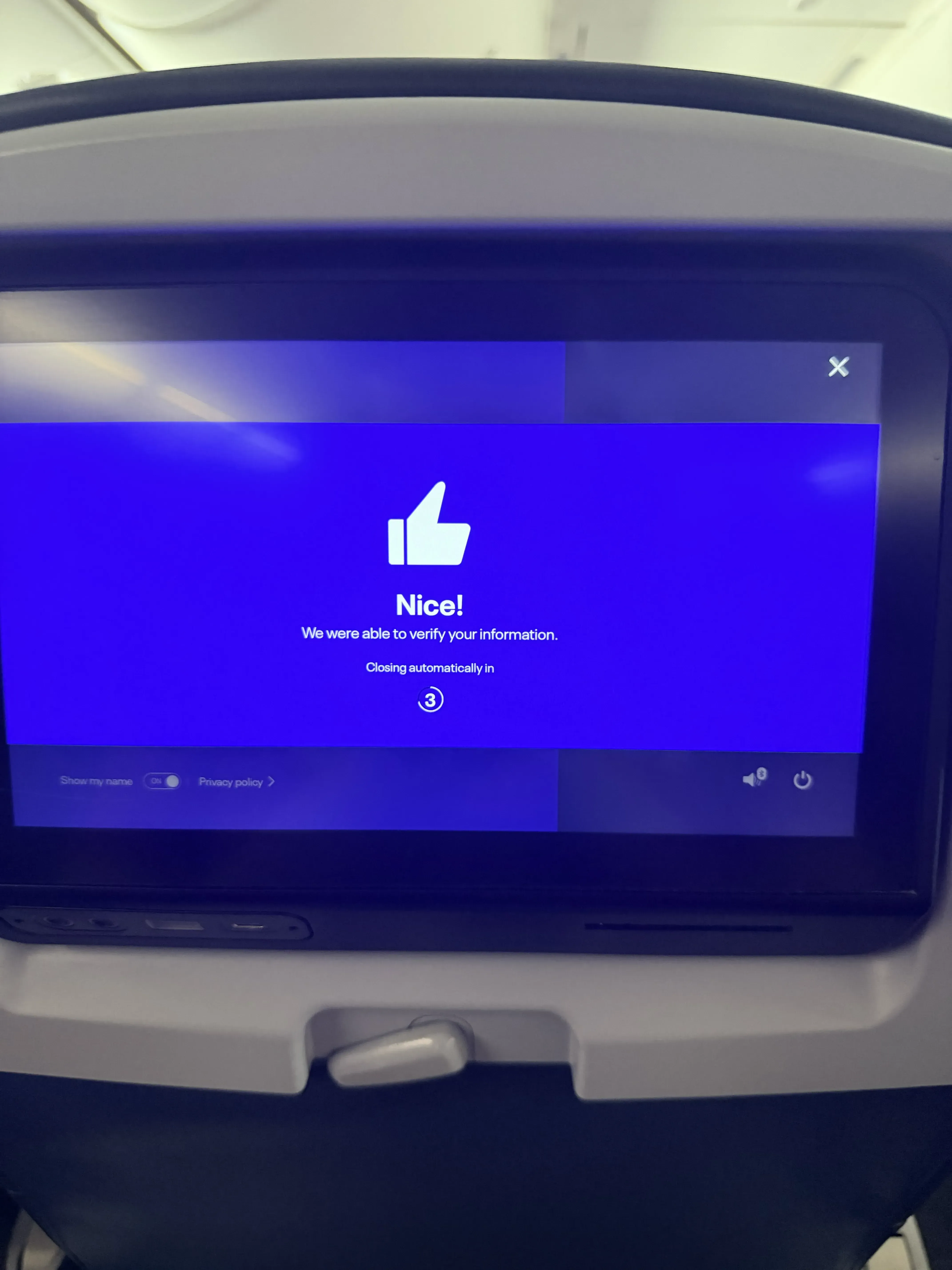
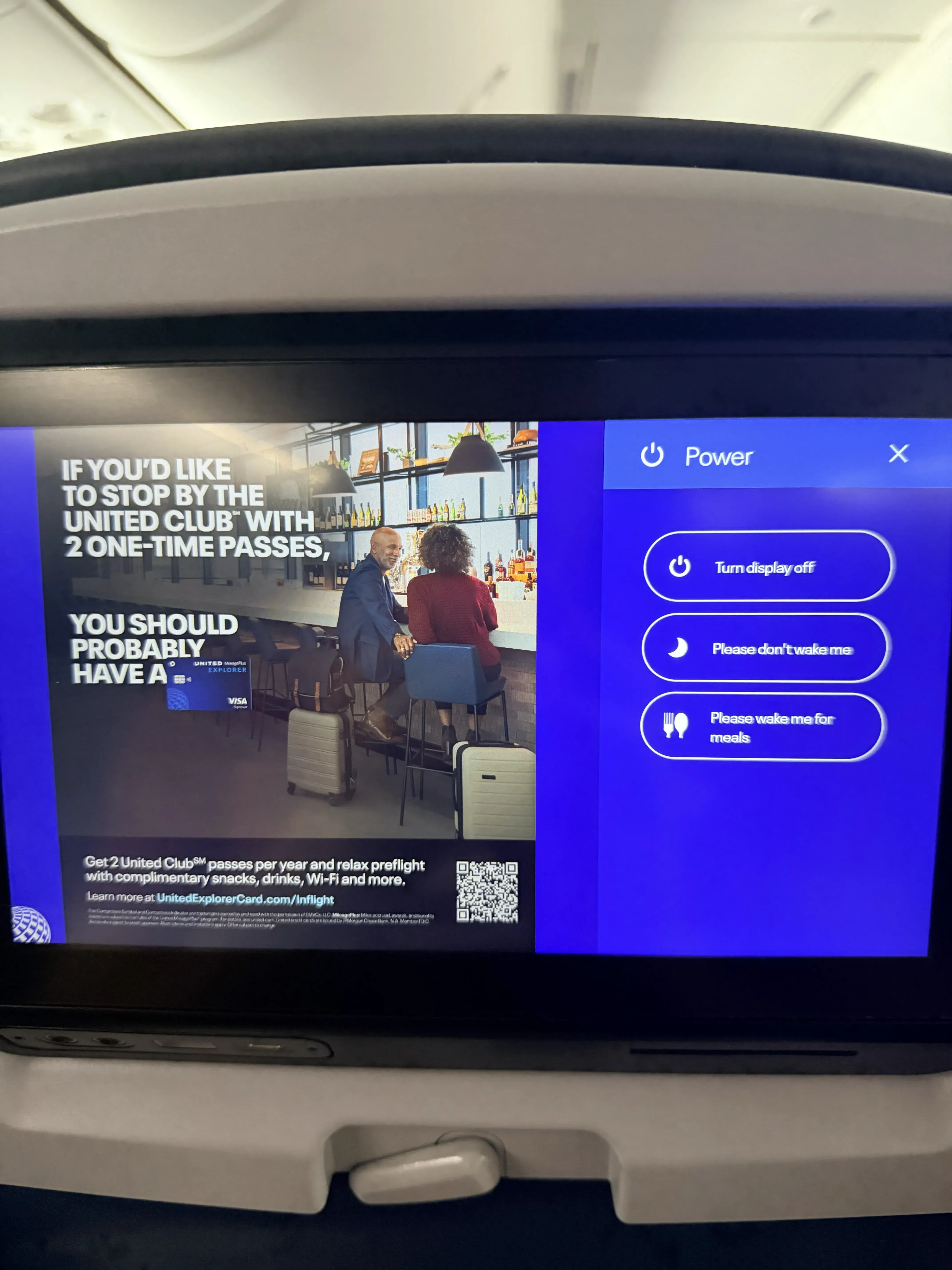
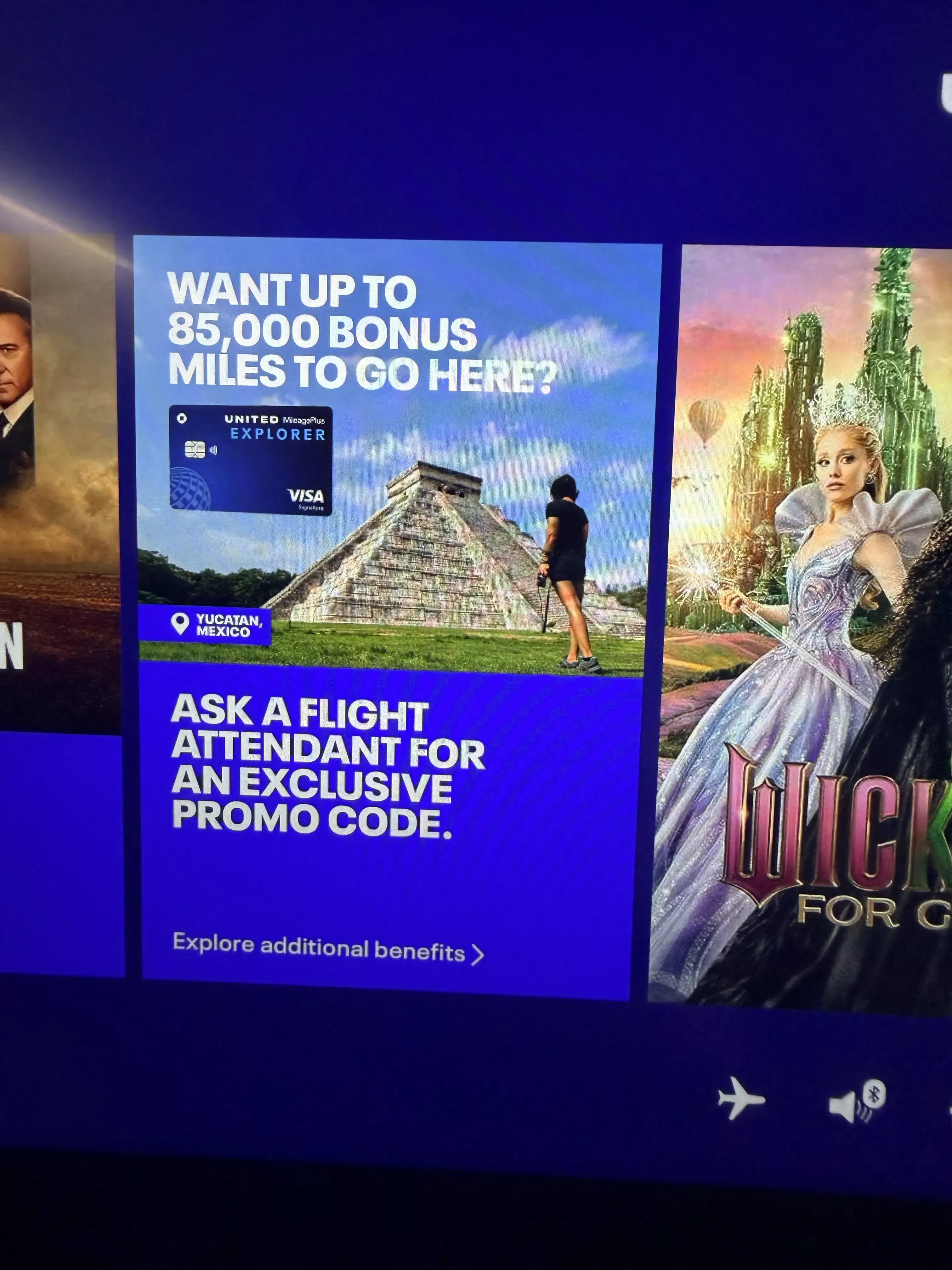
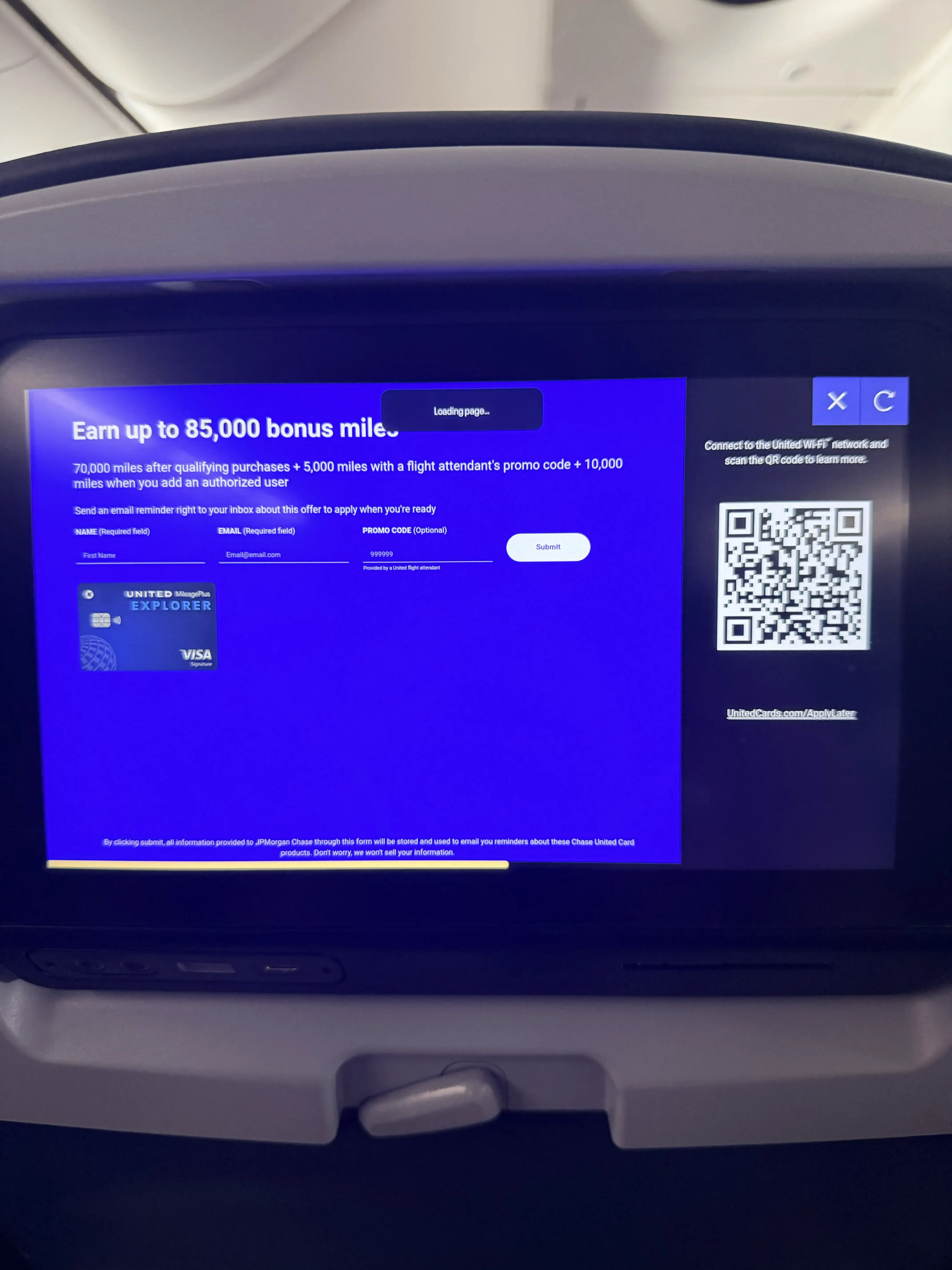
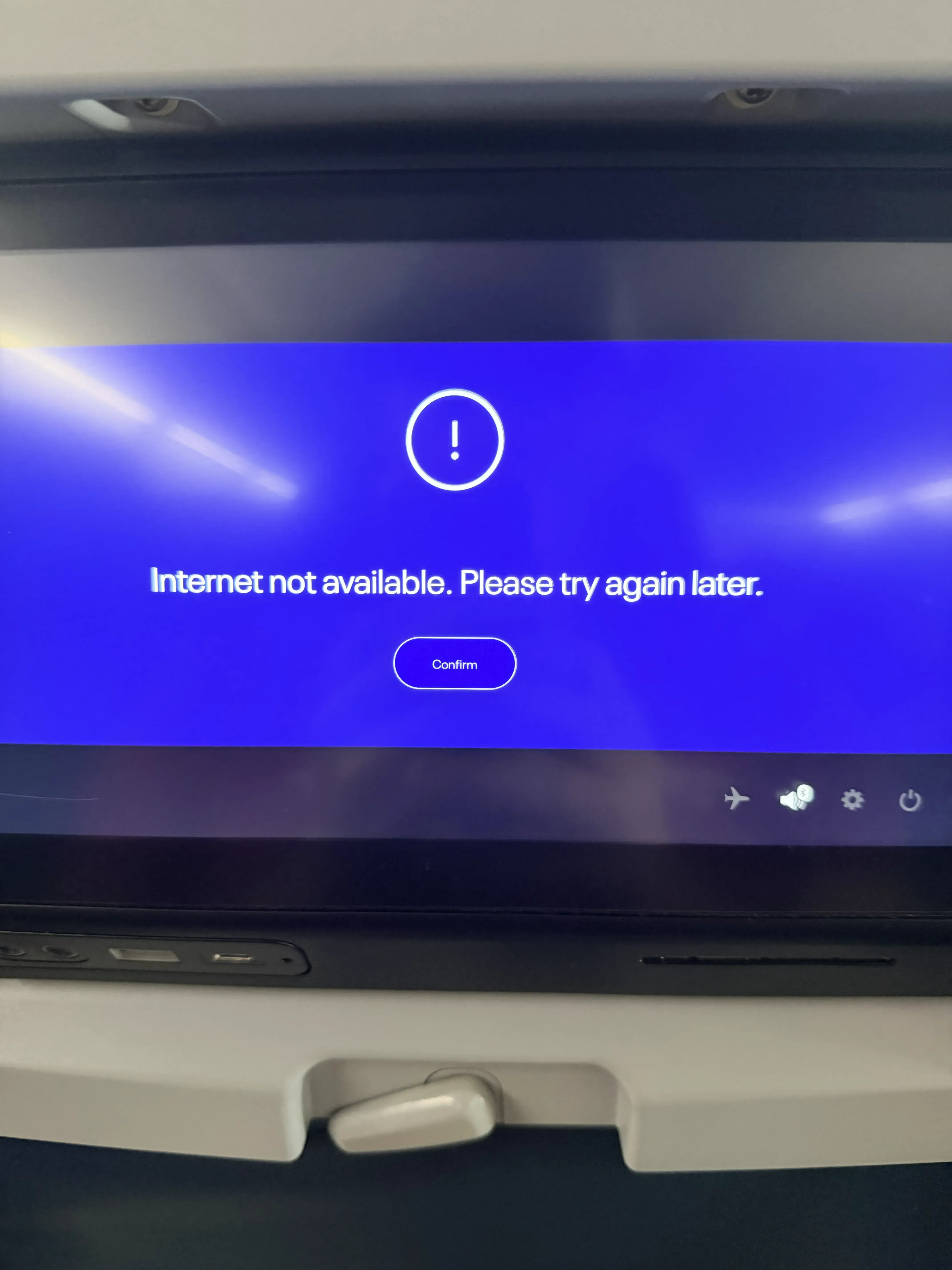
The seatback sequence: enter birthday → identity confirmed → credit card ad → 80K miles offer → enter name and email (which they already have) → internet not available. Six screens. Zero service.
While I was sleeping in a hostel and dancing at the Stratosphere and riding a $2 bus, the financial system was busy.
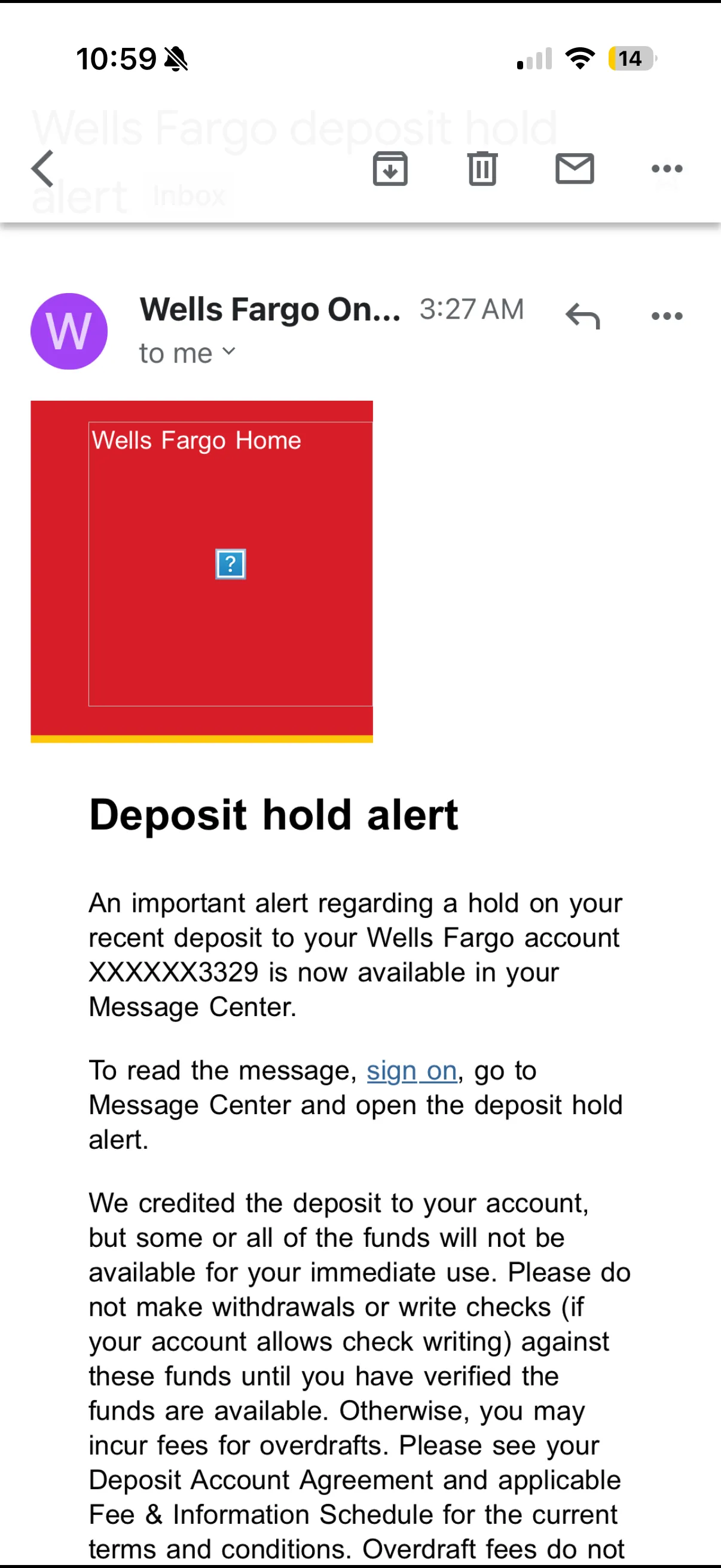
My brother Ben sent me $500 on PayPal. That's why I survived this trip. Not because any system worked — because my brother did.
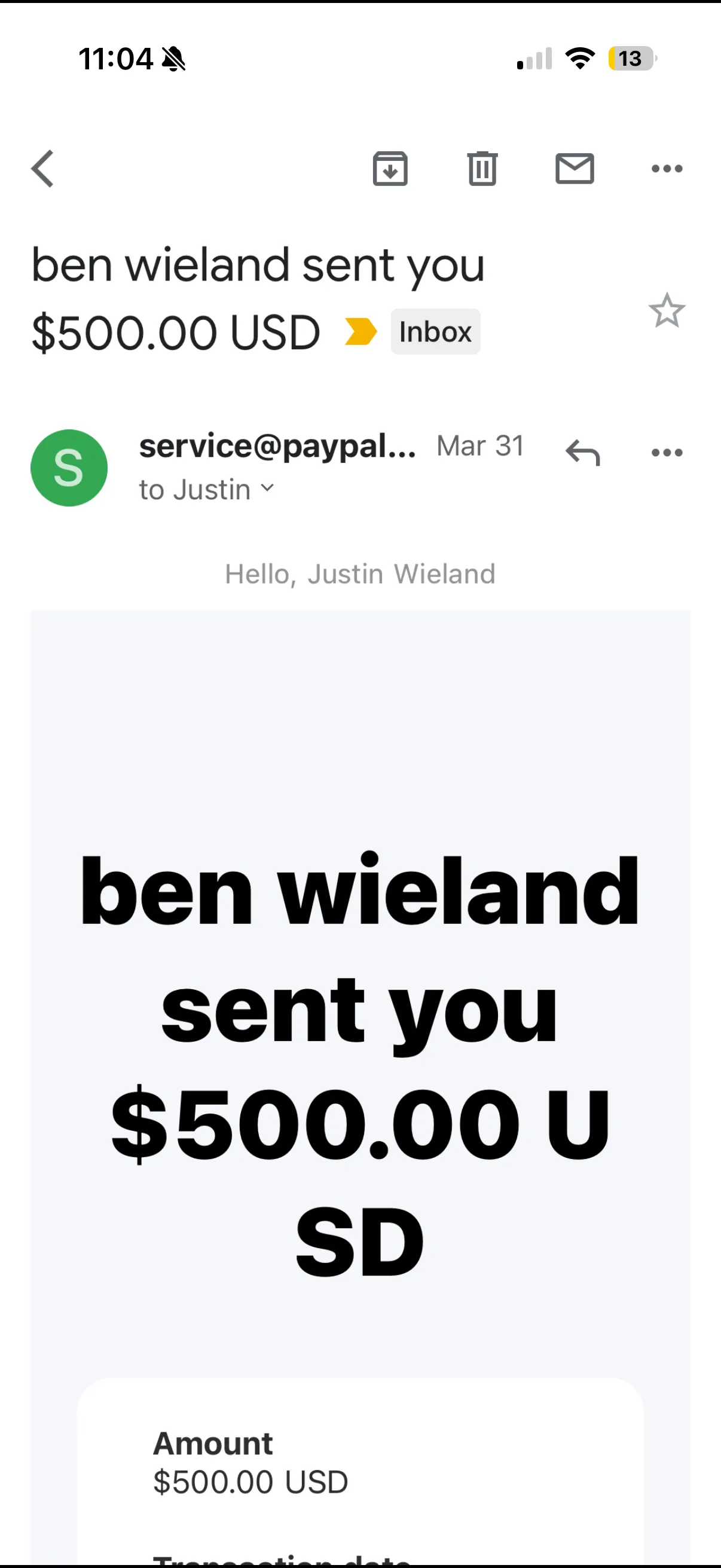
He sent it because Wells Fargo was holding my mother's $400 check hostage. Meanwhile, PayPal tried to auto-reload $50 from my Chase checking account. Chase declined. PayPal's response: they removed my bank account entirely. Not suspended — removed. One declined transfer and they severed the connection.
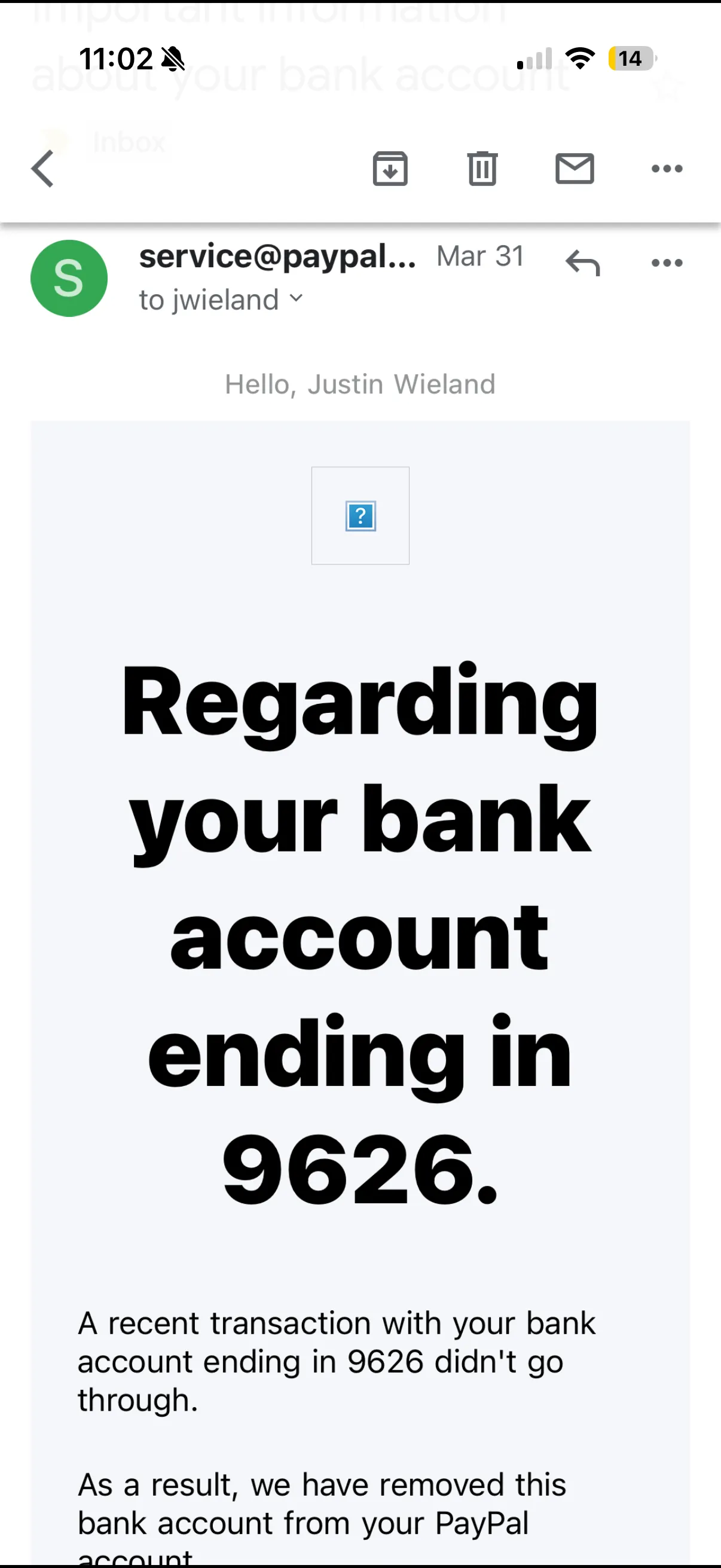
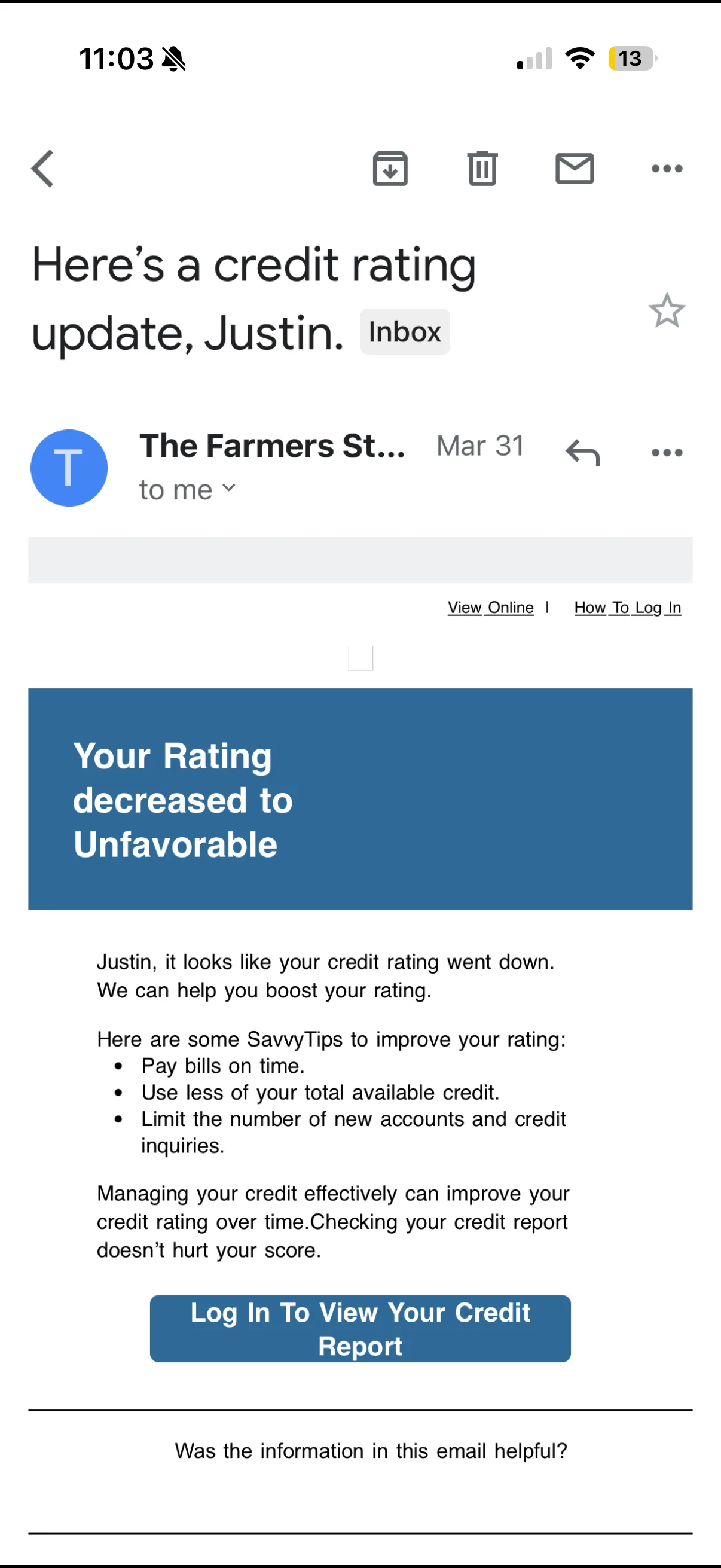
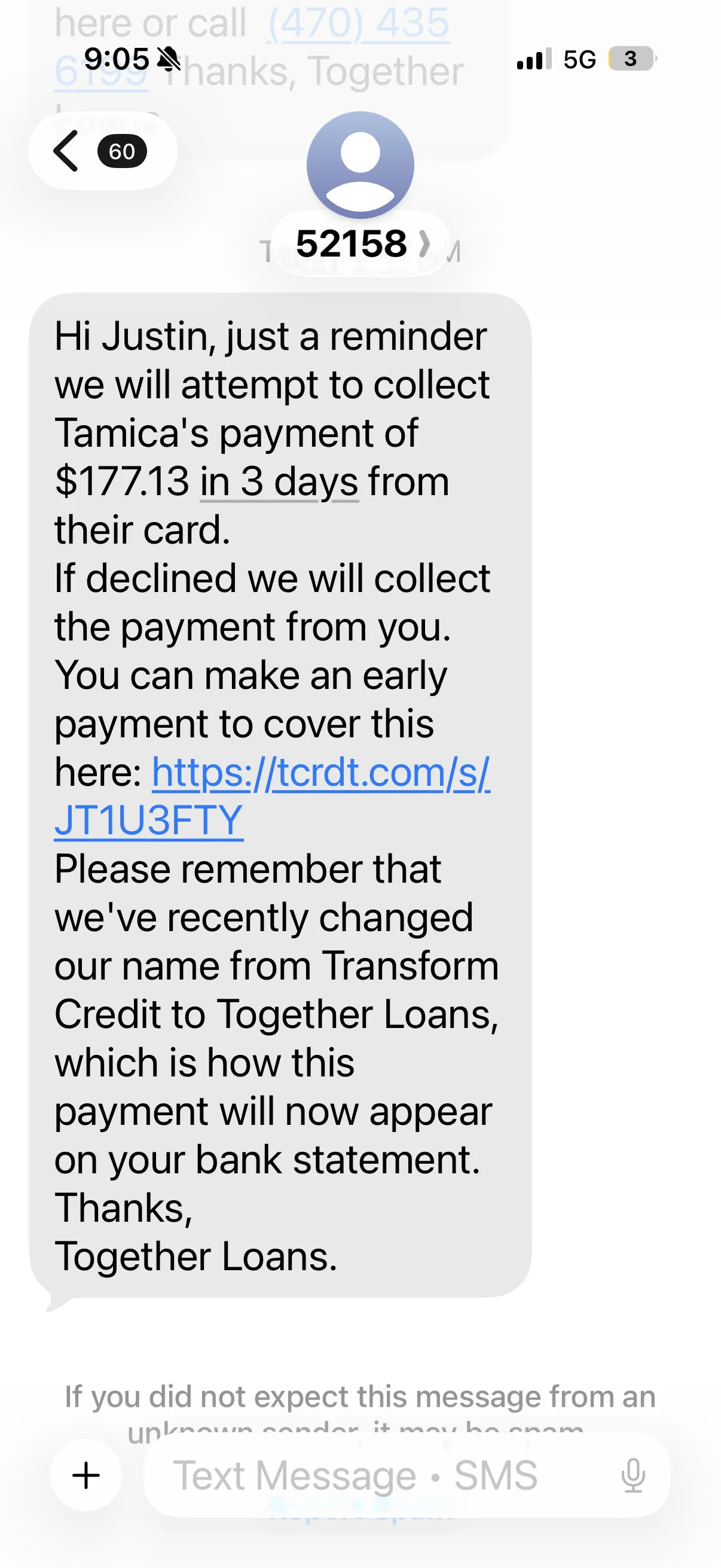
One hold triggered a cascade failure across every platform I touch. That's not bad luck. That's the system working as designed.
And somewhere in the middle of this cascade, I paid Tim Clawson $340 for car speakers. Through Facebook Messenger Pay. Which pulled from PayPal. Because Tim is locked out of both Chime and CashApp. Two people who both have money, trying to complete a simple transaction, routed through Facebook and PayPal because the simpler options won't let them in. Three platforms to pay a man for something he already installed in my car.
My connecting flight has a long layover. I see the sign: United Club. Usually domestic first class doesn't get you in. I bought my ticket with miles. But I walk up and try.
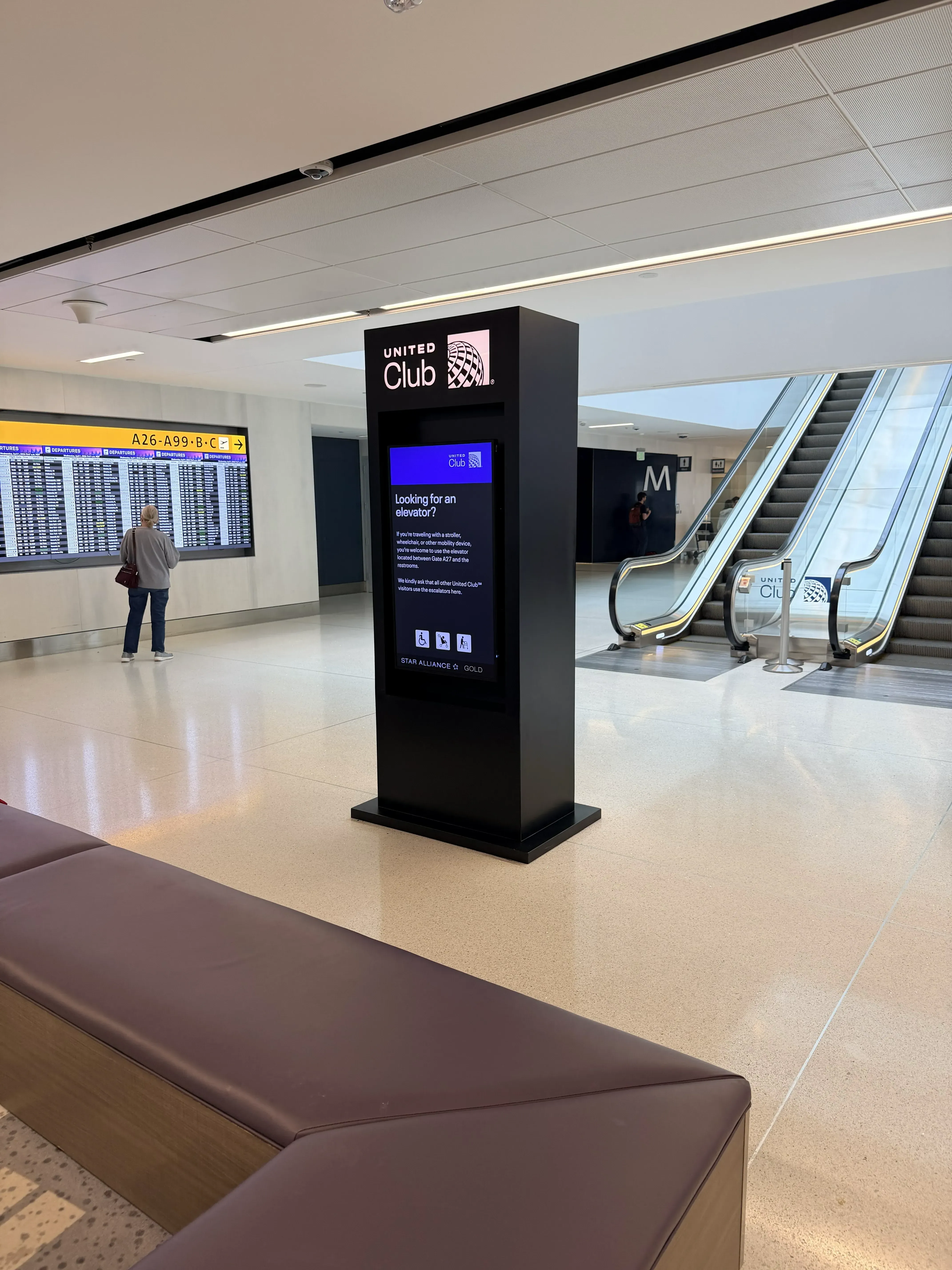
They let me in. Because of my credit card — the United card that charges an annual fee whether I use it or not. Two complimentary lounge passes a year. I didn't know that. I've been paying for this room and never walked in.
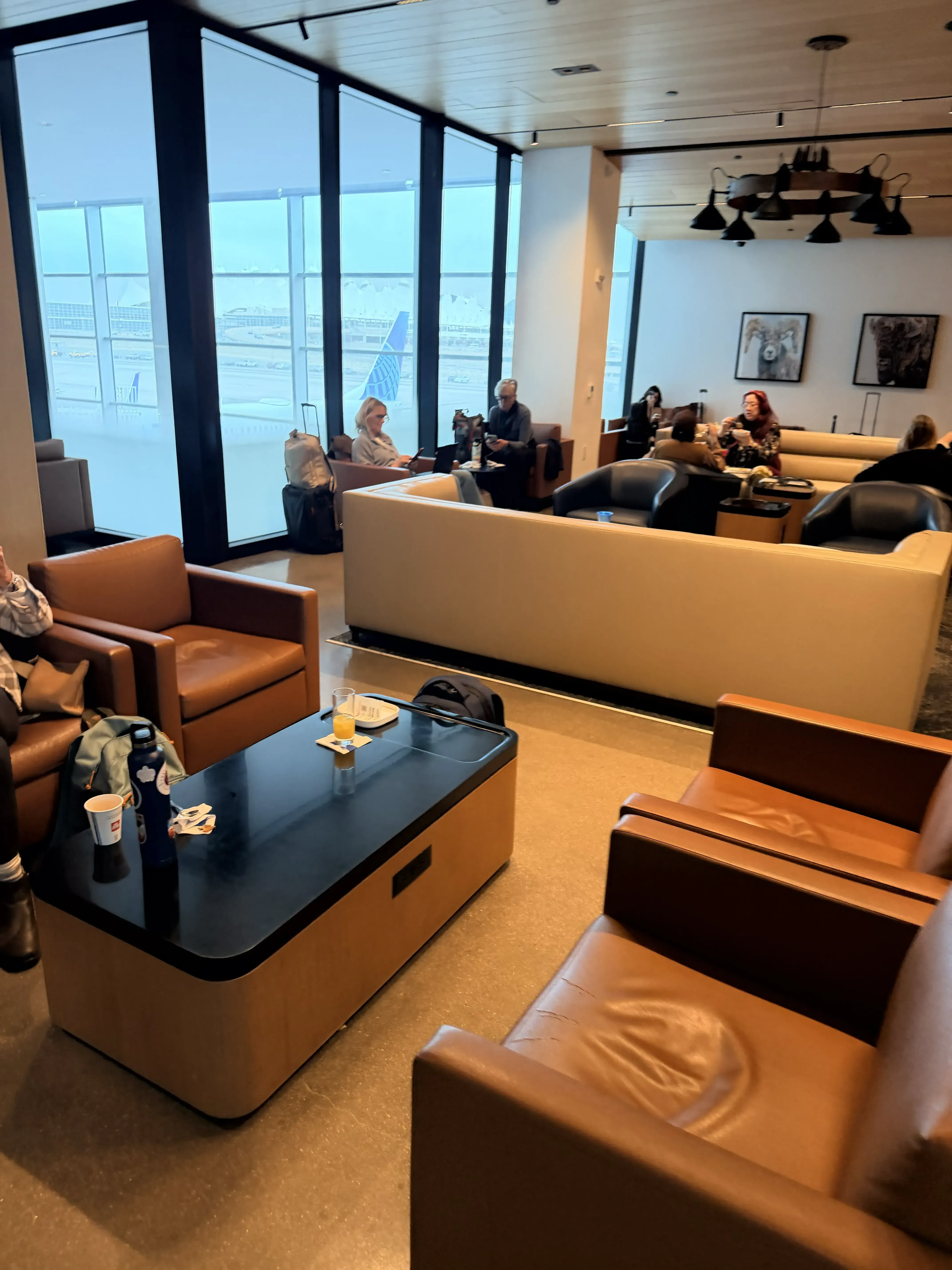
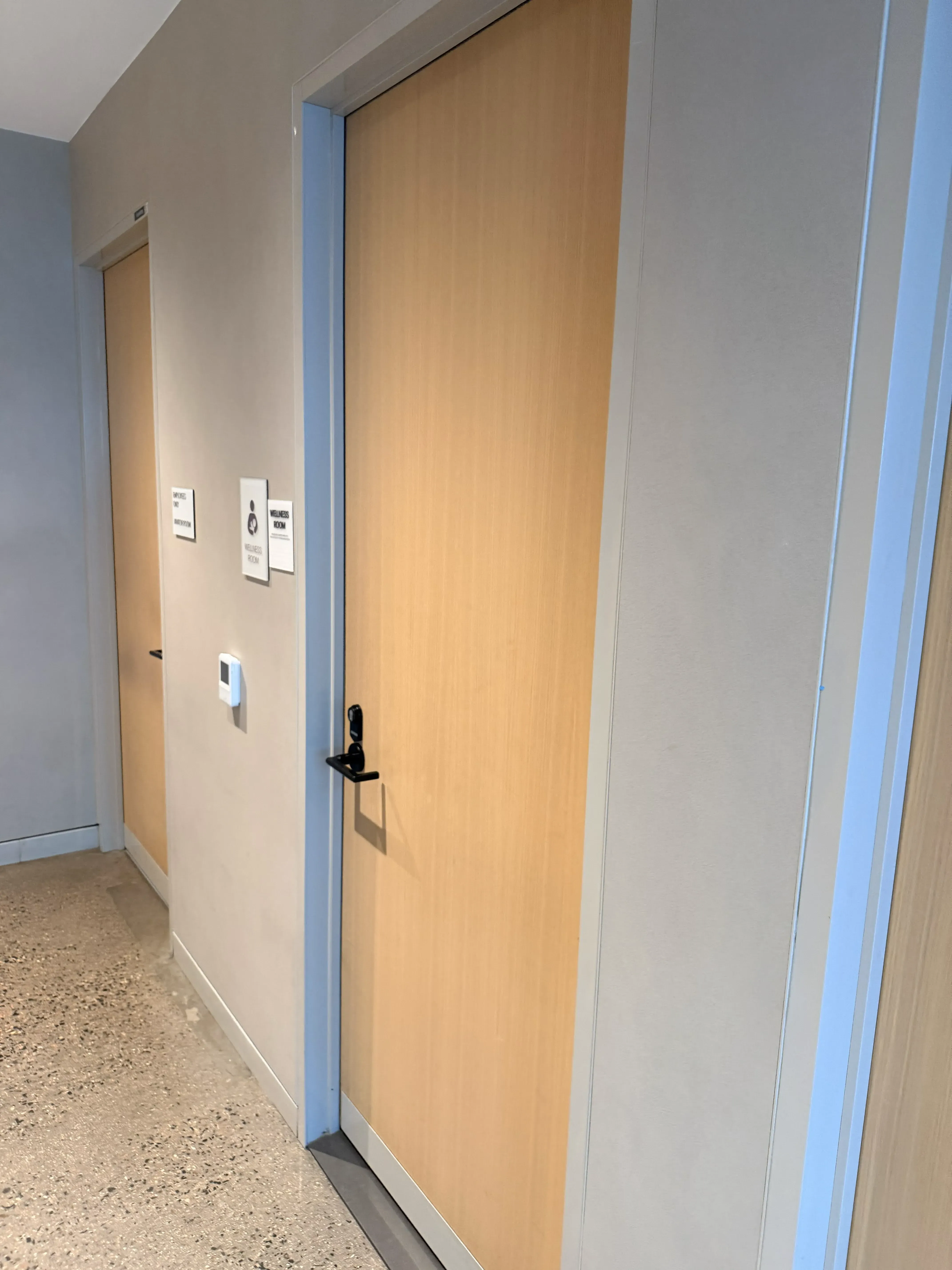
Polished concrete floors. Warm pendant lighting. Blue leather chairs in private wooden alcoves. A wall of stacked firewood that exists purely for ambiance. Floor-to-ceiling windows. And not a single headrest in the entire room. You can sit, but you cannot rest your head. You cannot nap. That is not an accident. Beautiful furniture designed to make you feel special walking in and restless enough to walk out before you cost them anything.
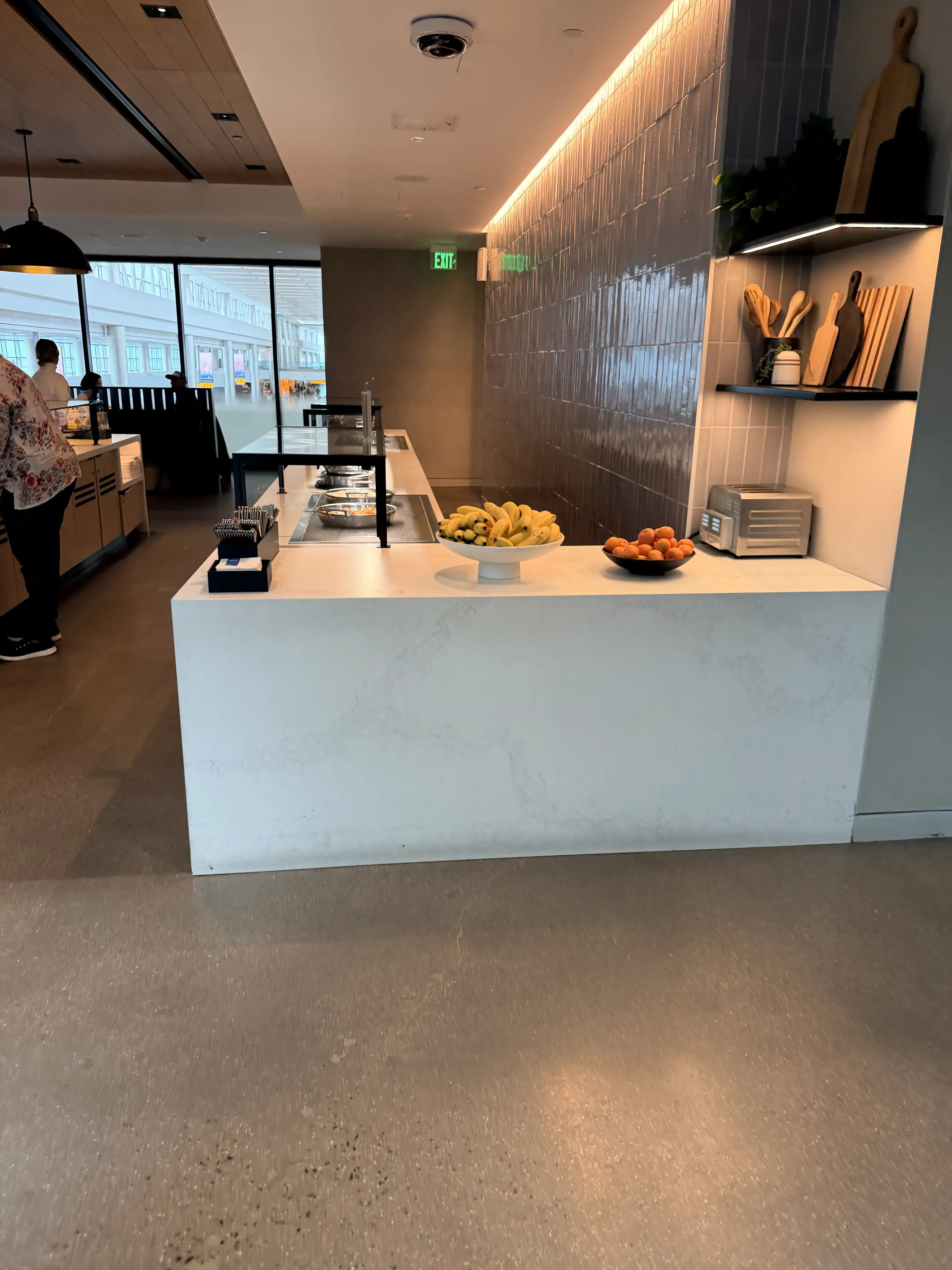
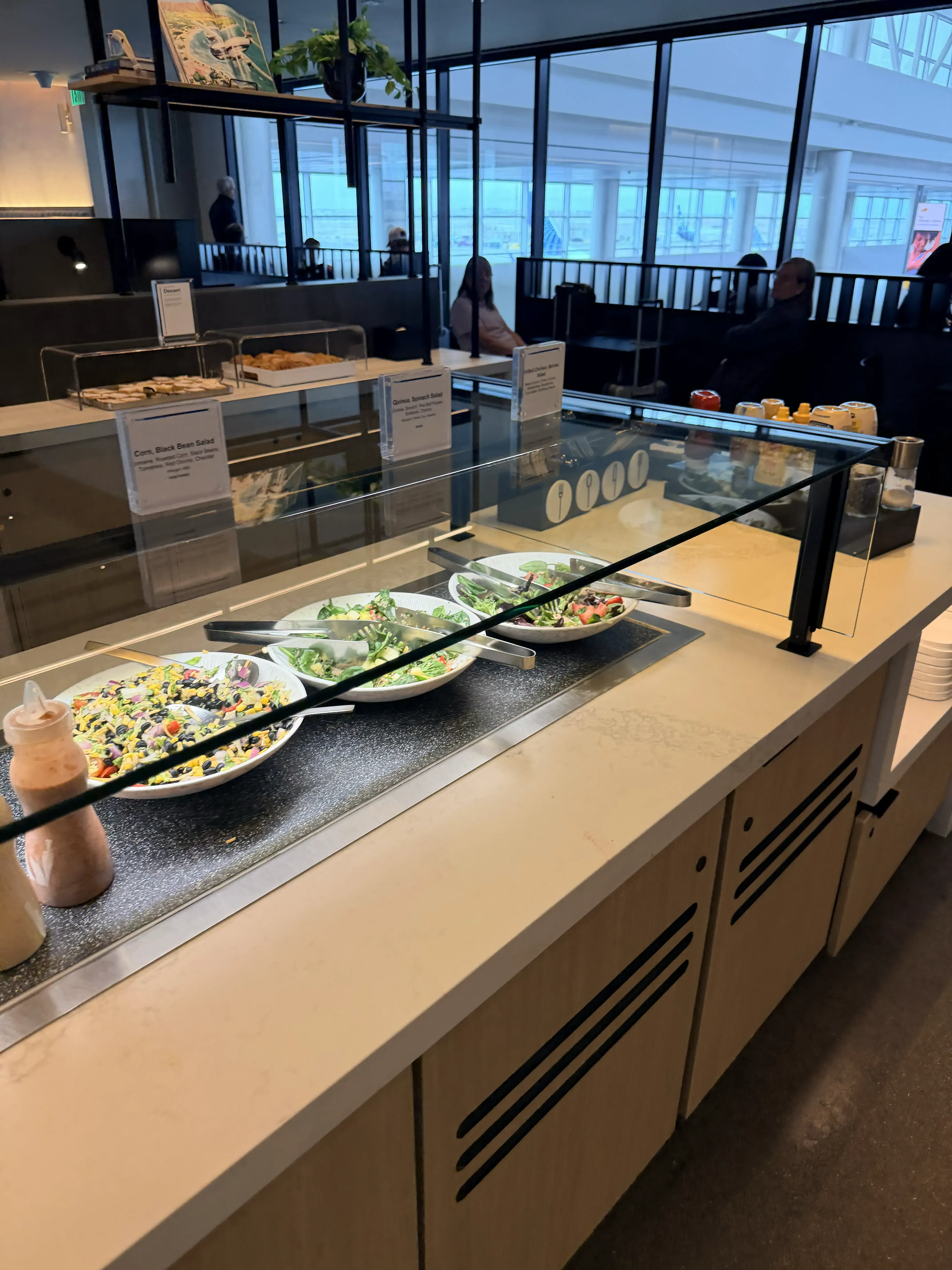
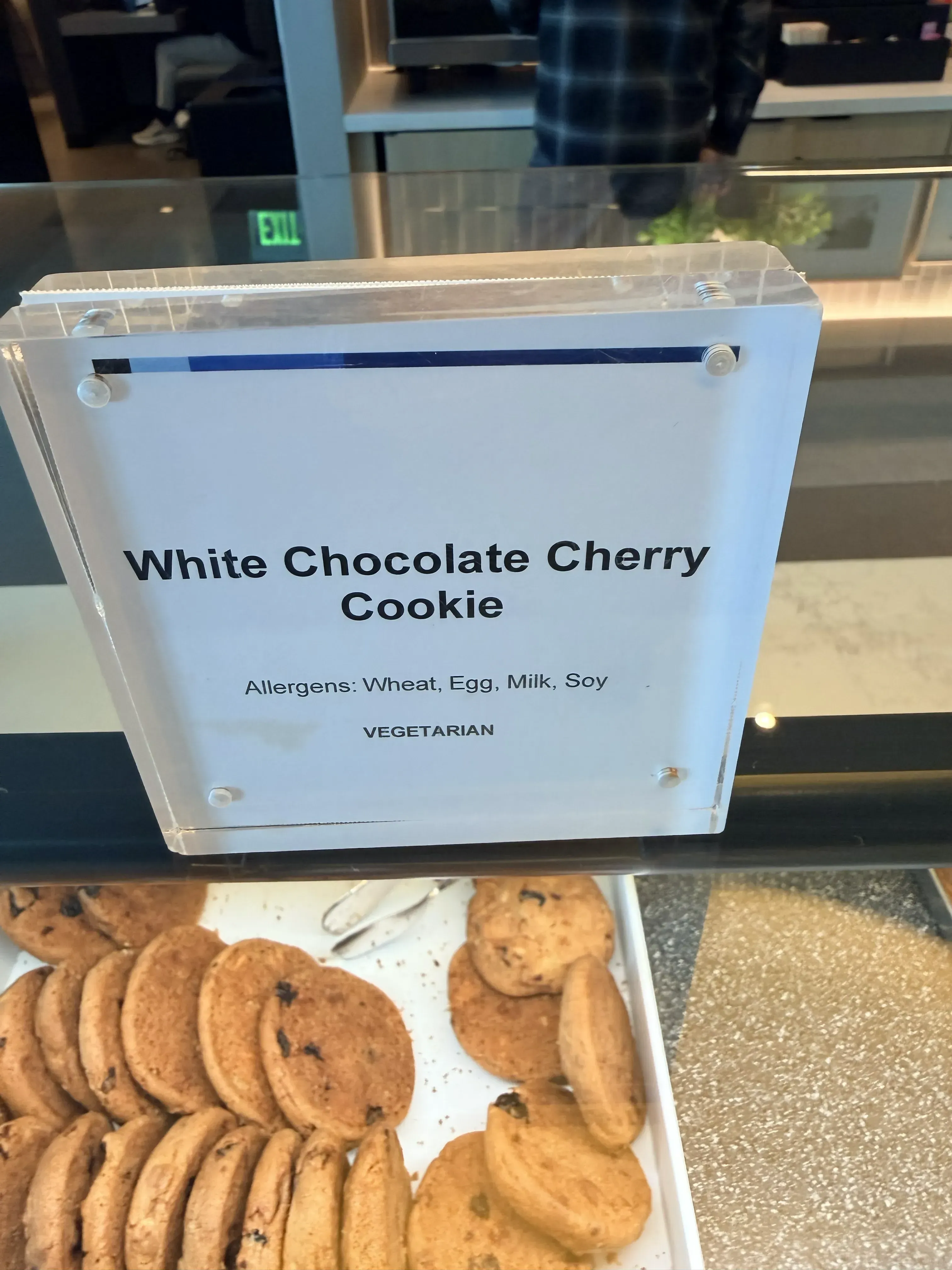
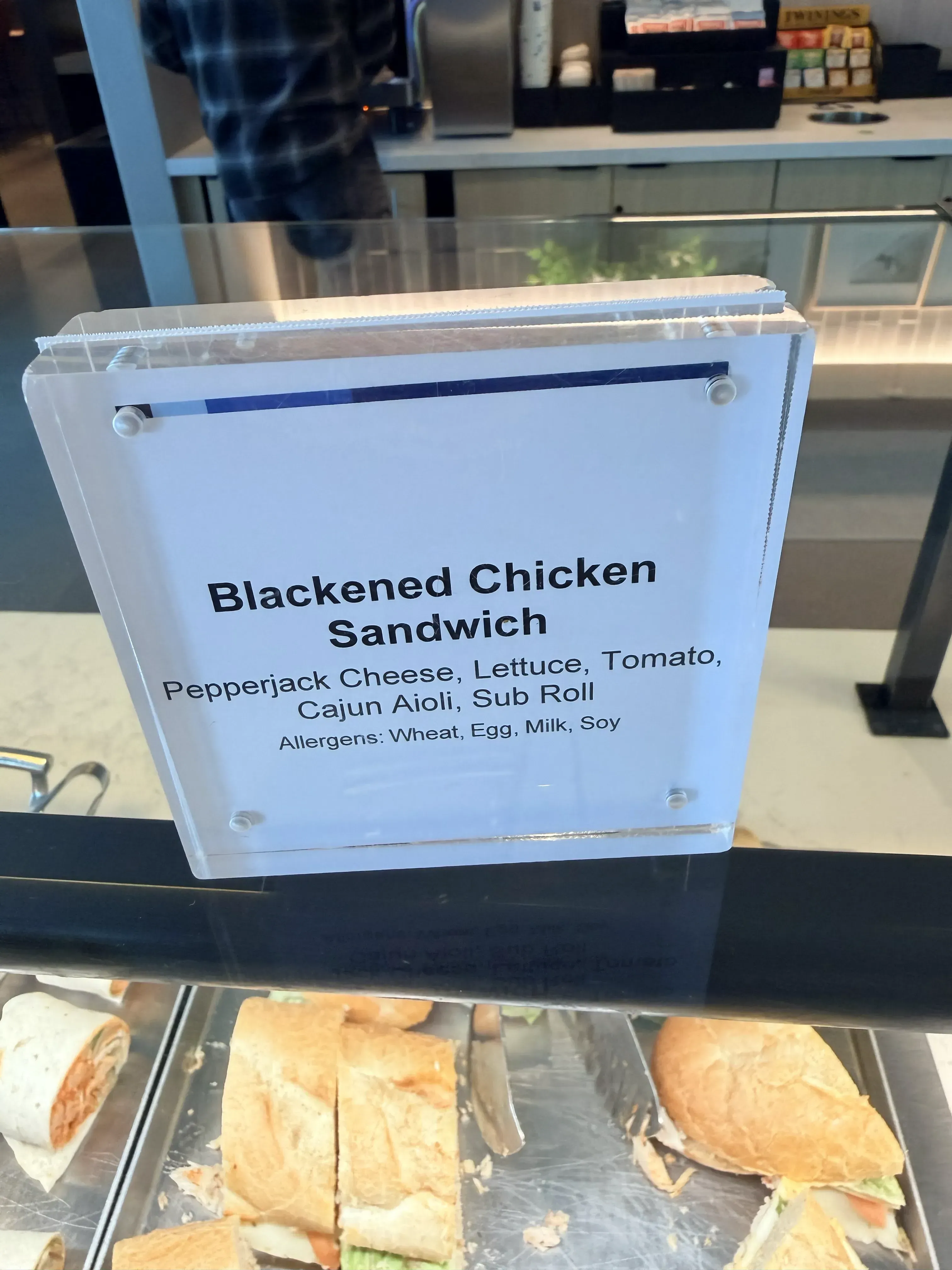
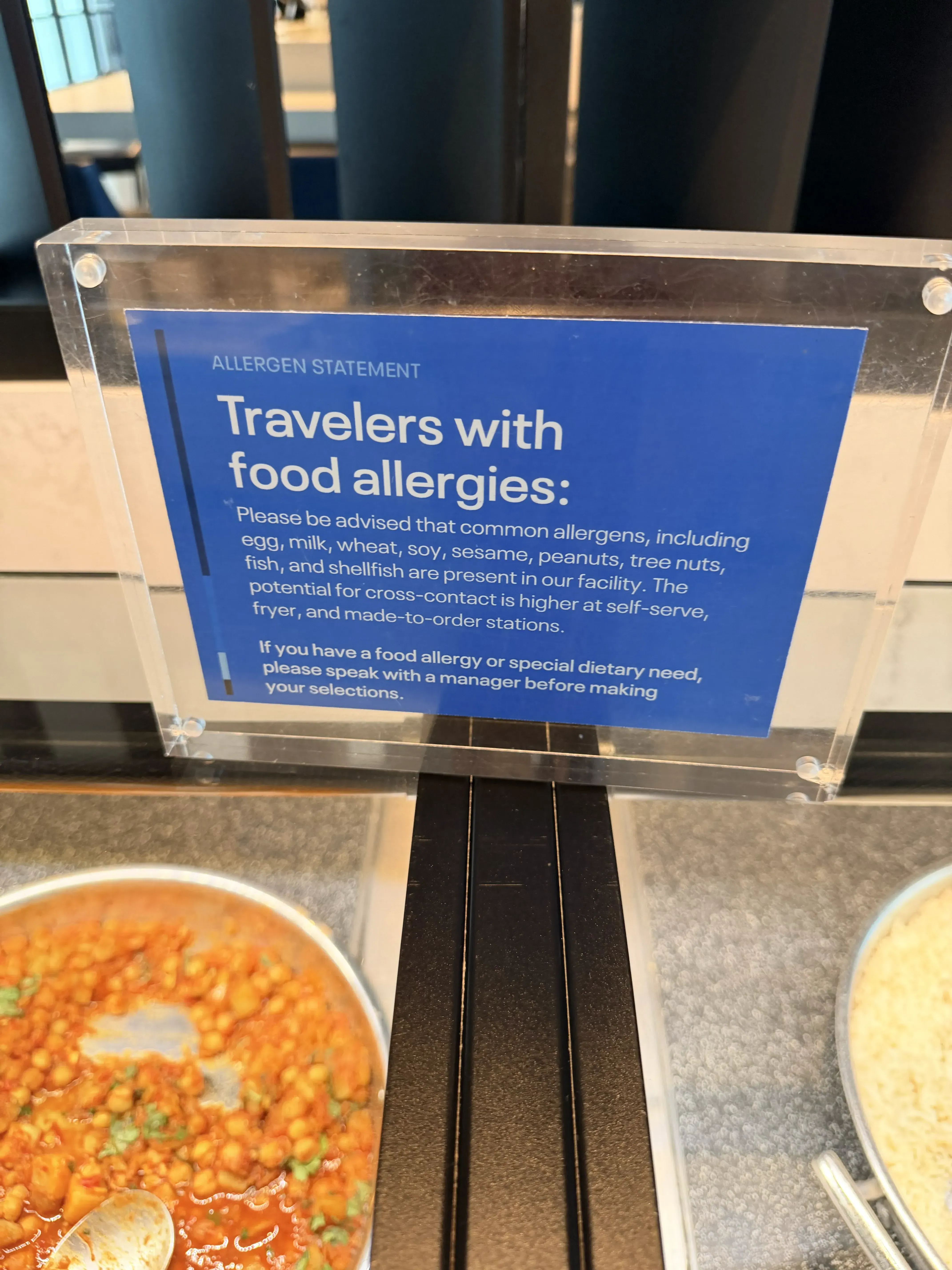
"Roasted Jerk Chicken, Pineapple Salsa." "Caribbean Chickpea, Potato Curry." The signs are beautiful. The food doesn't have to be.
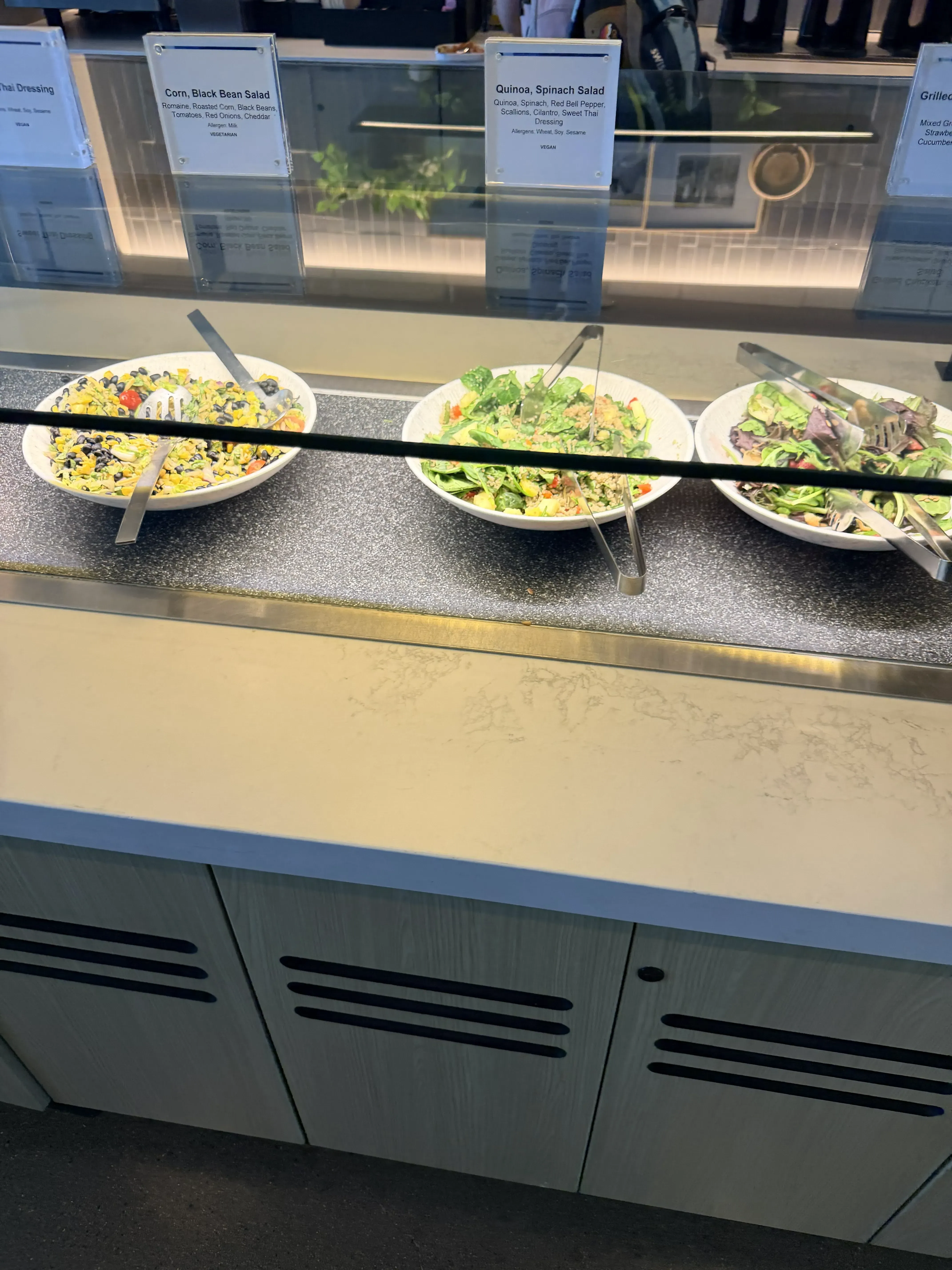
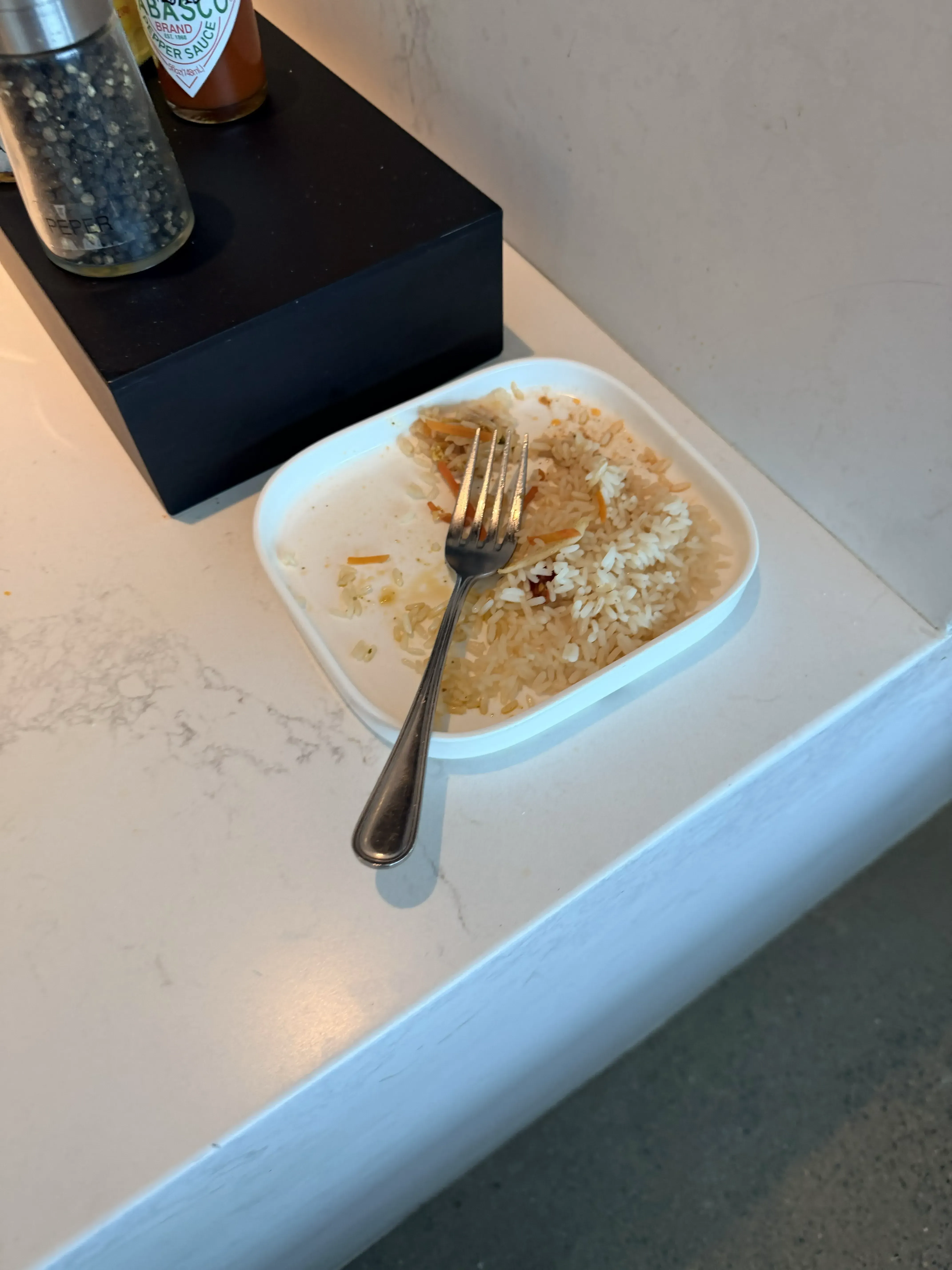
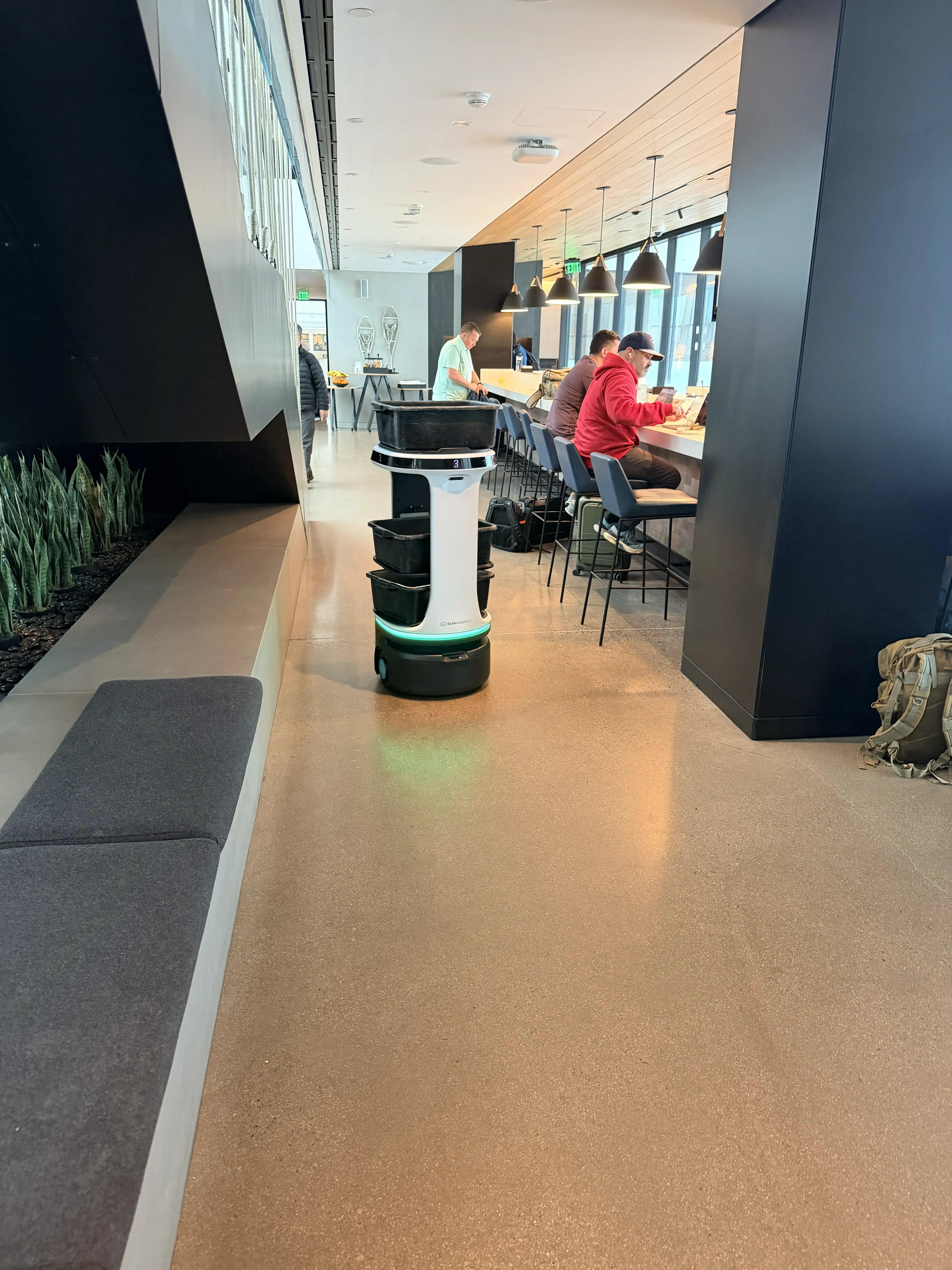
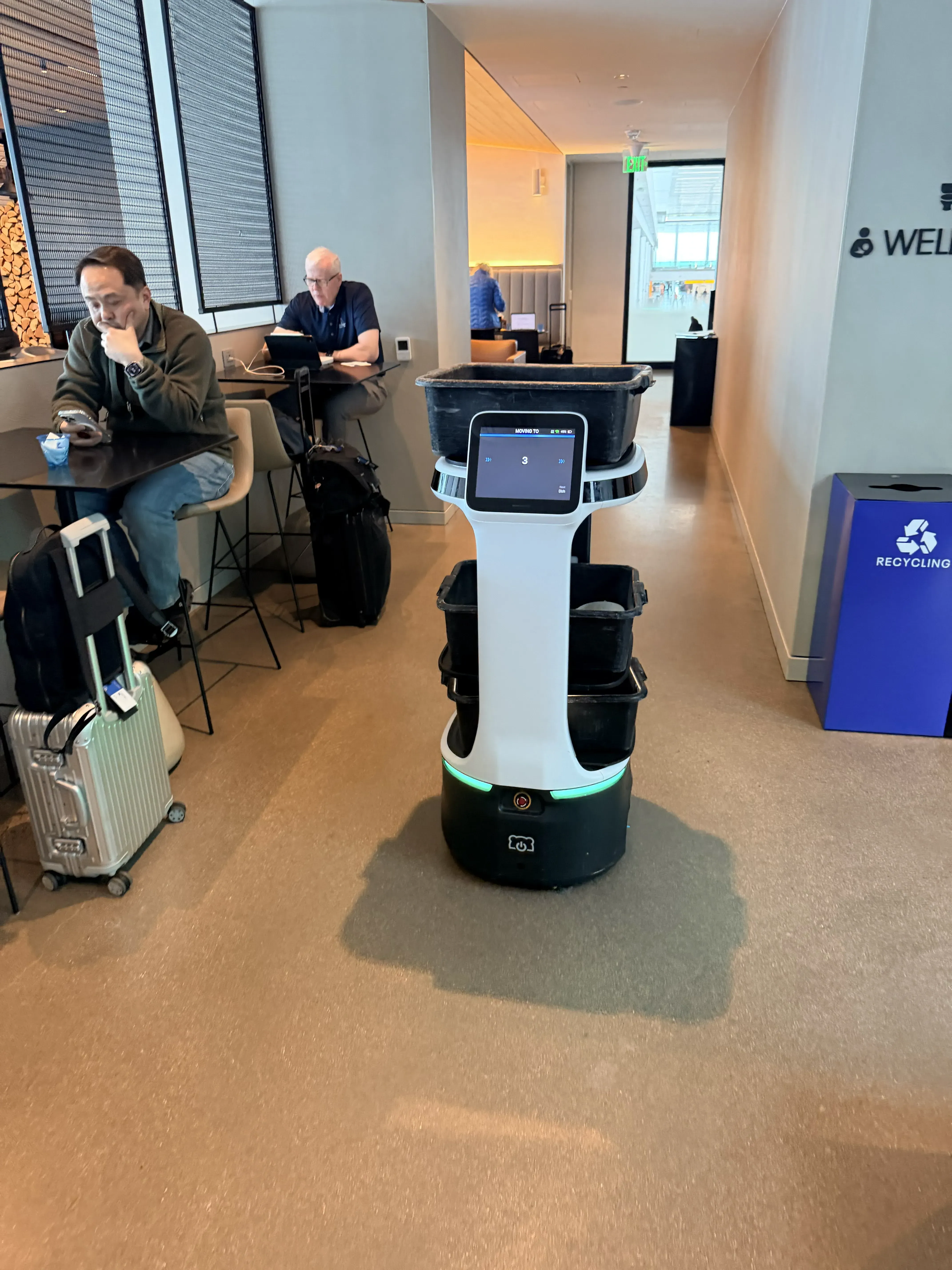
And the food is terrible. Not obviously terrible. It looks like a restaurant. But the jerk chicken tastes like a conference room. The sandwiches are 80% bread. Somebody tried to save the coconut rice by dousing it in Tabasco. It didn't work. They abandoned the plate on a counter and a robot picked it up — a glowing teal bussing robot that replaced the one human interaction you'd actually have in this room.
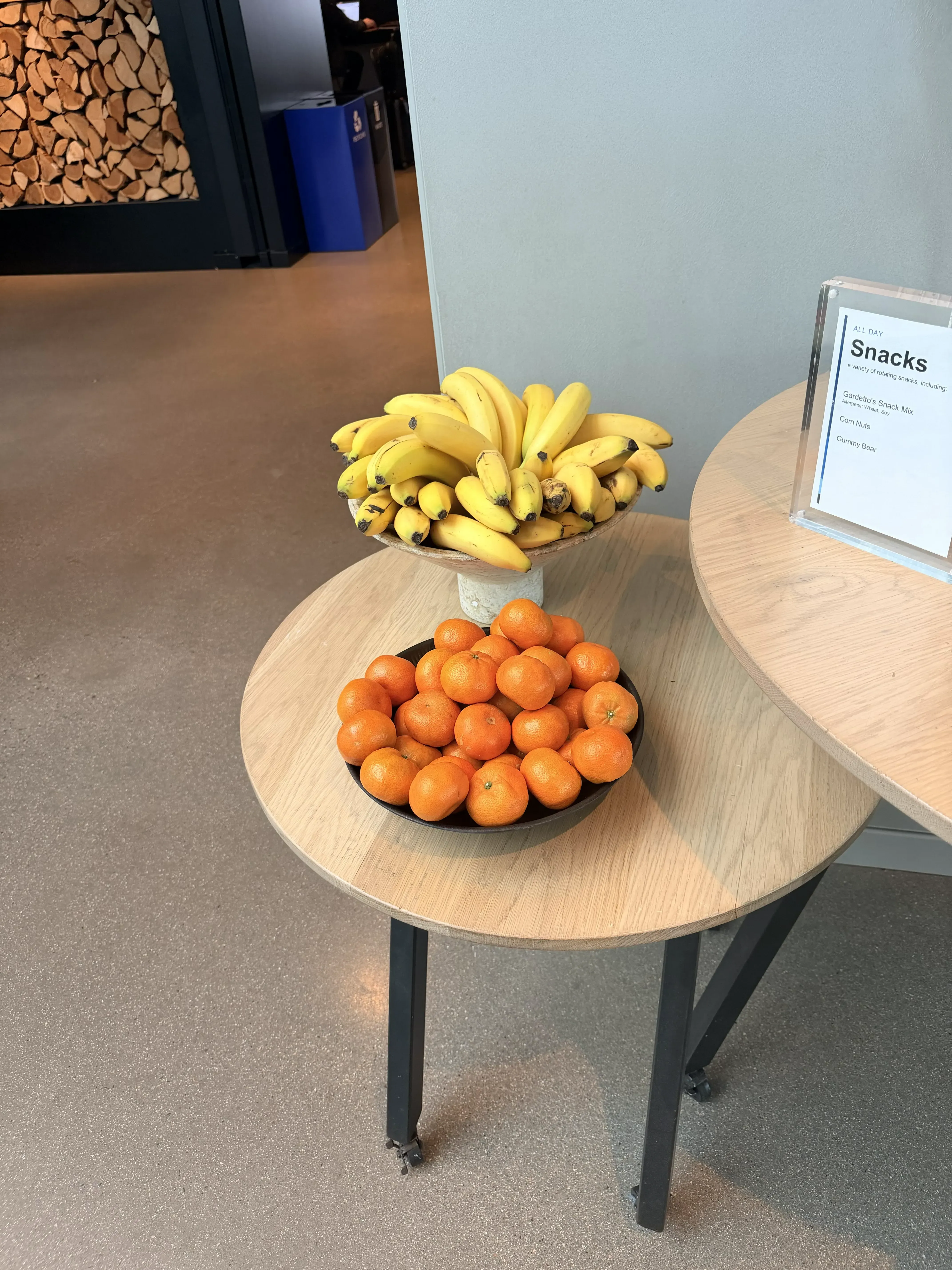
Next to the decorative firewood, a ceramic pedestal overflowing with bananas and a bowl of clementines. About a hundred dollars' worth of fruit — based on what I paid for one banana in the Vegas airport this morning — just sitting there. Free. All day.
On the bar, a sign: COMPLIMENTARY Drinks. Beer, wine, liquor, Red Bull, Coca-Cola products. The same Coca-Cola products that cost me $5.29 four hours ago. But there are no bottles here. No cans. Just a Coca-Cola Freestyle fountain machine — the exact machine that didn't exist anywhere in the Vegas airport when I was looking for a cheaper alternative.
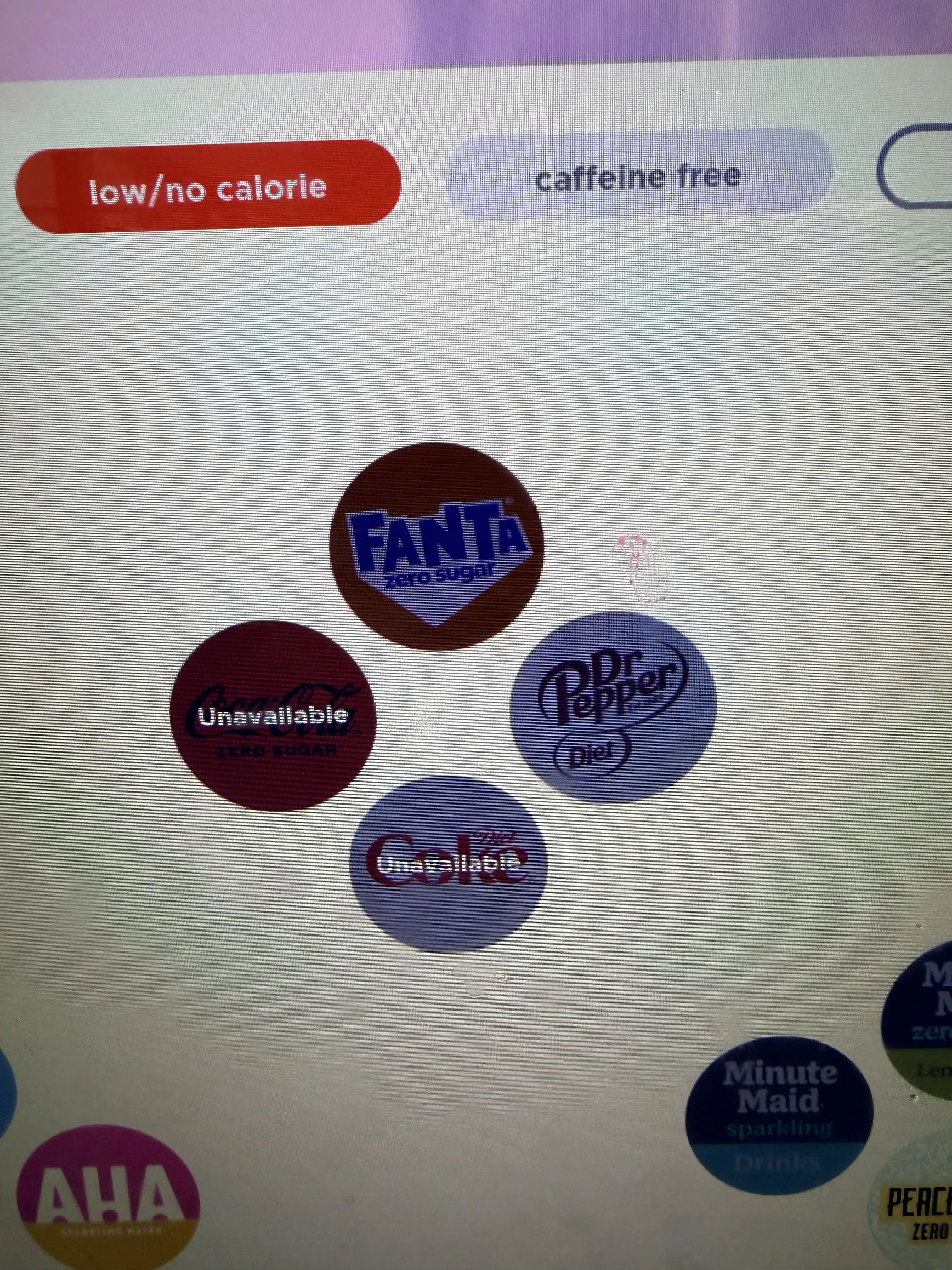
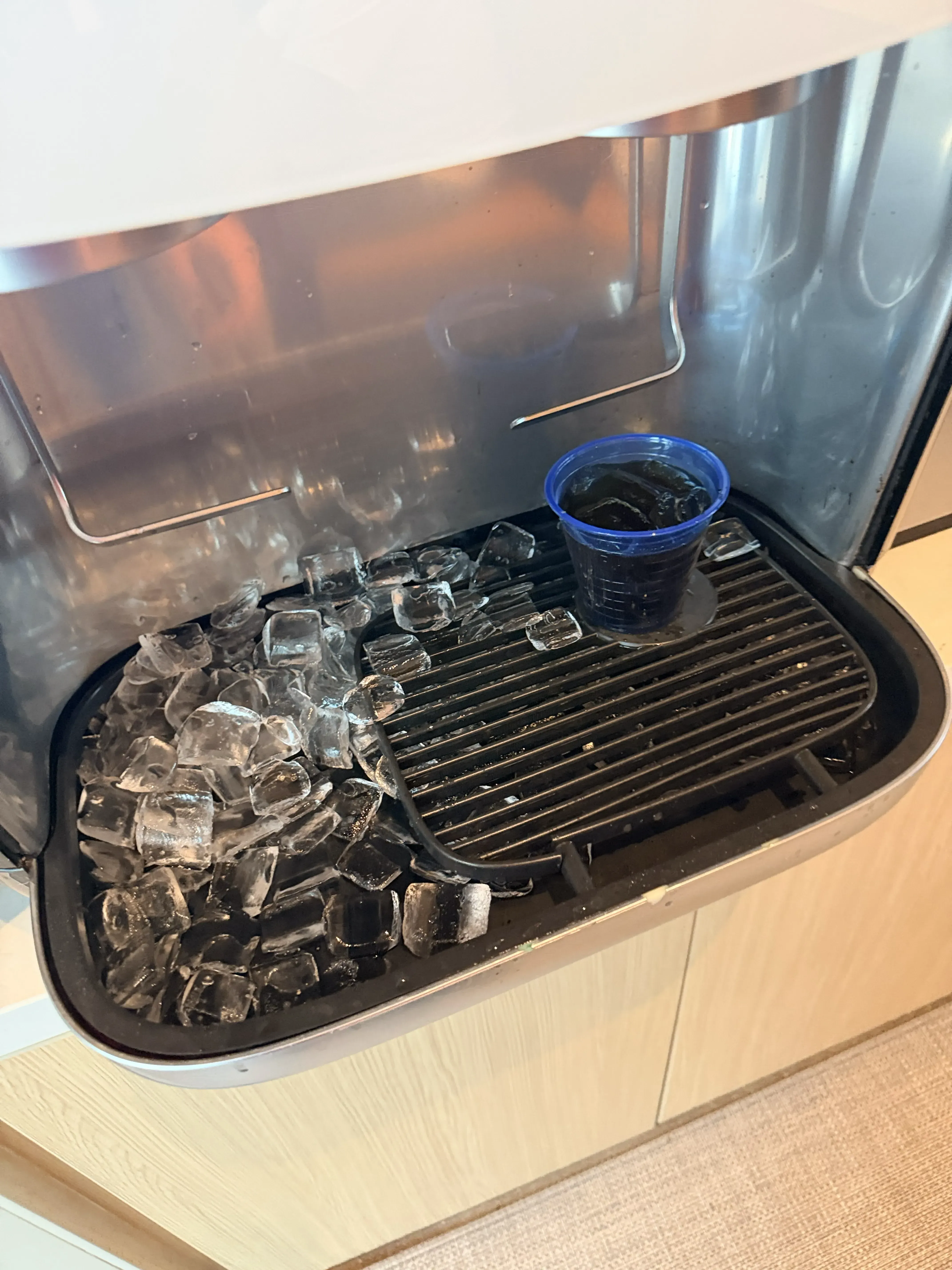
And next to the fountain, a sign:
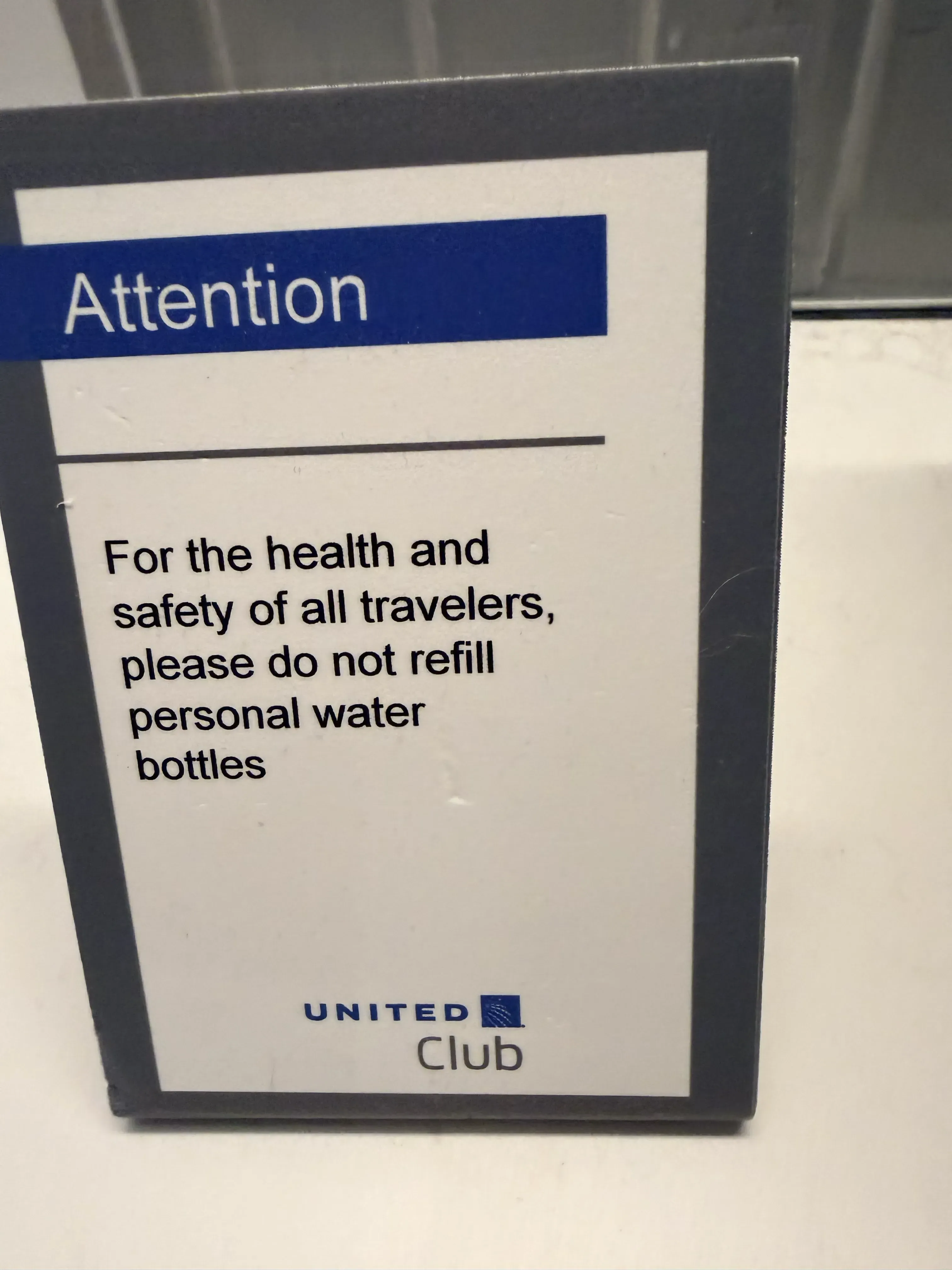
For the health and safety of all travelers, please do not refill personal water bottles.
Read that again. Don't fill your water bottle with water. The most basic human need on earth, and they've wrapped it in a public health warning to prevent you from carrying it out of the lounge — because outside those doors, a bottle of water costs five dollars. The "health and safety" risk isn't contamination. It's protecting the revenue model.
They give you tiny blue plastic cups. Disposable. No lid. You drink here, in the room, and when you leave you go back to paying $5.29. That sign is the entire extraction economy in six square inches.
I think about Gloria outside the hostel who gave me an apple at 4 AM. She doesn't have a United credit card. She doesn't get the lounge. She's standing on a sidewalk in Las Vegas sharing food with strangers while I'm sitting in a leather chair eating complimentary coconut rice because a bank decided I was a good enough risk to extend a line of credit.
The same system that held my mother's check, crashed my PayPal, dropped my credit rating, and rejected me from a robot car — that system also built this room. For me. And not for her.
That's the punchline.
I walk out of the lounge and back into the real terminal. People are standing in a two-hour line at Chick-fil-A — twenty feet from a room with free food. That's the market verdict on the United Club kitchen.
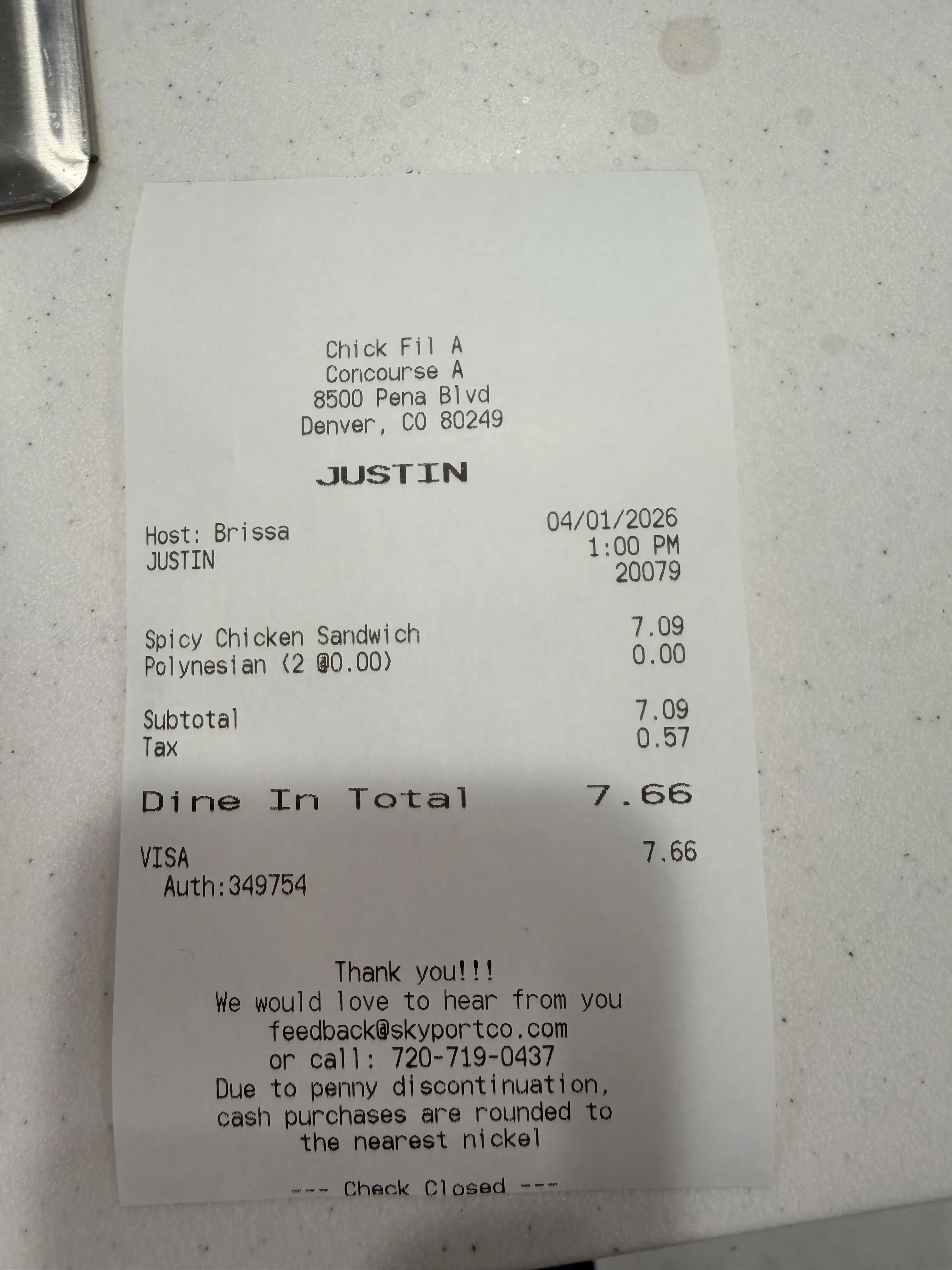
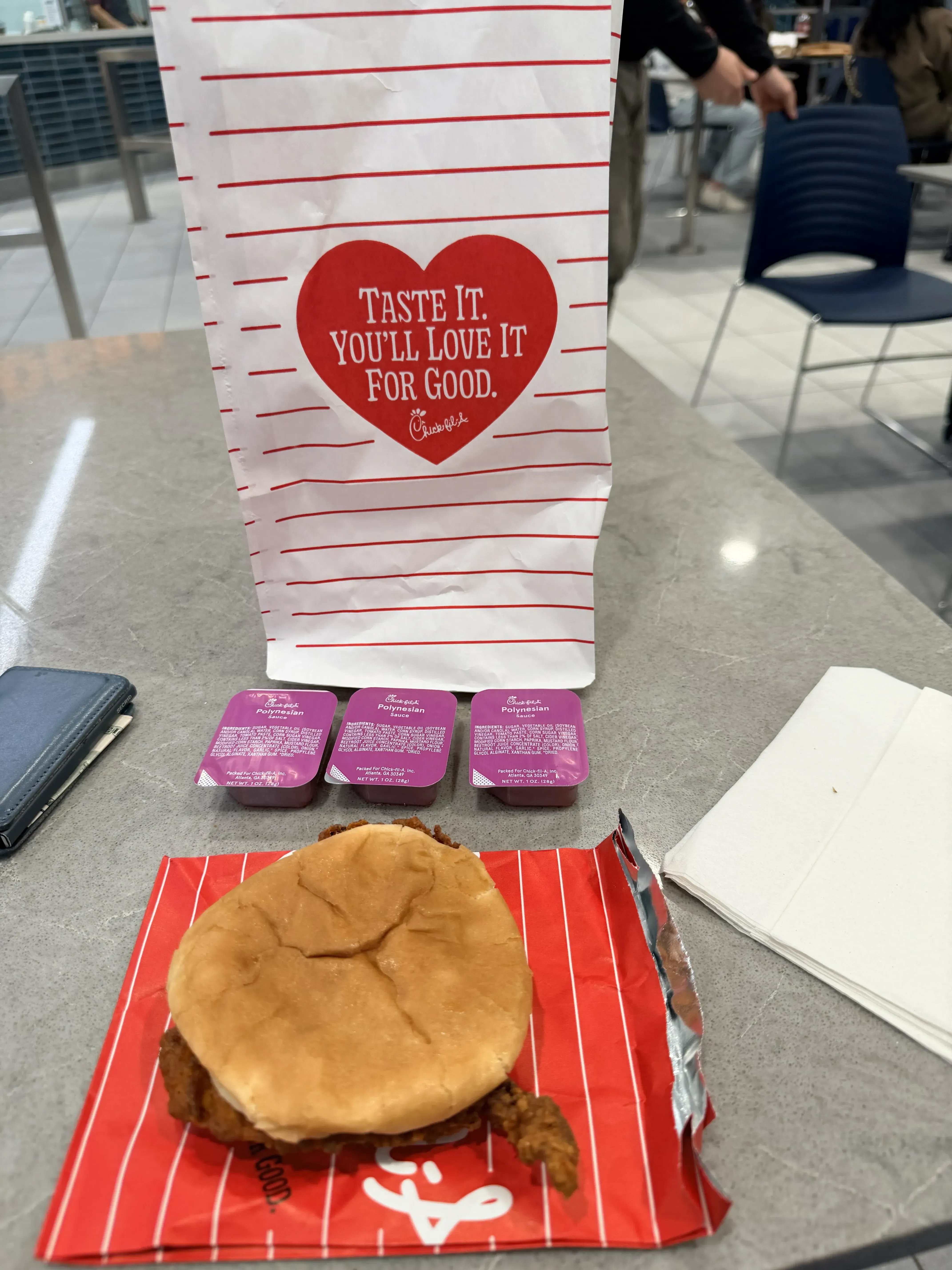
I get in line. A spicy chicken sandwich: $7.09. Not great, but honest. The "meal" — which adds waffle fries and a fountain drink that costs them a nickel — is $13.99. A $6.90 upcharge for potatoes and syrup water. I buy the sandwich. No meal. No drink. Just the thing I want at a price I'll pay.
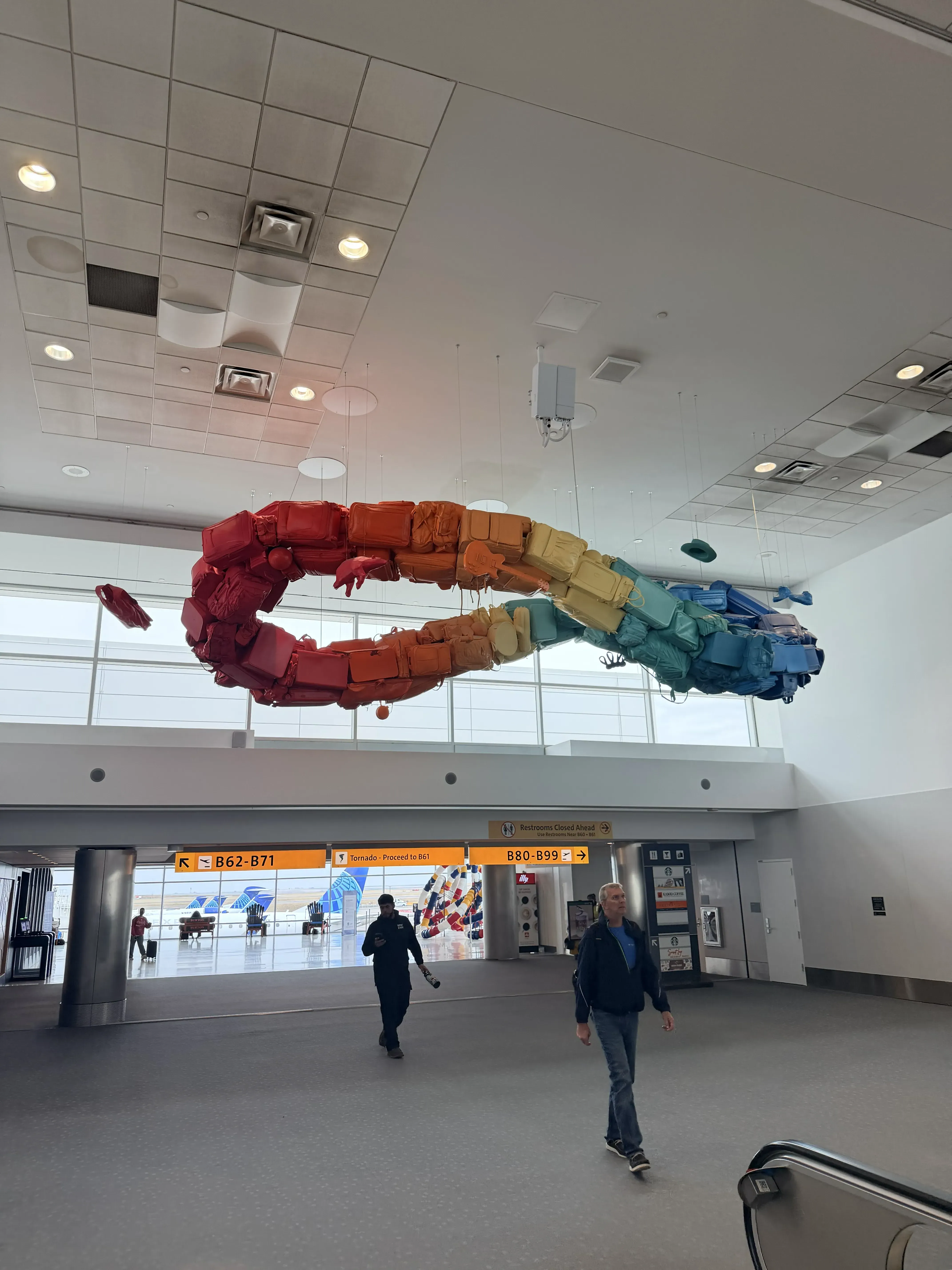
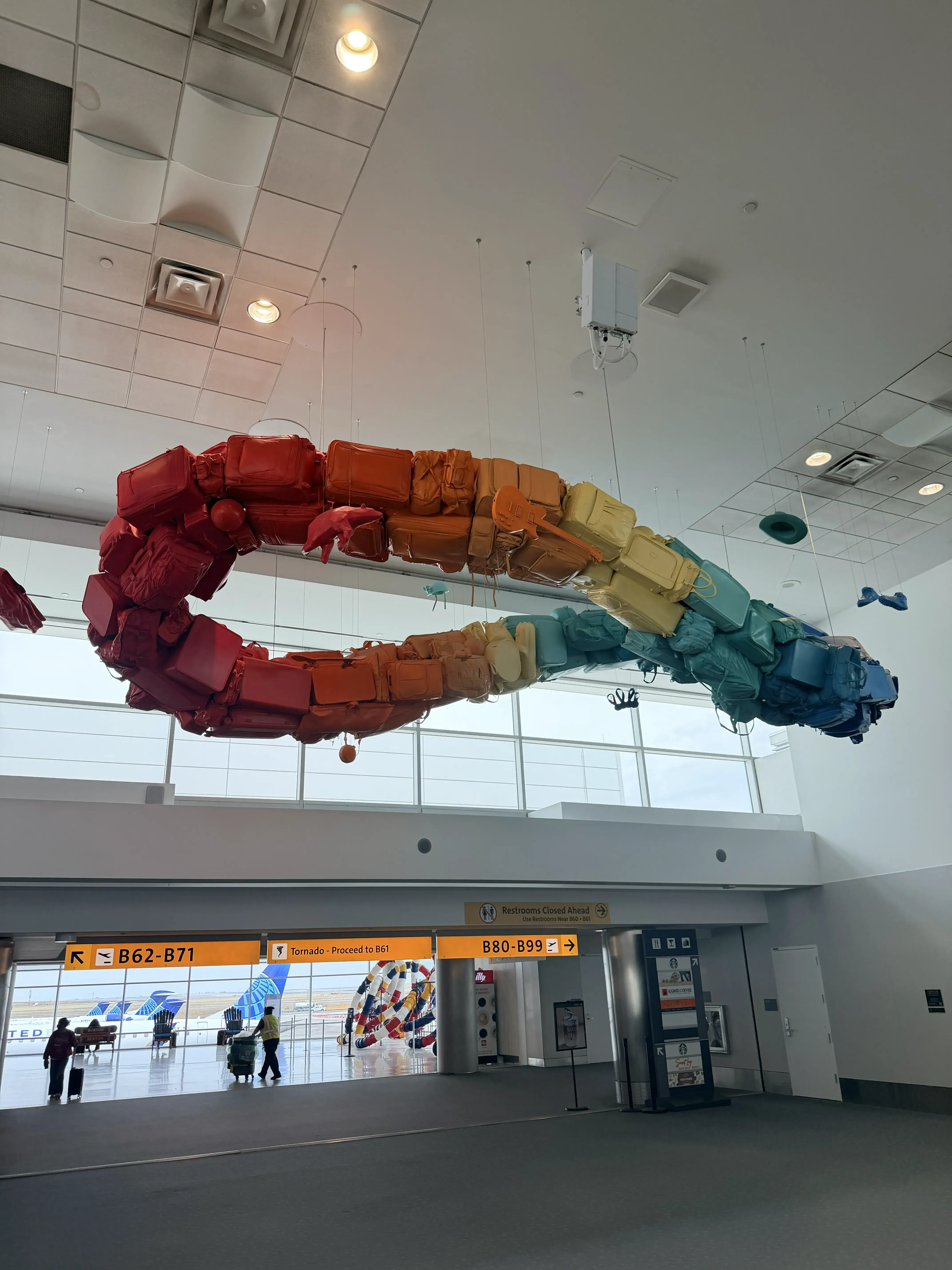
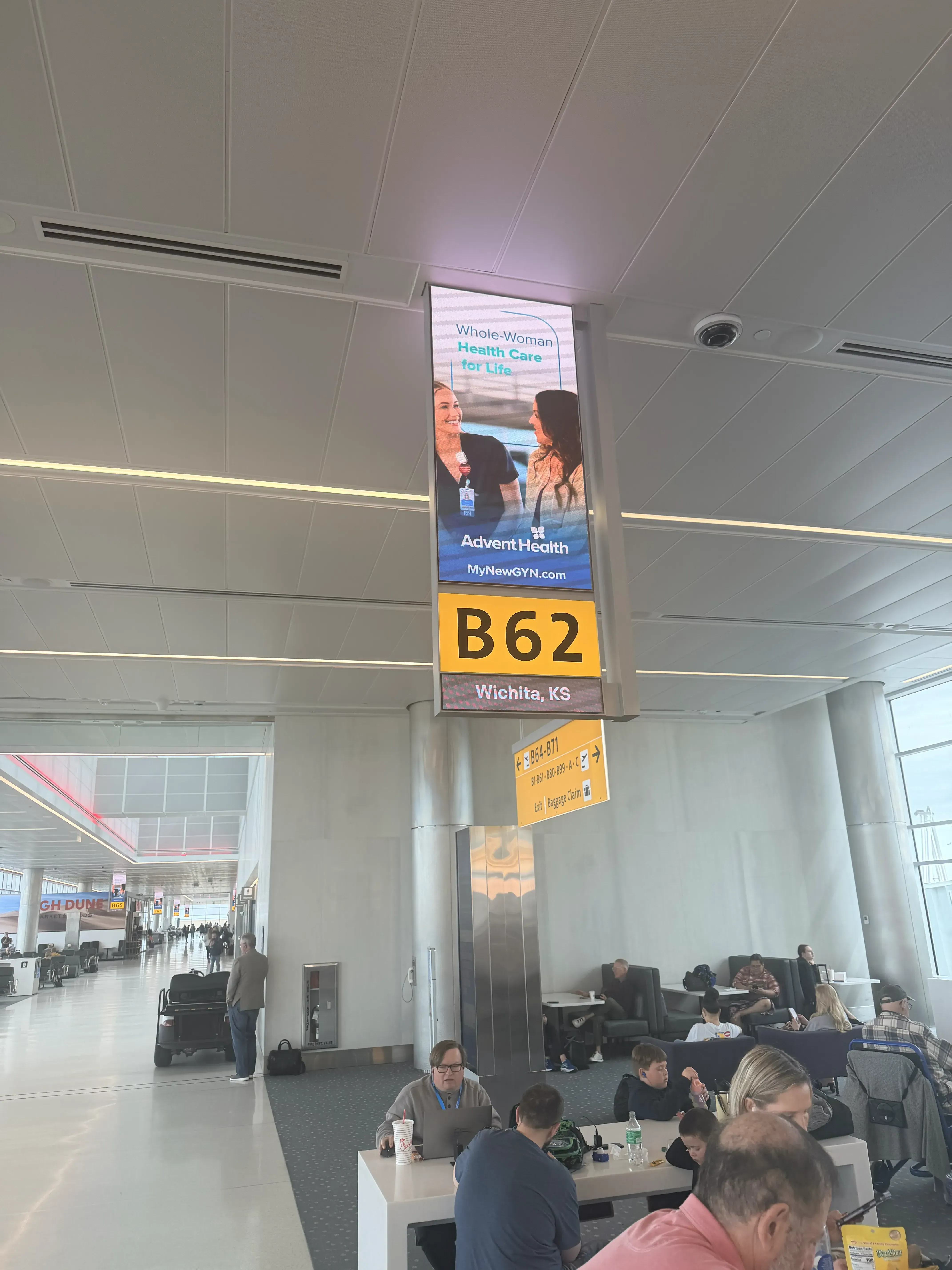
I board my connecting flight. Seat 1A. Bulkhead. I can stretch my legs and see straight into the cockpit. For a former fighter pilot, that view never gets old.
But I can't enjoy it, because every surface on this airplane is selling me a credit card. There's one in the seat pocket. There's one in the captain's announcement. There's one in the canned audio message that interrupts whatever you're listening to. The WiFi isn't free. The WiFi costs your email address and browsing habits. The credit card ad is the toll booth.
Once you notice it, you can't stop seeing it. The entire airplane is a credit card commercial that happens to fly.
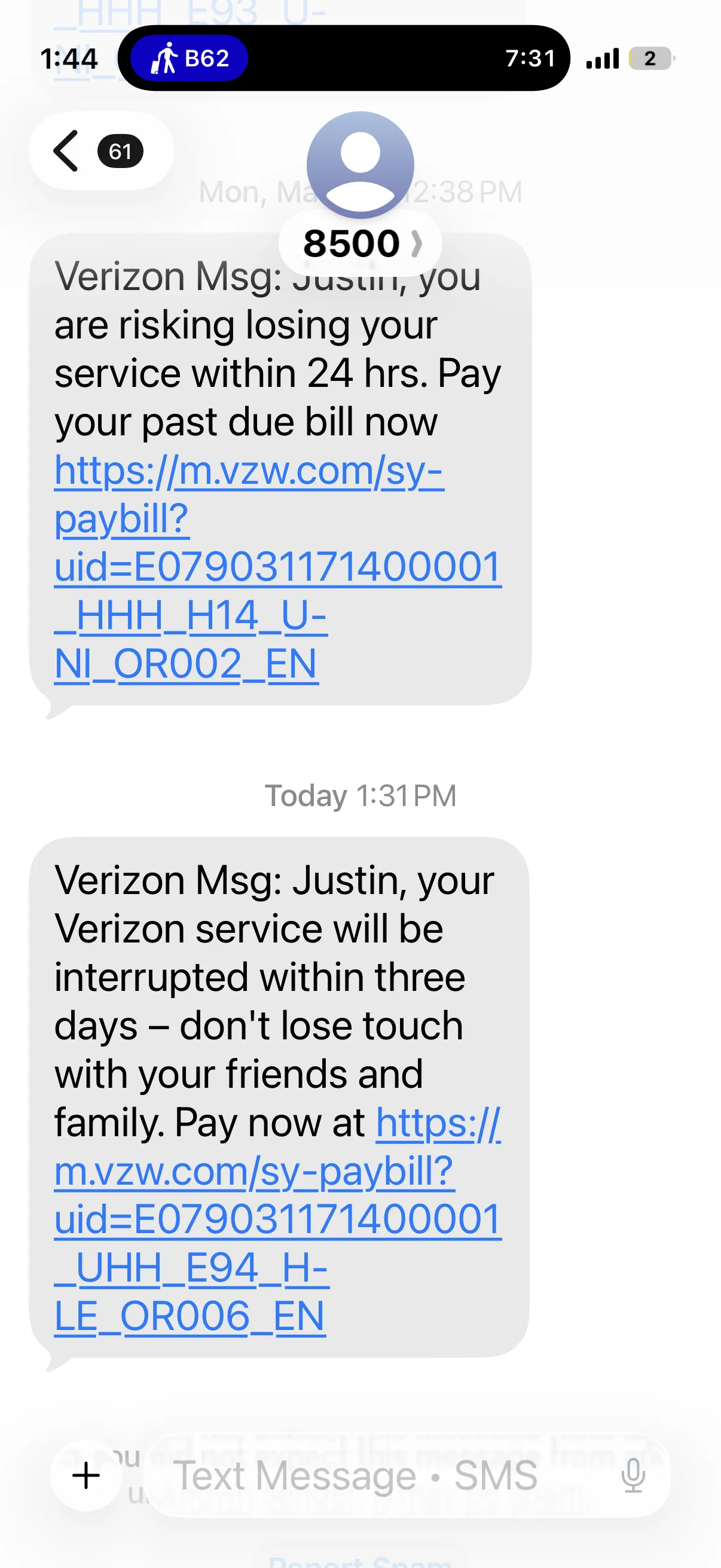
The flight attendant asked me to close my laptop and put it away. We were preparing for departure. She was doing her job.
You already know what happened next. You read it at the top of this article.
"FINE, I'LL PUT IT AWAY. I AM SO OVER THIS ENTIRE FUCKING PLANET!"
The cabin went silent. I could see it in her face — she was scared. A male flight attendant came up to sit in the jump seat, probably because she didn't want to be near me. The man sitting next to me went still.
I have bipolar disorder. I have spent years learning to manage it, to catch the wave before it crests, to channel the intensity into building things instead of breaking them. Most days I succeed. Today I didn't. Twenty-four hours of every system in America poking me — my money, my data, my credit rating, my bank account, poke after poke after poke — and the flight attendant caught the last one. She didn't deserve it. None of them do.
I apologized immediately. To the man beside me. To the male flight attendant. I tried to convey with my body language and my words that I was not a threat — that I was a tired man who had been ground down by a machine that doesn't stop grinding, and I broke. In public. At full volume.
I am ashamed of that moment. I am writing about it here because shame that stays hidden doesn't heal. And because I think other people have felt this same rage — at the $5.29 Coke, at the bank holding their money, at the credit card ad that interrupts the credit card ad, at the system that takes and takes and takes and then asks you to round up for charity — and they swallowed it. I didn't swallow it. I screamed it at a woman who was asking me to close a laptop.
That's the real cost of the extraction economy. Not the $509 in fees and surcharges. The human cost. The moment a person gets poked seventeen times in twenty-four hours and erupts at the eighteenth.
Officers on the jetway. Body cameras. Questions. The flight attendant confirmed I had apologized before landing. They let me go. They reported it to the FBI. Another number in another database — alongside my credit score, my driving record, and the birthday United demanded in my own seat.
I called RJ. The same friend who drove me to the airport yesterday morning for $20. He answered. He came.
On the way to the airport yesterday, I asked RJ to stop at Dollar General so I could load $20 onto Chime — enough to pay the $5 tax on my ticket. But RJ thought I'd miss the flight. He said he'd drop me off first, then take my $20 cash and load it onto Chime for me at a store. But I didn't know how long that would take. So when the check-in agent pointed me to the ReadyCARD machine, I just did it. Paid a $6 fee to access my own cash. The free option was ten minutes away. The extraction economy charged me $6 because I was in a hurry.
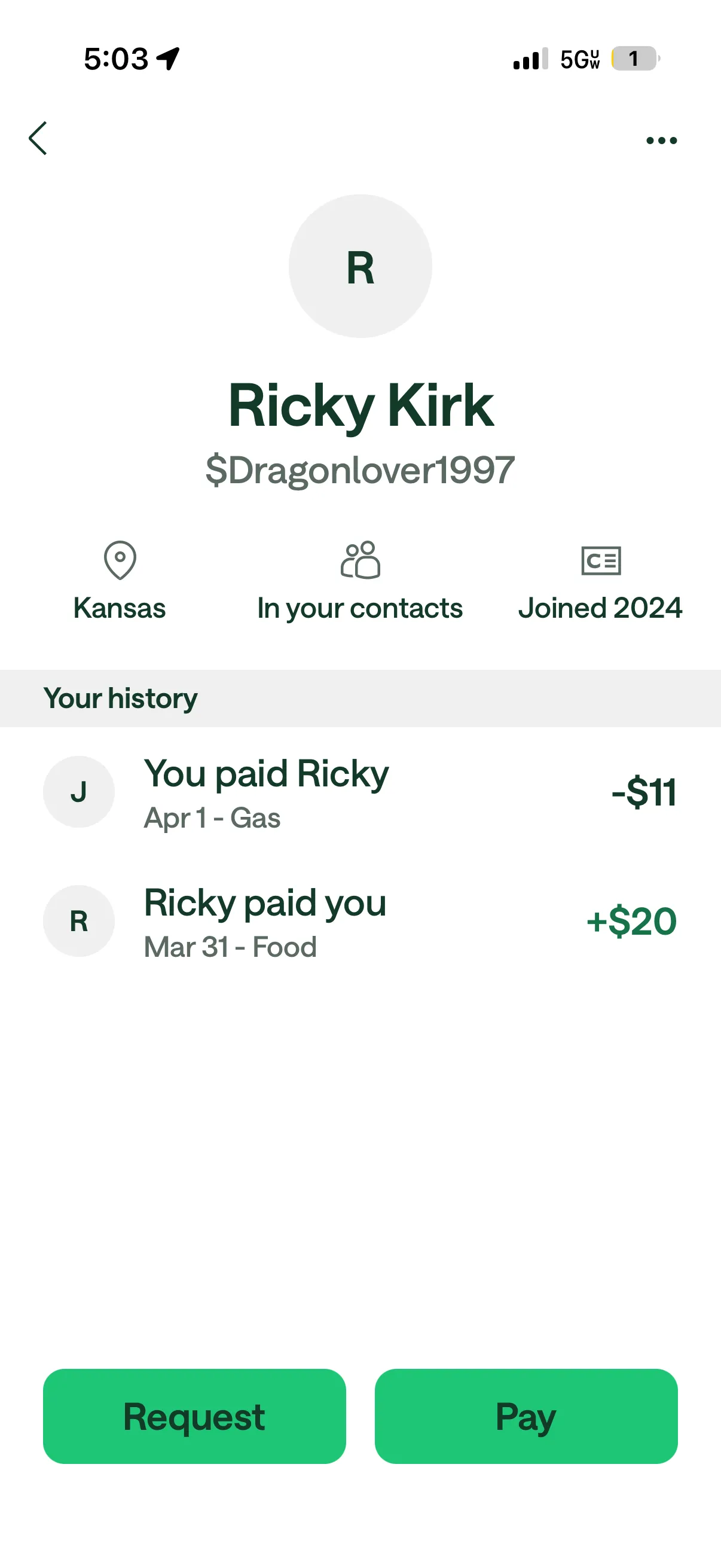
I sent RJ $11 for gas. My Chime balance before the payment: $11.85. My Chime balance after: $0.85.
Eighty-five cents. That's what's left after twenty-four hours inside the extraction economy.
They took my money — all of it, down to $0.85. They took my time. They took my data. They took my birthday, my credit rating, my bank account, and my brother's $500. They held my mother's check, rejected my cash, locked me out of an Uber, rejected me from a robot car, hid the bus, charged me $5.29 for a Coke, wouldn't let me fill a water bottle with water, and sold me a credit card from every surface of an airplane. They froze my debit card while I tried to buy dinner. They trapped $14 of my cash on a card with no ZIP code that will drain itself to zero in three months. They sent officers to question me on the jetway of my own hometown airport.
They tried to take my dignity.
They didn't get it. Dignity is mine to hold. It can never be taken. Not by a bank, not by an algorithm, not by a $5.29 Coke, not by the FBI report that will sit in a database somewhere alongside my credit score and my driving record and my birthday that United demanded in my own seat. Those are numbers. Dignity is not a number.
I lost my composure on an airplane and I screamed at a woman who didn't deserve it. I am sorry for that, and I will carry that. But losing my temper is not the same as losing my dignity. Dignity is what made me apologize before the officers boarded. Dignity is what makes me write this now, with the shame included, because the story doesn't work without it.
Gloria gave me an apple at 4 AM. She had almost nothing. She shared what she had with a stranger. That's dignity. It doesn't require a credit card or a ZIP code or a lounge membership. It requires being human.
I'm building a company for her. And for RJ, who showed up twice in twenty-four hours without being asked twice. And for Terrin, who picked me up in Denver and got trapped in a parking garage because Chime sent his money to an email instead of his account. And for Tamica, whose loan payment is being hunted by Together Loans while she prepares for a court date. And for the toll booth operator who paid $7 out of her own pocket so a stranger could leave a parking garage. And for everyone who has been ground down by a system that takes everything and gives back a tiny blue cup with no lid.
EnRoute is a transportation company where the price is the price. Where $20 means $20 whether it's sunny or raining or New Year's Eve. Where you can pay with cash. Where we don't need your birthday to give you a ride. Where a combat veteran doesn't get rejected by a database. Where you don't need the right plastic to get where you're going.
Where Gloria can get from point A to point B with dignity. Where a co-founder going to her court date doesn't need a credit card to get there. Where nobody has a day like the one I just had.
If you need a ride and you don't have the money, we'll give you one anyway. You'll come back and pay when you can. And if you want to tell your story on the way — about how the system is failing you, about what you're going through — that's your prerogative. We're just driving.
Cash and Conversation. $20 is $20. Always.
Soft launch: today.
Fleet launch: Monday.
EnRoute Kansas — Now Live